 Skip to content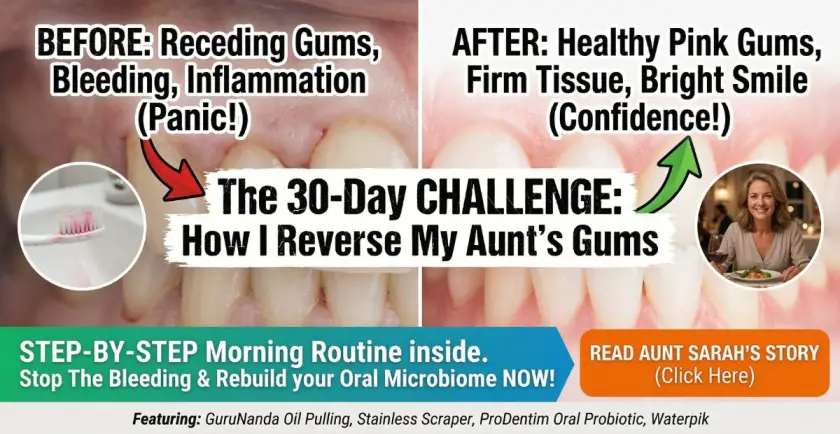
I remember watching my Aunt Sarah at our last family dinner. She’s always been the life of the party, but that evening she was quiet, barely touching her favorite steak. When I asked her why, she leaned in and admitted, with a visible wince, that her gums were so tender and inflamed that even chewing felt like a chore. She’d been “doing everything right”—brushing three times a day and using the strongest minty mouthwash money could buy. Yet she was losing the battle. Her sink was constantly stained pink, and her confidence was at an all-time low.
Aunt Sarah’s struggle is the silent reality for millions. We’ve been conditioned to believe that if our gums are failing, we just need to “scrub harder” or “bleach more.” But as we head into 2026, dental science has performed a massive U-turn. We now know that by obsessively sterilizing our mouths, we are actually destroying the oral microbiome—the vital community of “good” bacteria that acts as a natural shield for our gums.
This guide is Aunt Sarah’s roadmap—and yours. It moves beyond the outdated “mechanical” approach to dental care and introduces a holistic morning routine that focuses on restoration rather than just sanitation. We will explore how to detoxify the mouth using ancient techniques, how to reseed your oral environment with the specific “good” bacteria your gums are starving for, and which modern tools can reverse years of neglect.
If you’ve felt that same sting of sensitivity or noticed your gums slowly receding, this isn’t just another article; it’s a definitive plan to reclaim your smile’s health from the inside out.
When you click on certain links within my blog posts, it may lead you to a product page where you have the opportunity to make a purchase. Please note that if you decide to make a purchase through those links, I may earn a commission from the retailer or brand. For more information, please visit the Affiliate Disclosure page on my blog.
Step 1: The “Ancient-Modern” Reset (Oil Pulling & Tongue Scraping)
When I first saw the state of Aunt Sarah’s gums, I’ll be honest—I panicked. Her gums weren’t just red; they were pulling away from her teeth, and she looked like she was in constant, dull pain. I spent the next three weeks obsessively searching through medical journals, watching hours of holistic dental YouTube videos, and reading every book I could find.
I even deep-dived into “It’s All in Your Mouth” by Dr. Dominik Nischwitz and “Heal Your Oral Microbiome” by Cass Nelson-Dooley (both are game-changers if you want to understand the science of healing). What I learned was terrifying: by using harsh chemicals to “clean” her mouth, Sarah was actually making the problem worse. She was killing the very bacteria her body needed to heal.
I told her, “Aunt Sarah, we have to stop the war on your mouth. We need to reset it gently.” Here is the two-step “Reset” I begged her to try before she considered surgery.
The 60-Second “Biofilm Lift” (Tongue Scraping)
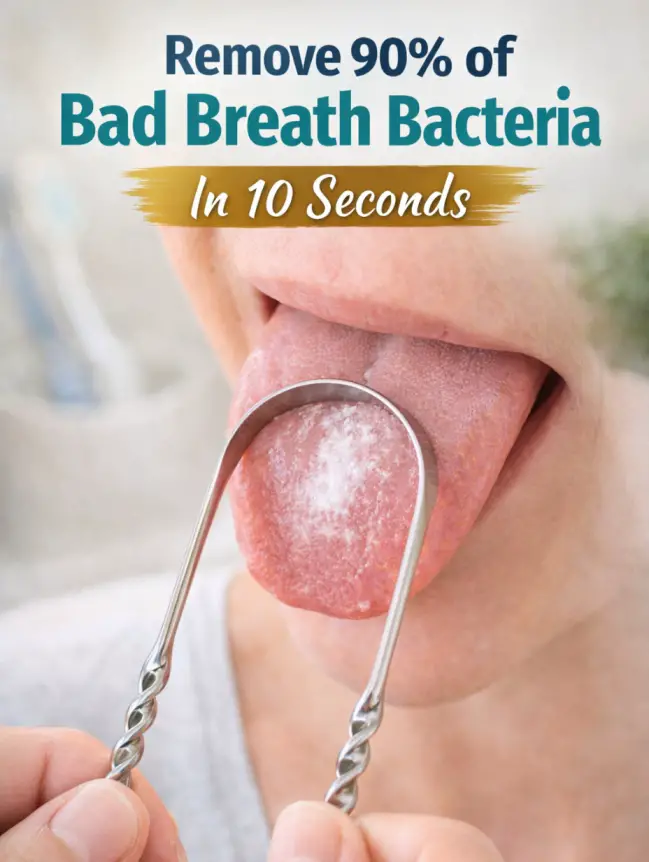
The first thing I realized is that most of the “poison” in our mouth sits on the tongue. If you don’t remove that white coating every morning, you’re just swallowing those toxins all day. I bought Aunt Sarah a basic stainless steel tongue scraper.
- The Experience: I told Sarah, “Just try it once.” She was horrified by what came off her tongue that first morning, but for the first time in years, she said her mouth felt “light.”
- The Information: Unlike a toothbrush, which just pushes bacteria around, a medical-grade scraper lifts the sulfur-producing bacteria out of your mouth entirely. It’s the fastest way to stop bad breath at the source.
The “Oil Pulling” Detox
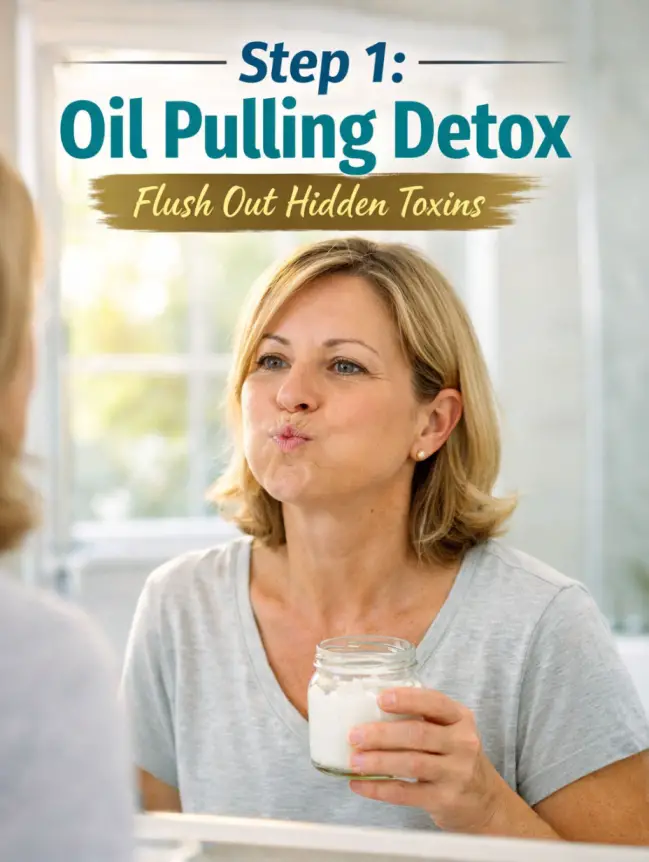
Next, I explained the concept of oil pulling. I’ll admit, Sarah thought I was crazy when I told her to swish oil in her mouth for 10 minutes. But I showed her the research on how oil acts like a “magnet” for the fat-soluble toxins hiding under the gum line.
- The Experience: Sarah started doing this while she read the morning news. Within a week, the “throbbing” in her gums had quieted down. The oil was soothing the inflammation in a way that her expensive, burning mouthwash never could.
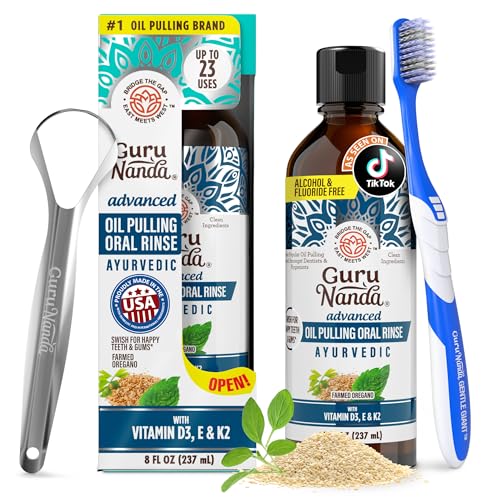
- The Product Mix: You can’t just use any oil if you’re in a “panic mode” like we were. I found the GuruNanda Advanced Whitening Pulling Oil. It’s infused with Vitamins D, E, and K2, specifically added to help rebuild the bone and tissue that support your gums.
Step 2: The “Probiotic Shift” (Reseeding the Garden)
After a week of the “Ancient Reset,” Aunt Sarah’s mouth felt cleaner, but the underlying problem was still there. Her gums were still pale in some spots and angry red in others. She was still worried, and honestly, so was I. I kept searching for that “missing link.”
That’s when I stumbled upon a concept that changed everything: Repopulation.
I realized that Aunt Sarah’s mouth was like a garden where all the plants had been pulled out, leaving only bare dirt. In that environment, the only things that grow back are weeds (the harmful, inflammation-causing bacteria). To fix her gums, we didn’t need more cleaning; we needed to “plant” the right seeds.
The Science of Oral Probiotics
I learned that certain strains of “good” bacteria are specifically designed to live in the mouth, not the gut. These bacteria produce natural substances that kill off the germs causing gingivitis while actually strengthening the gum tissue. This was the “Aha!” moment. I told Sarah, “We’ve stopped the fire, now we need to rebuild the house.”
- The Experience: I found a breakthrough in the form of a specific probiotic candy. It wasn’t a pill you swallow; it was something she had to let dissolve in her mouth so the bacteria could actually “stick” to her gums. Sarah started taking it every morning after her oil pulling. Within 14 days, the bleeding stopped—completely. For the first time in years, she could brush without seeing pink in the sink.
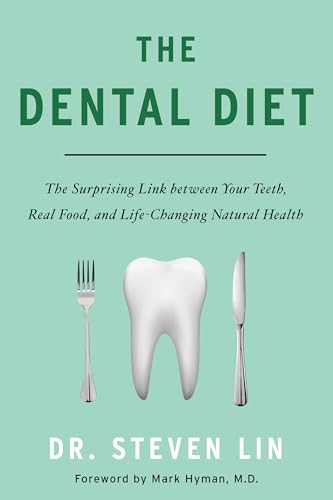
- Lin, Steven (Author)
- English (Publication Language)
- 344 Pages – 02/05/2019 (Publication Date) – Hay House LLC (Publisher)
- The Information: Modern dental research (which you can read about in books like The Dental Diet by Dr. Steven Lin) highlights that 3.5 billion probiotics is the “sweet spot” for reversing oral dysbiosis.
The Breakthrough: ProDentim

The specific product that finally gave Aunt Sarah her confidence back was ProDentim. Unlike traditional treatments, this is a doctor-formulated blend of 3.5 billion probiotic strains and nutrients.
It contains Lactobacillus Reuteri, which is well known in dental science for helping reduce inflammation, and B. lactis BL-04®, which supports the natural balance of bacteria in the mouth. For Sarah, it was the final piece of the puzzle. It transformed her mouth from a “war zone” into a healthy, thriving ecosystem.
Step 3: High-Tech Plaque Removal (The “Insurance Policy”)
Once the bleeding had stopped and the “good” bacteria were doing their job, I had a new fear: backsliding. I knew Sarah. If she went back to her old habits—rushing her brushing or skipping flossing because it “hurt”—all our hard work could disappear in a month. I spent several more late nights on YouTube and reading “The Mouth-Body Connection” by Dr. Gerald P. Curatola (a must-read if you’re worried about how oral health affects your heart), searching for the best tools that would make her routine effortless.
I realized that for someone with sensitive, recovering gums, traditional string flossing can be too abrasive. It’s like trying to clean a wound with a saw. I needed something that could clean deep into the gum pockets without causing more trauma.
The Water Flossing Revelation
I discovered that a water flosser isn’t just a luxury; for gum health, it’s a necessity. It uses a targeted stream of pulsating water to flush out 99.9% of plaque from areas that traditional string floss simply can’t reach.
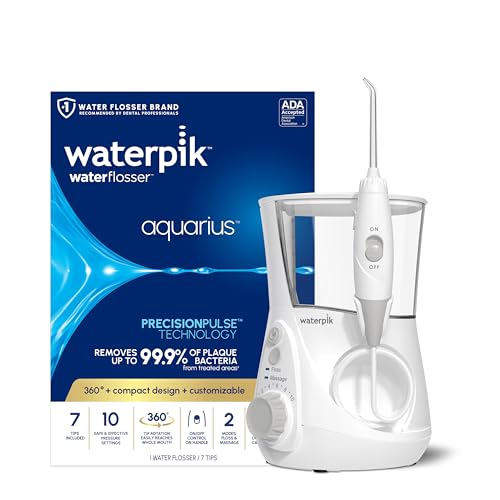
- The Experience: I finally convinced Sarah to try a Waterpik Aquarius Water Flosser. She was hesitant at first because she thought it would be messy. But after the first use, she said her mouth felt “professionally cleaned.” She could actually see the debris being washed away that her toothbrush had missed. More importantly? It didn’t hurt.
- The Information: The pulsating action of a water flosser actually massages the gum tissue, which increases blood flow and helps speed up the healing of periodontal pockets.
The AI-Powered Clean
To round out her “insurance policy,” I looked into electric toothbrushes. I learned that manual brushing often involves too much pressure, which can cause gums to recede even further. I needed a brush that would do the work for her.

- The Experience: I suggested that Sarah switch to the Philips Sonicare DiamondClean Prestige 9900. It has built-in sensors that alert you if you’re pressing too hard. For Sarah, this was a big help because she had been a “power brusher,” unknowingly scrubbing her gums too aggressively.
- The Product Mix: These tools are the heavy hitters of Tier 1 dental care. They are investments, but compared to the cost of a gum graft or deep scaling (which Sarah was terrified of), they are a total bargain.
Step 4: The Finishing Touch (Fresh Breath Without the Burn)
After the high-tech cleaning routine, Aunt Sarah was starting to feel confident again. But she still had one old habit she couldn’t shake—she loved that sharp, “stinging” feeling of a strong, alcohol-based mouthwash. She believed that if it didn’t burn, it wasn’t really working.
I had to sit her down and show her the research. I explained that using alcohol in your mouth is like pouring gasoline on a forest fire. It dries out the delicate tissues in the mouth, slows down the healing process, and—worst of all—it destroys the 3.5 billion “good” bacteria we had spent weeks restoring with her oral probiotics.
The “Oxygen” Secret
I told her, “Sarah, we need to kill the bad-breath bacteria using oxygen, not alcohol.” Bad-breath bacteria are anaerobic, meaning they hate oxygen. By using an oxygenating rinse, you can neutralize bad breath for up to 24 hours without harming your gums or your oral microbiome.
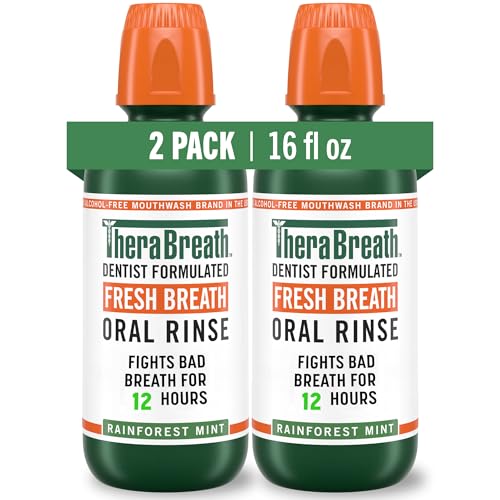
- The Experience: I bought her a bottle of TheraBreath Fresh Breath Oral Rinse. She was surprised that it tasted almost like water, yet it kept her breath fresh even after a garlicky dinner. She also noticed that her mouth didn’t feel “dry” or “sticky” in the morning anymore.
- The Information: When you have receding gums, dry mouth is your biggest enemy. Saliva is your mouth’s natural defense system, and alcohol-based mouthwashes strip it away. Switching to a pH-balanced, non-alcoholic rinse acts like the final protective layer for your morning routine.
The “Knowledge” Upgrade
To make sure she understood the why behind all of this, I gave her one last gift: a book called “The Mouth-Body Connection” by Dr. Gerald P. Curatola. It’s a fascinating read that explains how the health of your gums is directly connected to the health of your heart and brain.
The Result: Sarah didn’t just follow the routine—she truly understood it. She realized that taking care of her gums wasn’t only about having a healthy smile; it was about protecting her overall health and being there longer for the people she loves.
Final Recommendations for Your Routine
To help you get started on your own journey (or to help your own “Aunt Sarah”), here are the specific tools that finally turned the tide for us. These are the gold standards for Tier 1 dental care:
- Waterpik Aquarius Water Flosser: The most effective way to clean deep gum pockets without pain.
- TheraBreath Fresh Breath Oral Rinse: An alcohol-free, oxygenating rinse that protects your oral microbiome.
- The Mouth-Body Connection (Book): The ultimate guide to understanding why your oral health is the gateway to your total body wellness.
Dietary Secrets for Gum Longevity (Feeding the Foundation)
By the time we reached this stage, Aunt Sarah was feeling like a new person. Her breath was fresh, and the bleeding had stopped. But as I kept reading through books like “The Dental Diet” by Dr. Steven Lin, I realized we were still missing a huge piece of the puzzle: nutrition.
I noticed that while Sarah was cleaning her teeth perfectly, she was still snacking on soft, sugary, ultra-processed foods that were essentially feeding the harmful bacteria faster than we could eliminate them. I told her, “Sarah, you can’t build a strong house with weak bricks. We need to feed your gums the vitamins they need to stay firm.”
The “Crunch” Factor
I encouraged Sarah to swap her soft snacks for what I like to call “nature’s toothbrushes”—apples, carrots, and celery.
- The Experience: At first, Sarah was nervous to bite into an apple. She had become so used to her gums hurting that she avoided anything crunchy. But once she started, she realized that the simple act of chewing fibrous vegetables was gently massaging her gums and stimulating healthy saliva production.
- The Information: Chewing tough, fibrous foods naturally helps clean the teeth and exercises the jawbone. This stimulation supports gum health and helps prevent the bone loss that is often linked to receding gums.
Read More-
The Vitamin “Trinity” (K2, D3, and C)
I found that most Tier 1 diets are severely lacking in Vitamin K2, which is responsible for moving calcium into the bones and teeth and away from where it shouldn’t be (like your arteries).
- The Experience: I started Sarah on a daily regimen of Life Extension Vitamins D and K with Sea-Iodine. I also made sure she was getting enough Vitamin C to support collagen production—the “glue” that holds your gums to your teeth.
- The Result: Within a month, her dentist noted that her gum tissue looked “denser” and more resilient.
FAQ: Common Questions About Gum Recovery
As I shared Aunt Sarah’s story on social media, I started getting the same questions again and again. These were the exact things most people—including me at the beginning—were worried and confused about.
1. Can receding gums actually grow back?
Technically, gum tissue doesn’t “grow back” like a fingernail. However, you can stop the recession from getting worse and, more importantly, strengthen the existing tissue so it attaches more firmly to the tooth. This is exactly what the oral probiotic and the Waterpik water flosser helped Sarah achieve.
2. How long does it take to see real results?
Most people notice an improvement in breath within 48 hours. For bleeding to stop, it usually takes about 7 to 14 days of consistent oil pulling and probiotic use. For the gums to feel firm and healthy again, it’s best to commit to a full 30-day routine.
3. Is an electric toothbrush really better than a manual one?
Yes. Research shows that electric toothbrushes remove significantly more plaque. More importantly for people like Sarah, they prevent brushing too aggressively, which is a major cause of gum recession. I personally recommend the Philips Sonicare DiamondClean because it does most of the work for you.
4. Can I just use a regular gut probiotic?
No. Gut probiotics are designed to survive stomach acid and live in your intestines. Oral probiotics, like the ones found in the probiotic lozenge Sarah used, are specifically formulated to live in the mouth and fight the bacteria responsible for gum disease and bad breath.
Conclusion: Reclaiming Your Smile
If you’re reading this because you’re worried about your own gums or the health of someone you love, take a deep breath. Aunt Sarah went from avoiding steak and hiding her smile to being the first one laughing at the dinner table again.
It didn’t require surgery or thousands of dollars in laser treatments. What it required was a shift in mindset—moving away from the idea of “sterilizing” the mouth and instead learning to nurture it. By starting the morning with a gentle reset, reseeding the mouth with beneficial bacteria, and using the right tools and habits, it’s possible to reverse years of damage and restore healthy gums.