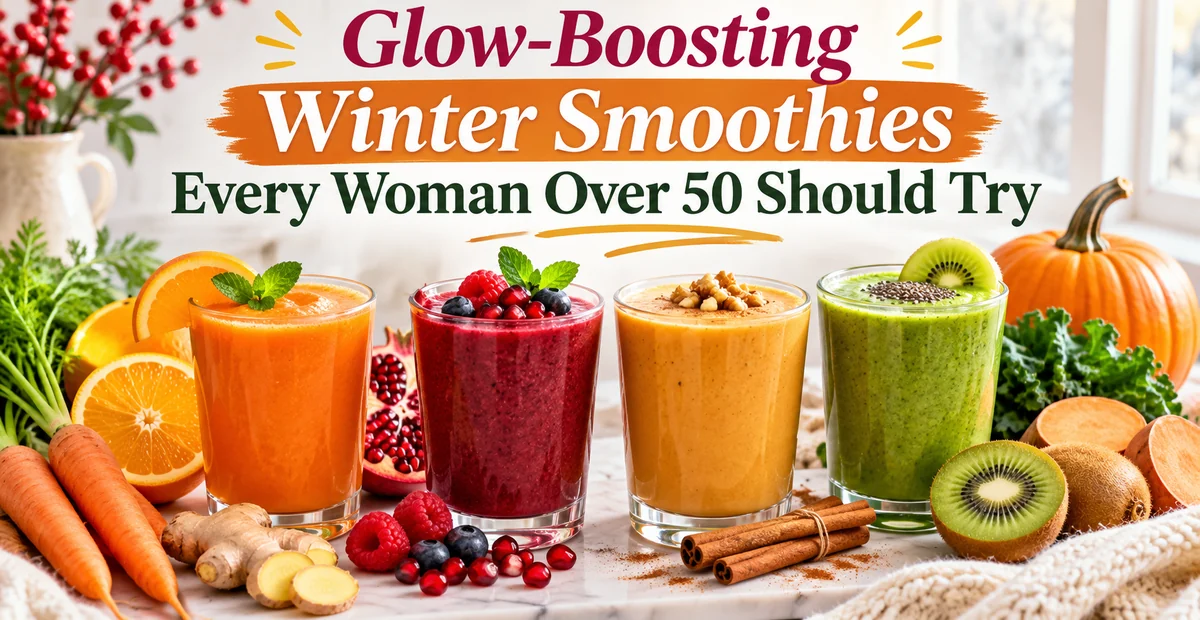
Cold weather can make your complexion feel different almost overnight. One morning your skin feels comfortable; the next, it seems tight after cleansing, makeup catches on dry patches, and the healthy-looking glow you remember from summer is harder to find.
If you are over 50, there are several reasons winter dryness can be more noticeable. Skin tends to produce less oil with age, and changes around menopause can affect its texture and moisture retention. Add cold winds outside and indoor heating at home, and a little extra skincare — and nourishment — can feel especially welcome.
Moisturizer and sunscreen still do the most important everyday work on the outside. Food supports overall skin health from the inside by supplying protein, essential fats, vitamins and minerals. A smoothie is one convenient way to add more of those ingredients to your routine, especially when fresh produce feels less appealing in winter.
Winter smoothies can bring together seasonal citrus, pomegranates, pears, persimmons, pumpkin and sweet potatoes with practical pantry favorites like frozen berries, oats and seeds. Blend them with plain Greek yogurt, kefir, milk or a suitable plant-based alternative for a satisfying breakfast addition or afternoon snack.
These 12 winter smoothies for glowing skin are designed with women over 50 in mind. You will find precise ingredients, realistic prep tips, substitutions, nutrition highlights, a simple seven-day rotation and guidance on making smoothies more balanced. They can complement a good skincare routine, not replace it.
Nutrition note: These smoothies are foods, not treatments for dry skin, wrinkles or medical conditions. If you have diabetes, kidney concerns, food allergies or medication-related dietary restrictions, review ingredients with your healthcare team before changing your usual diet.
Winter Smoothies for Glowing Skin: A Colorful Starting Point
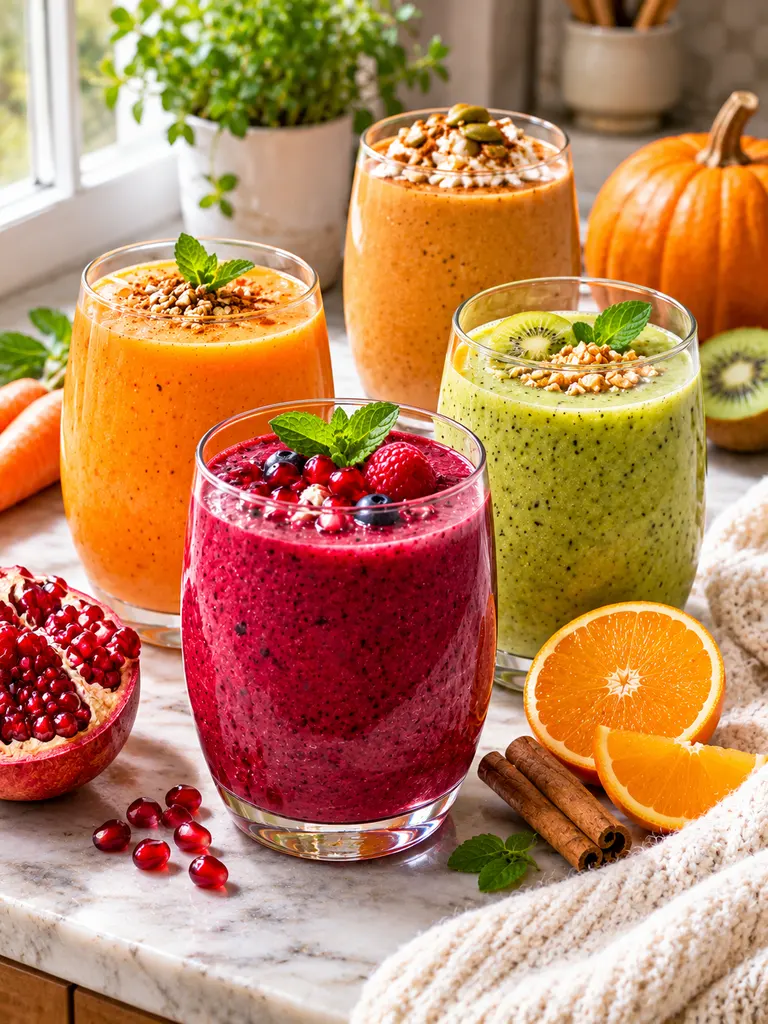
Think of these as food-first recipes: bright citrus blends, creamy pumpkin favorites, berry-rich options and a comforting warm pear smoothie. Each one is different, so you can choose the flavors and ingredients that suit you.
Why Winter Is So Hard on Skin After 50
Winter skincare is about much more than what is in your glass. These are some of the reasons skin can feel drier in colder months — and why it helps to combine nourishing meals with gentle skincare.
1. Cold, dry air pulls moisture out of your skin
Cold weather and low humidity can increase moisture loss from the skin. Indoor heating may dry the air further. For everyday comfort, a fragrance-free cream, gentle cleanser and indoor humidifier often matter more than any single food.
2. Hormonal changes slow down collagen and oil production
Around and after menopause, changing estrogen levels can influence skin thickness, collagen and oil production. These changes vary from person to person; they are not a reason to expect that a smoothie can restore lost collagen or reverse aging.
3. You probably drink less water in cold weather
It is easy to forget drinks when the weather is cold, especially if you are not feeling thirsty. Smoothies contribute to fluid intake, but water and other unsweetened drinks remain practical everyday choices. If your clinician has set a fluid limit, follow that guidance.
4. Less sunlight means less vitamin D
Less time outdoors can reduce opportunities for vitamin D production in some seasons and locations. Some U.S. milks and plant-based beverages are fortified with vitamin D, but not every yogurt or milk substitute is. Check the Nutrition Facts label rather than assuming a smoothie supplies vitamin D.
5. Comfort food crowds out fresh produce
Holiday desserts are part of the fun of winter. The goal is not to avoid treats; it is to make room for a variety of fruits, vegetables, proteins and healthy fats. Choosing whole fruit instead of fruit juice generally helps retain more fiber.
A well-balanced smoothie can make fruits, vegetables, protein and healthy fats easier to include. It is one helpful option among many — not a required daily habit or a shortcut to younger-looking skin.
Key Skin Nutrients to Pack Into Your Winter Smoothies
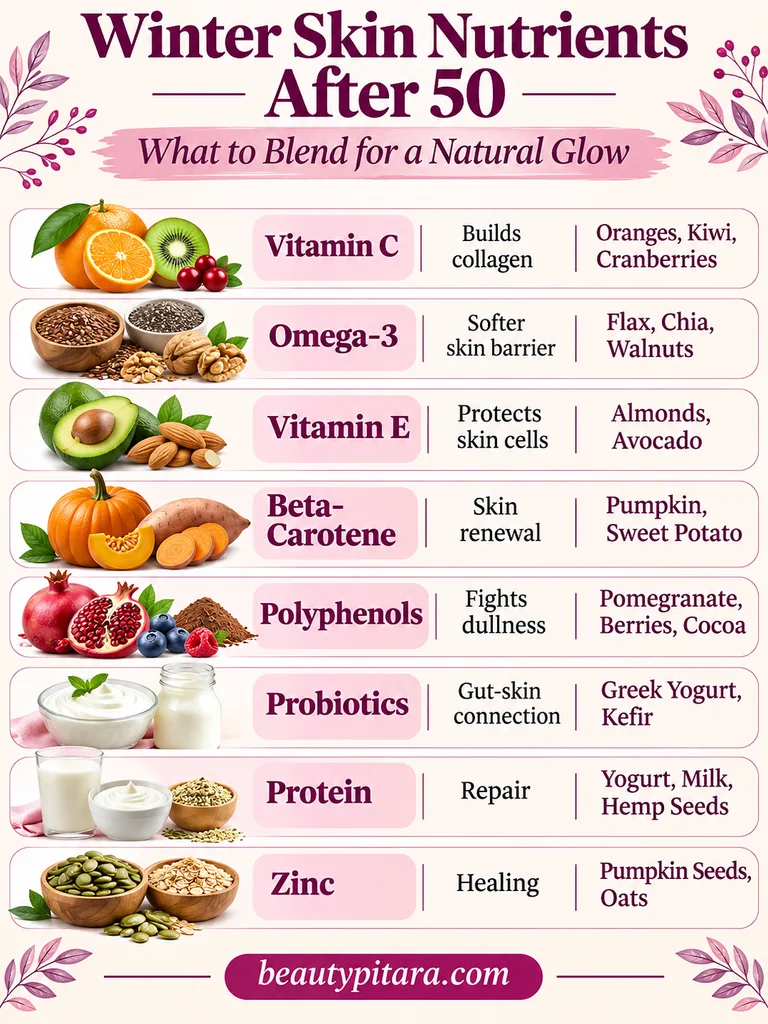
You do not need specialty powders or expensive supplements. A few familiar nutrients explain why these recipes combine colorful produce with protein-rich dairy or alternatives, nuts and seeds.
Vitamin C
Vitamin C is needed to make collagen and works as an antioxidant. Oranges and kiwi are particularly convenient food sources, and many berries also contribute. Eating vitamin C supports normal nutrition; it does not guarantee visible changes in skin firmness.
Healthy fats and omega-3s
Healthy dietary fats are part of an overall balanced eating pattern. Chia, flaxseed and walnuts provide the plant omega-3 ALA, while avocado and nut butters add mainly unsaturated fats. These are useful additions, but they cannot substitute for moisturizer when skin is dry.
Vitamin E
Vitamin E helps protect cells from oxidative damage. Almonds, almond butter, sunflower seeds and avocado are practical sources.
Beta-carotene (vitamin A)
Your body can convert beta-carotene from plant foods into vitamin A, which contributes to normal skin and immune function. Pumpkin, sweet potato, carrot, mango and persimmon make these smoothies naturally colorful.
Polyphenols and antioxidants
Berries, pomegranate, cocoa and other plant foods contain a variety of polyphenols. They can be part of a nutritious diet, although specific claims about reversing skin damage from food alone are not established.
Probiotics
The gut–skin connection is an active area of research, but benefits from probiotic foods vary. Kefir and some plain yogurts contain live cultures; check the product label. Both can also add protein or creaminess, depending on the brand.
Protein
Protein helps maintain and repair tissues. Plain Greek yogurt, dairy milk, fortified soy milk, hemp seeds and nut butters can make a smoothie more filling. A smoothie built entirely from fruit may be less satisfying on its own.
Zinc
Zinc contributes to normal tissue repair and immune function. Pumpkin seeds, oats, cashews and dairy foods can help add zinc to your diet.
| Nutrient | Nutritional role | Best Winter Smoothie Sources |
|---|---|---|
| Vitamin C | Needed for normal collagen production | Oranges, kiwi, berries, citrus fruit |
| Healthy fats / omega-3 | Provides essential fats as part of a balanced diet | Flaxseed, chia, hemp seeds, walnuts, avocado |
| Vitamin E | Contributes antioxidant protection to cells | Almonds, almond butter, sunflower seeds, spinach |
| Beta-carotene | Source of provitamin A for normal body function | Pumpkin, sweet potato, carrots, mango, persimmon |
| Polyphenols | Plant compounds found in a variety of foods | Pomegranate, berries, beets, unsweetened cocoa |
| Probiotics | Live cultures in some yogurt and kefir products | Plain Greek yogurt, kefir |
| Protein | Supports maintenance and repair of body tissues | Greek yogurt, milk, nut butters, hemp seeds |
| Zinc | Contributes to normal tissue repair | Pumpkin seeds, cashews, oats |
Before You Blend: Winter Smoothie Tips for Mature Skin
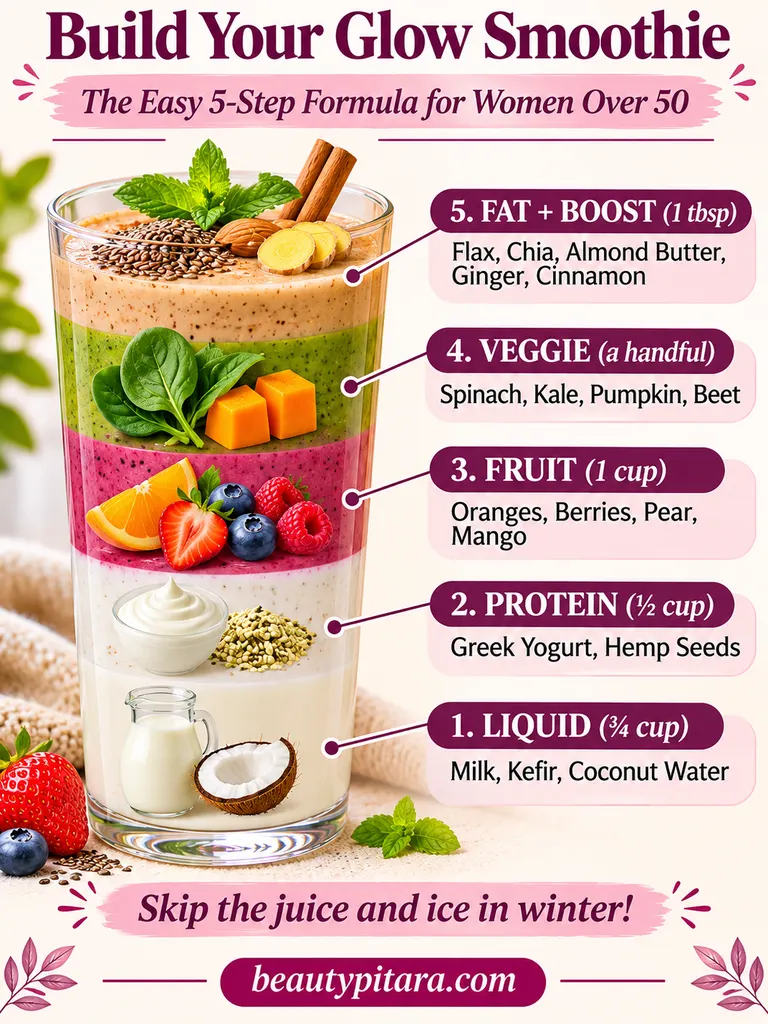
A few small tweaks make winter smoothies more comforting, more nourishing and easier on your body.
- Skip the ice if you prefer. Let frozen fruit stand a few minutes before blending. Cool or room-temperature ingredients are perfectly fine; avoid hot liquids in a sealed blender.
- Try warming spices. Ginger, cinnamon, turmeric, cardamom and nutmeg add a cozy flavor without needing much extra sweetness.
- Include some fat when it fits the recipe. A spoonful of seeds, nut butter or avocado adds flavor and helps the body absorb fat-soluble carotenoids.
- Include protein for staying power. Plain Greek yogurt, kefir, dairy or fortified soy milk can balance a fruit-heavy blend.
- Start without added sugar. Taste fruit-forward recipes first, then decide whether the optional honey or maple syrup is necessary.
- Keep frozen fruit on hand. Frozen berries and mango are convenient, often affordable and generally nutritious alternatives when fresh produce is out of season.
- Choose ground flaxseed. Ground flaxseed is easier to digest than whole seeds. Store it sealed according to the package instructions.
- Choose a blender suited to the ingredients. For hard raw carrots or kale, blend with liquid first; use cooked carrots if your blender is less powerful.
Helpful Tools and Pantry Staples
A reliable blender, a few reusable containers and a small selection of pantry staples are enough. Choose brands you already like; no particular product is required for these recipes.
- A blender capable of processing soft fruit, leafy greens and seeds; check the manual for frozen ingredients.
- Ground flaxseed for plant omega-3 ALA and a slightly nutty taste.
- Chia seeds for fiber and texture.
- Hemp hearts for extra protein and a mild flavor.
- Unsweetened almond butter for creaminess and unsaturated fats.
- Ground turmeric, ginger and cinnamon for warm winter flavors.
- Clean glass jars or cups with secure lids if taking a smoothie on the go.
- Freezer-safe, reusable bags or containers for portioning produce.
The 12 Glow-Boosting Winter Smoothie Recipes
Each recipe makes approximately one serving. Thickness and finished volume vary by the size of the fruit and the amount of liquid. Use plain, unsweetened ingredients when possible, and taste before adding any optional sweetener. Prepare only as much as you will comfortably enjoy.
1. Orange Carrot Ginger Glow Smoothie
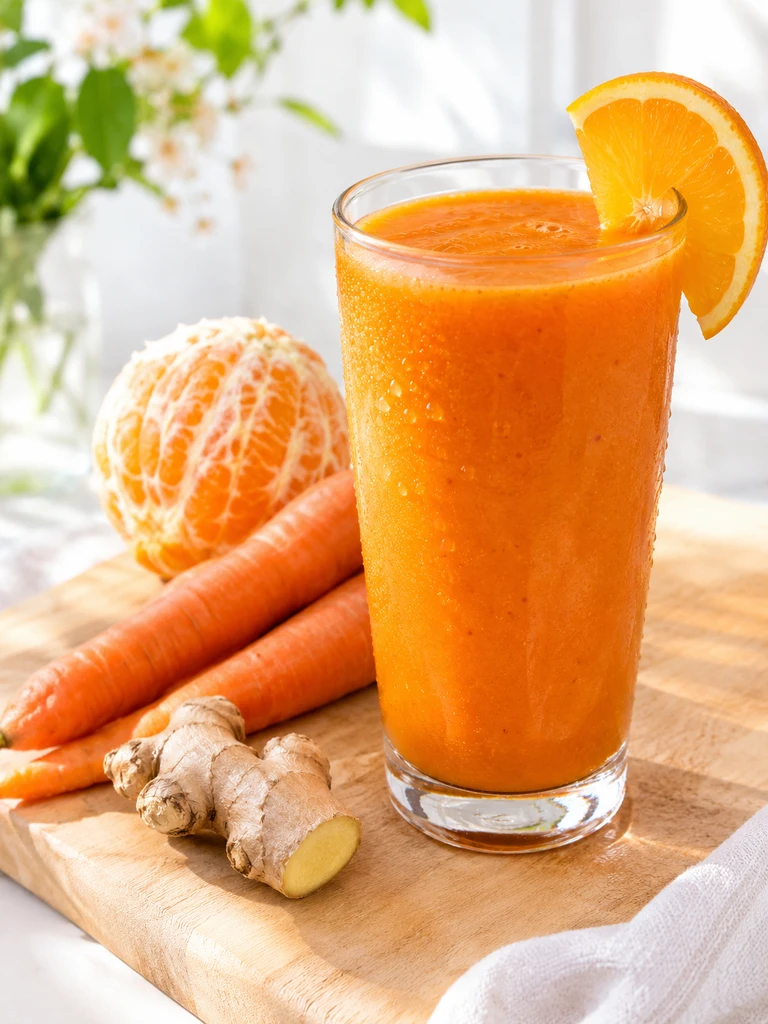
This bright, sunny smoothie tastes like a little winter sunshine. Orange brings vitamin C, carrot adds beta-carotene, and fresh ginger gives it a pleasant kick. It is a colorful option for anyone who enjoys citrus-forward breakfasts.
Prep time: 5 minutes | Servings: 1 | Difficulty: Easy
Ingredients
- 1 large orange, peeled and seeds removed
- 1 medium carrot, chopped (or ½ cup baby carrots)
- ½ frozen banana
- ½ cup plain Greek yogurt
- ½ cup water or milk
- 1 teaspoon freshly grated ginger
- ¼ teaspoon ground turmeric
- 1 tablespoon hemp seeds
Instructions
- Add the water or milk to the blender first, then the carrot. Blend for 20–30 seconds until the carrot is finely chopped.
- Add the orange, banana, Greek yogurt, ginger, turmeric and hemp seeds.
- Blend on high for about 60 seconds until completely smooth. Add a splash more liquid if it’s too thick.
- Pour into a glass and enjoy right away.
Nutrition Highlights
- Orange contributes vitamin C, which the body needs for normal collagen production.
- Carrot supplies beta-carotene, a form of provitamin A.
- Ginger and turmeric provide lively flavor in small amounts.
- Yogurt adds protein, while hemp seeds contribute protein and unsaturated fats.
Tip: If your blender isn’t very powerful, use ½ cup of cooked or steamed carrots instead of raw. They blend silky smooth.
2. Pomegranate Berry Antioxidant Smoothie
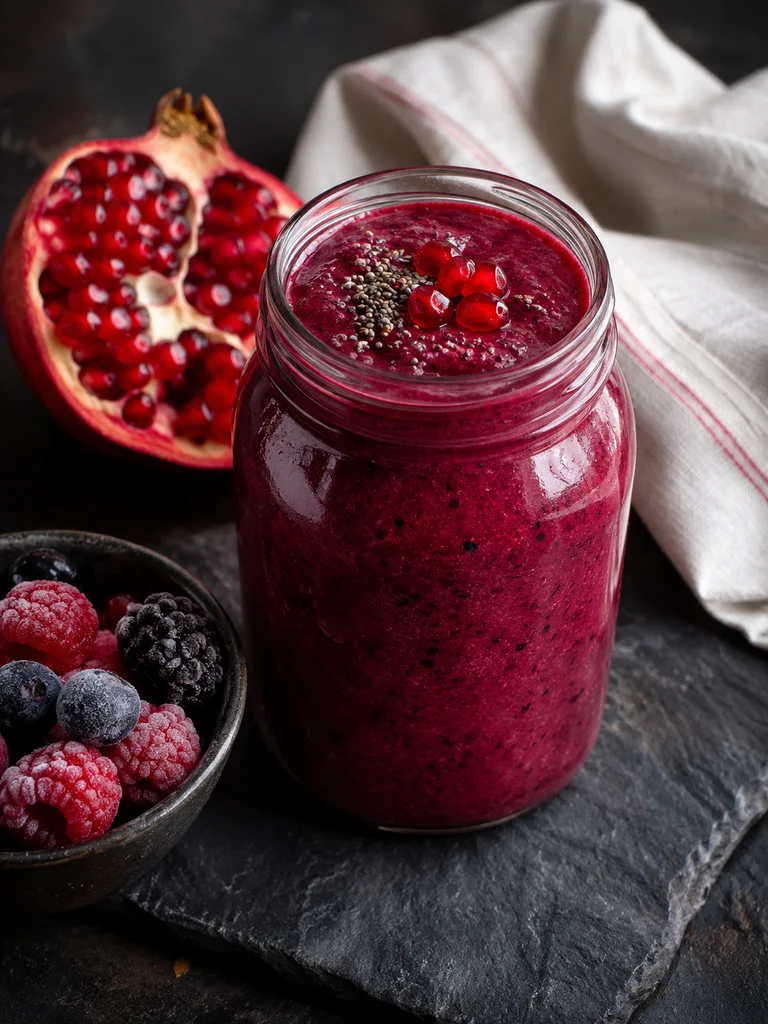
Pomegranates are a seasonal favorite in many U.S. markets during fall and winter. Their ruby arils pair with frozen berries and tangy kefir in a bold, fruity blend with plenty of texture and bright flavor.
Prep time: 5 minutes | Servings: 1 | Difficulty: Easy
Ingredients
- ½ cup pomegranate seeds (arils)
- 1 cup frozen mixed berries
- ½ frozen banana
- ¾ cup plain kefir
- 1 tablespoon chia seeds
- Splash of water, if needed
Instructions
- Pour the kefir into the blender and add the pomegranate seeds. Blend for 30 seconds to break up the seeds.
- Add the berries, banana and chia seeds.
- Blend until smooth and thick, about 60 seconds.
- For an extra-smooth texture, you can strain the pomegranate juice first, but blending the whole seeds keeps all the fiber.
Nutrition Highlights
- Pomegranate and berries provide a range of plant compounds, including polyphenols.
- Kefir may provide live cultures; check its label.
- Chia seeds add fiber and plant omega-3 ALA.
- Berries contribute vitamin C and fiber.
Tip: To seed a pomegranate without the mess, cut it in half and hit the back with a wooden spoon over a bowl of water. The seeds sink, and the white pith floats.
3. Pumpkin Pie Skin-Soothing Smoothie
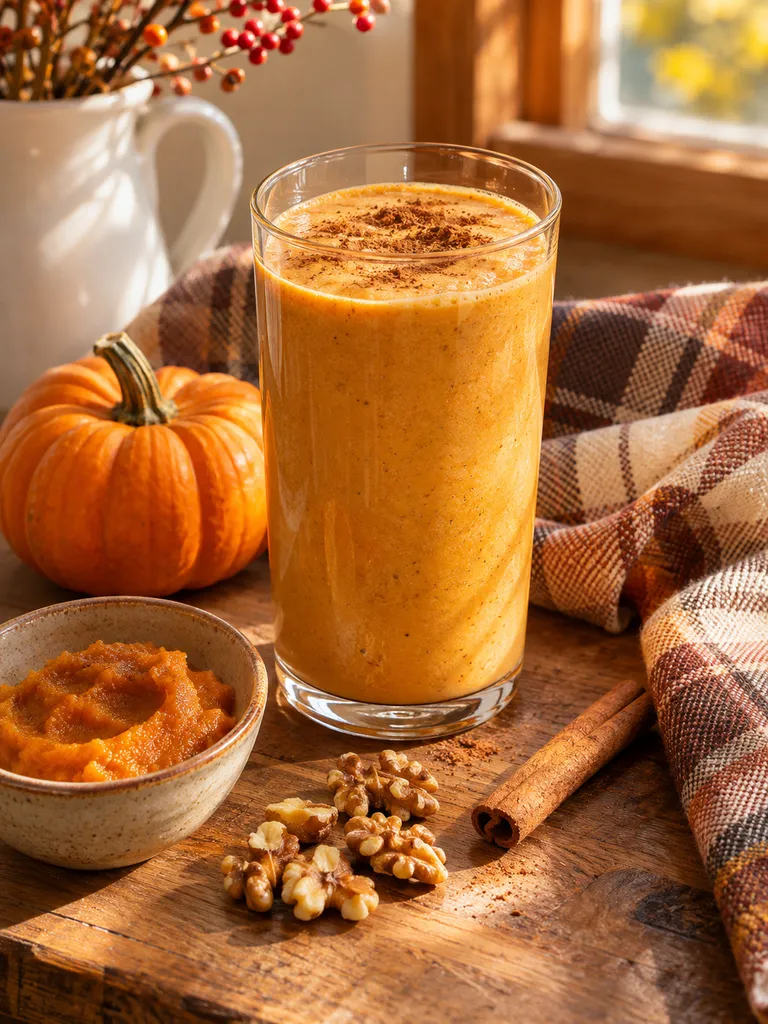
This creamy blend borrows the flavor of pumpkin pie without needing pastry. Pure pumpkin purée adds beta-carotene, while walnuts contribute plant omega-3 ALA. Use canned plain pumpkin, not sweetened pie filling.
Prep time: 5 minutes | Servings: 1 | Difficulty: Easy
Ingredients
- ½ cup pure pumpkin purée (not pumpkin pie filling)
- 1 frozen banana
- ¾ cup milk
- ¼ cup plain Greek yogurt
- 1 tablespoon walnuts
- ½ teaspoon pumpkin pie spice (or cinnamon with a pinch of nutmeg and ginger)
- 1 teaspoon maple syrup (optional)
- ¼ teaspoon vanilla extract
Instructions
- Add the milk, yogurt and pumpkin purée to the blender.
- Add the banana, walnuts, spice, vanilla and maple syrup if using.
- Blend for 60–90 seconds until creamy.
- Sprinkle a little extra cinnamon on top and serve.
Nutrition Highlights
- Pumpkin is a source of beta-carotene, which can be converted to vitamin A.
- Walnuts supply unsaturated fat, including omega-3 ALA.
- Milk and yogurt contribute protein; check the label for vitamin D fortification.
- Cinnamon adds a sweet-spiced flavor without added sugar.
Tip: Freeze leftover pumpkin purée in an ice cube tray. Two or three cubes equal about ¼ cup and make your next smoothie extra thick.
4. Creamy Avocado Spinach Hydration Smoothie
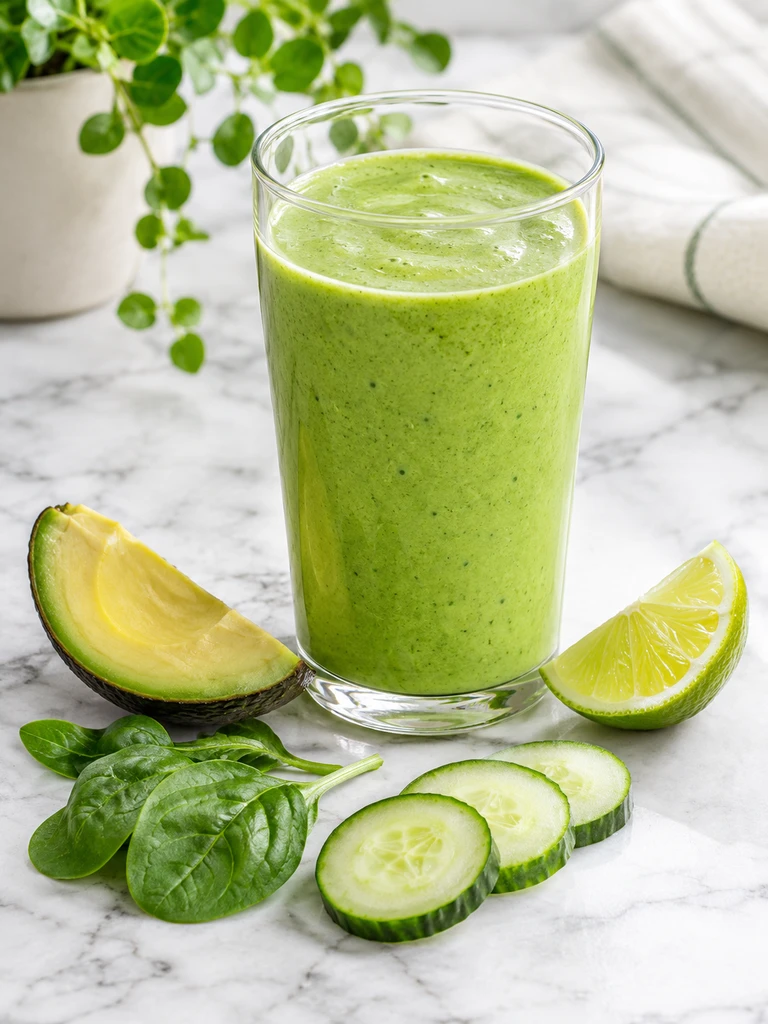
For a less-sweet smoothie, avocado, spinach and cucumber make a fresh, creamy combination. The avocado and almond butter contribute unsaturated fats; lime keeps the flavor lively.
Prep time: 5 minutes | Servings: 1 | Difficulty: Easy
Ingredients
- ½ ripe avocado
- 1 cup fresh baby spinach
- ½ green apple, cored and chopped
- ½ cup chopped cucumber
- Juice of ½ lime
- 1 tablespoon almond butter
- ¾ cup unsweetened almond milk or regular milk
- 1 teaspoon honey (optional)
Instructions
- Add the milk and spinach to the blender and blend until the spinach is completely broken down.
- Add the avocado, apple, cucumber, lime juice, almond butter and honey.
- Blend until silky smooth, about 60 seconds.
- Taste and add more lime or honey if you like.
Nutrition Highlights
- Avocado and almond butter add unsaturated fats and vitamin E.
- Cucumber and apple contribute water and fresh flavor.
- Spinach contributes folate and other micronutrients.
- Lime contributes tartness and some vitamin C.
Tip: Freeze ripe avocado halves (peeled and pitted) in a freezer bag so you always have one ready.
5. Golden Turmeric Mango Smoothie
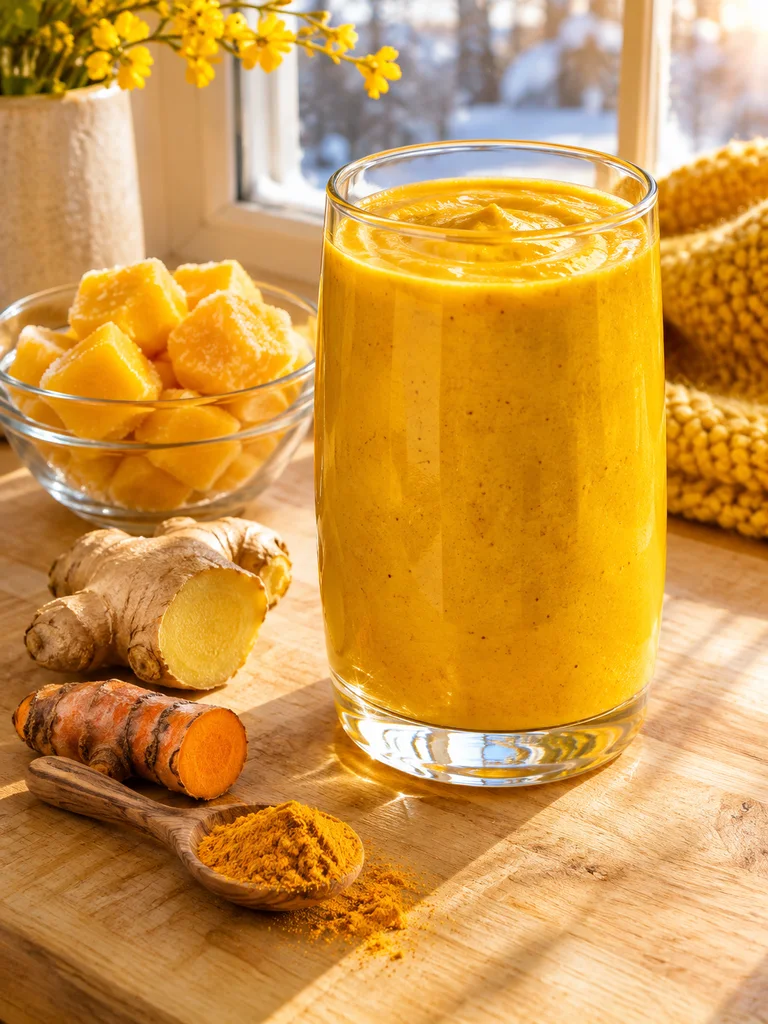
Inspired by golden milk, this sunny smoothie blends mango with turmeric and ginger. A tiny pinch of black pepper adds a little warmth, but the recipe is meant as food, not a treatment for inflammation or redness.
Prep time: 5 minutes | Servings: 1 | Difficulty: Easy
Ingredients
- 1 cup frozen mango chunks
- ¾ cup unsweetened coconut milk beverage (from the carton)
- ¼ cup plain Greek yogurt
- ½ teaspoon ground turmeric
- ½-inch piece fresh ginger, peeled (or ¼ teaspoon ground ginger)
- Pinch of black pepper
- 1 tablespoon ground flaxseed
- 1 teaspoon honey (optional)
Instructions
- Let the mango sit out for 5 minutes to soften slightly.
- Add the coconut milk, yogurt, ginger, turmeric and black pepper to the blender.
- Add the mango, flaxseed and honey.
- Blend until smooth and golden. Serve with a sprinkle of cinnamon.
Nutrition Highlights
- Turmeric and ginger add flavor; a smoothie has not been shown to treat facial redness.
- Mango contributes vitamin C and carotenoids.
- Ground flaxseed contributes plant omega-3 ALA and fiber.
- Plain Greek yogurt adds protein and may contain live cultures.
Tip: Turmeric stains! Rinse your blender right after using it, and use a glass or stainless steel cup.
6. Cranberry Orange Winter Refresh
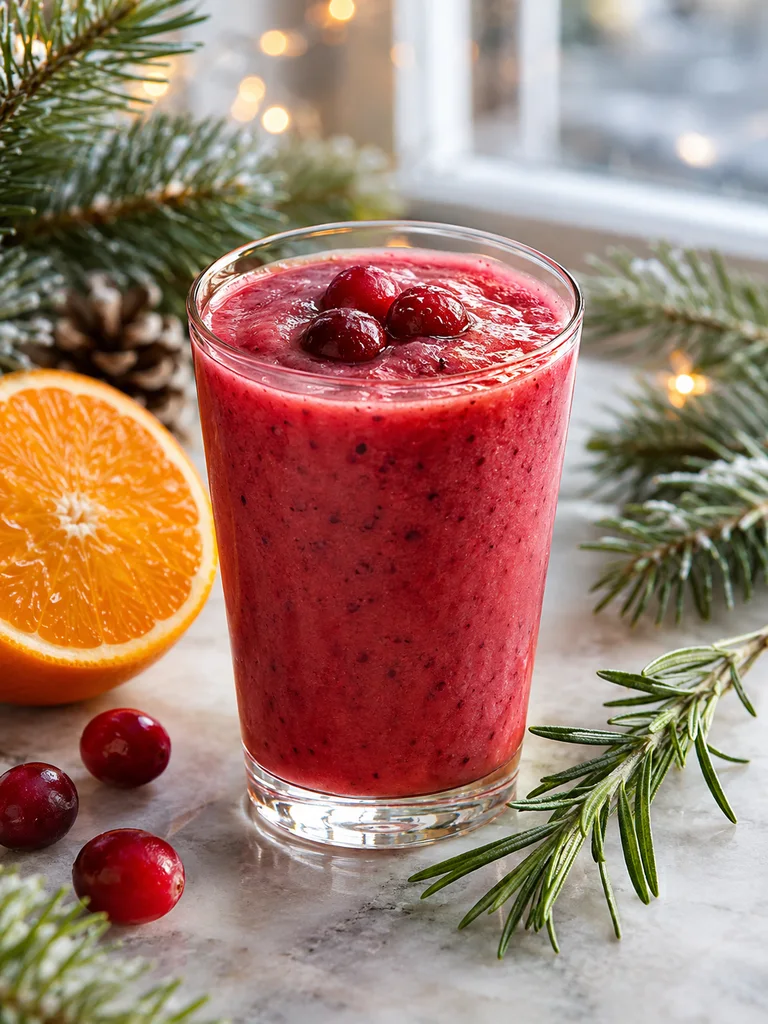
Fresh cranberries are widely available in U.S. stores during fall and winter. Their sharp flavor plays well with ripe orange and banana. Taste before adding the optional honey, since tartness can vary.
Prep time: 5 minutes | Servings: 1 | Difficulty: Easy
Ingredients
- ½ cup fresh or frozen cranberries
- 1 medium orange, peeled and seeds removed
- 1 frozen banana
- ½ cup plain Greek yogurt
- ¼ cup water or milk
- 1–2 teaspoons honey (to taste)
- Pinch of cinnamon
Instructions
- Add the water or milk, orange and cranberries to the blender. Blend for 30 seconds.
- Add the banana, yogurt, honey and cinnamon.
- Blend until completely smooth.
- Taste. Cranberries are tart, so add a little more honey if needed.
Nutrition Highlights
- Orange is a useful source of vitamin C; cranberries provide additional plant compounds.
- Cranberries contain plant polyphenols, including proanthocyanidins.
- Plain Greek yogurt adds protein and may contain live cultures.
- Banana adds natural sweetness, texture and carbohydrates.
Tip: Buy two or three extra bags of fresh cranberries in November and freeze them. They’ll keep for up to a year.
7. Kiwi Green Glow Smoothie
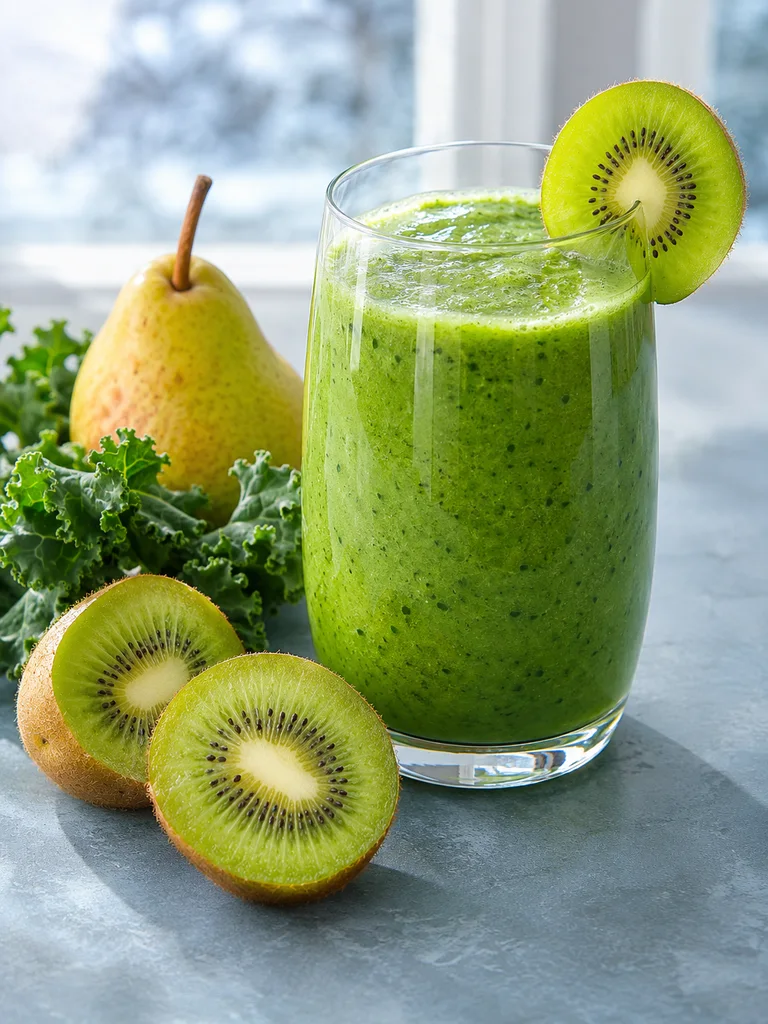
Kiwi brings a refreshing sweet-tart flavor and is a useful source of vitamin C. Blend it with kale, pear and coconut water for a bright green smoothie; Greek yogurt is optional if you want extra protein.
Prep time: 5 minutes | Servings: 1 | Difficulty: Easy
Ingredients
- 2 ripe kiwis, peeled
- 1 cup kale leaves, stems removed (or baby spinach)
- ½ ripe pear, cored
- ¾ cup coconut water
- 1 tablespoon ground flaxseed
- Squeeze of lemon juice
- ¼ cup plain Greek yogurt (optional, for extra creaminess and protein)
Instructions
- Blend the coconut water and kale first until no leafy pieces remain.
- Add the kiwi, pear, flaxseed, lemon juice and yogurt if using.
- Blend until smooth, about 45–60 seconds.
- Serve immediately for the brightest color.
Nutrition Highlights
- Kiwi is a good source of vitamin C.
- Kale provides vitamin K and carotenoids.
- Coconut water adds fluid and potassium.
- Ground flaxseed adds fiber and plant omega-3 ALA.
Tip: If you take a blood thinner such as warfarin, talk to your doctor about leafy greens. Kale is high in vitamin K, and your doctor may want you to keep your intake consistent.
8. Warm Spiced Pear and Oat Smoothie
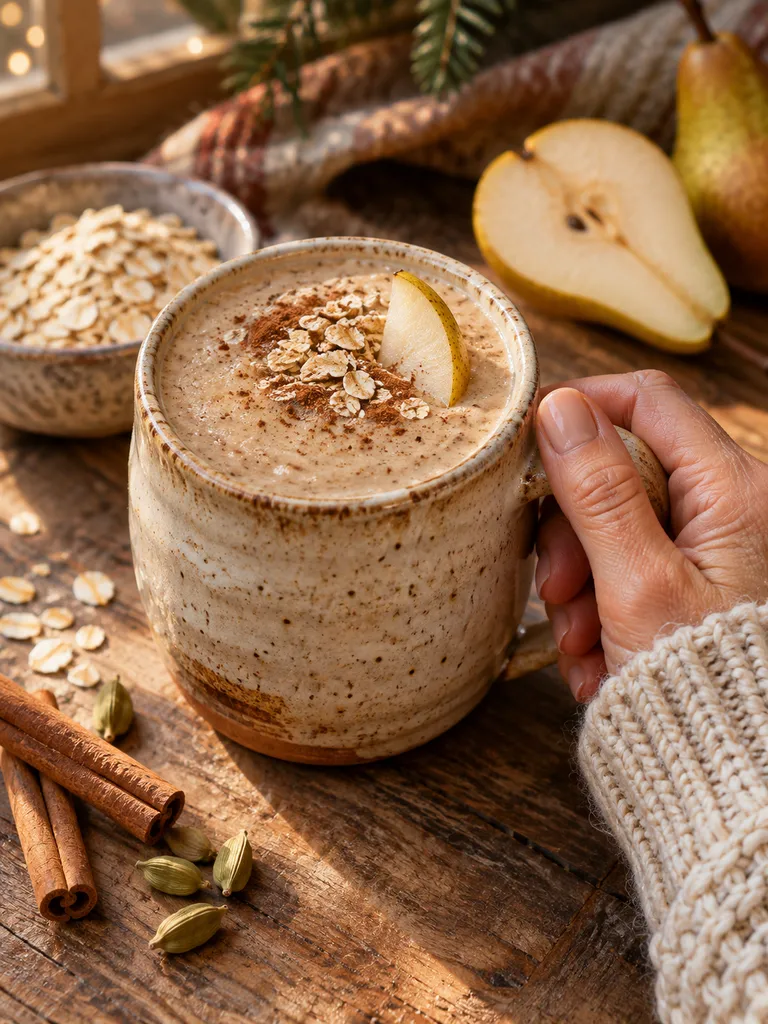
Who says a winter smoothie has to be icy? Pear, oats and warm spices taste like a cozy breakfast. Blend the ingredients at room temperature and warm the drink separately; never pour hot liquid into a sealed personal blender.
Prep time: 7 minutes | Servings: 1 | Difficulty: Easy
Ingredients
- 1 ripe pear, cored and chopped
- ¼ cup old-fashioned rolled oats
- 1 cup milk or unsweetened almond milk
- 1 Medjool date, pitted
- 1 tablespoon almond butter
- ½ teaspoon cinnamon
- Pinch of ground cardamom
- Pinch of nutmeg
Instructions
- Set aside ½ cup of the milk at room temperature. Warm the remaining ½ cup gently in a saucepan until comfortably warm, not steaming.
- Pulse the oats briefly in a dry blender until finely broken down.
- Add the room-temperature milk, pear, date, almond butter and spices. Blend until smooth.
- Pour the blended mixture into a mug, stir in the warmed milk and adjust with a little more milk if needed.
- Serve immediately, checking the temperature before drinking.
Nutrition Highlights
- Oats contribute fiber and some minerals.
- Pear contributes fiber and mild natural sweetness.
- Almond butter contributes vitamin E and unsaturated fat.
- Cinnamon and cardamom give the drink a cozy spiced flavor.
Safety tip: Never blend steaming or hot liquids in a sealed personal blender. Blend with room-temperature ingredients and warm the finished drink separately.
9. Beetroot Berry Radiance Smoothie
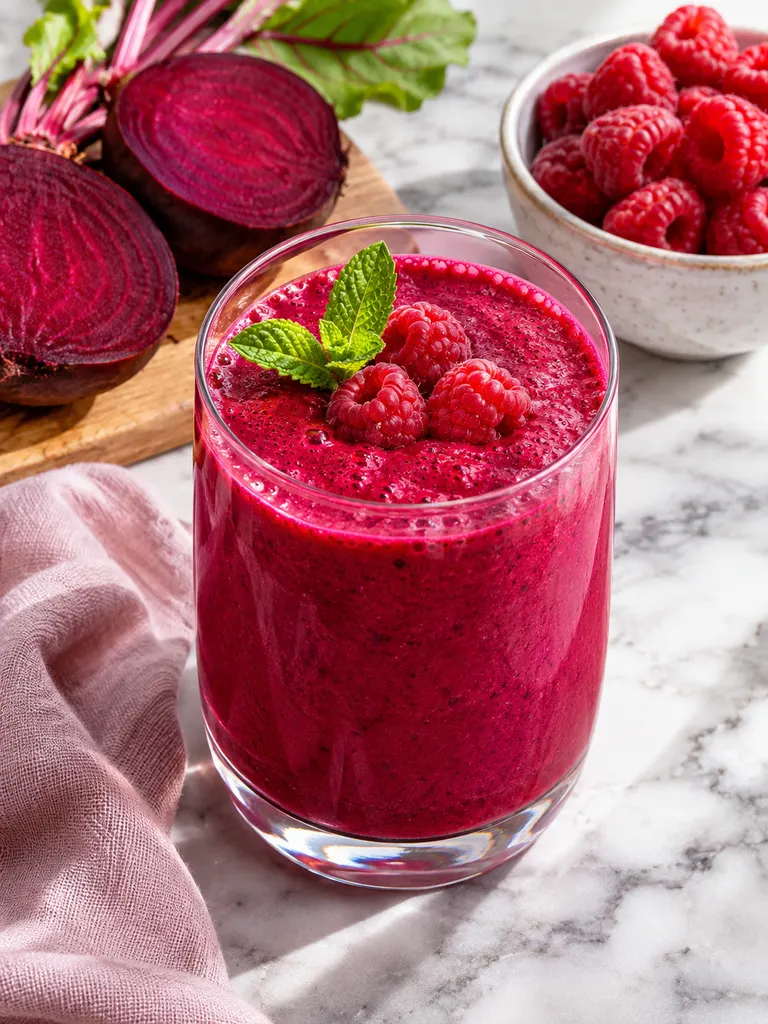
A cooked beet gives this raspberry smoothie its vivid magenta color. Banana softens the earthy taste, while yogurt provides creaminess and protein. Pre-cooked, unseasoned beets work especially well here.
Prep time: 5 minutes | Servings: 1 | Difficulty: Easy
Ingredients
- 1 small cooked beet, chopped (pre-cooked vacuum-packed beets work perfectly)
- 1 cup frozen raspberries
- ½ frozen banana
- ½ cup plain Greek yogurt
- ½ cup milk
- ½ teaspoon vanilla extract
Instructions
- Add the milk, yogurt and beet to the blender. Blend until the beet is smooth.
- Add the raspberries, banana and vanilla.
- Blend until thick and creamy.
- Serve right away.
Nutrition Highlights
- Cooked beet brings natural pigments called betalains.
- Raspberries add fiber and vitamin C.
- Milk and Greek yogurt provide protein.
- Betalains are the pigments responsible for the vivid color.
Tip: Beets are high in oxalates. If you’ve been told to limit oxalates, swap the beet for ½ cup of extra frozen cherries.
10. Chocolate Almond Glow Smoothie
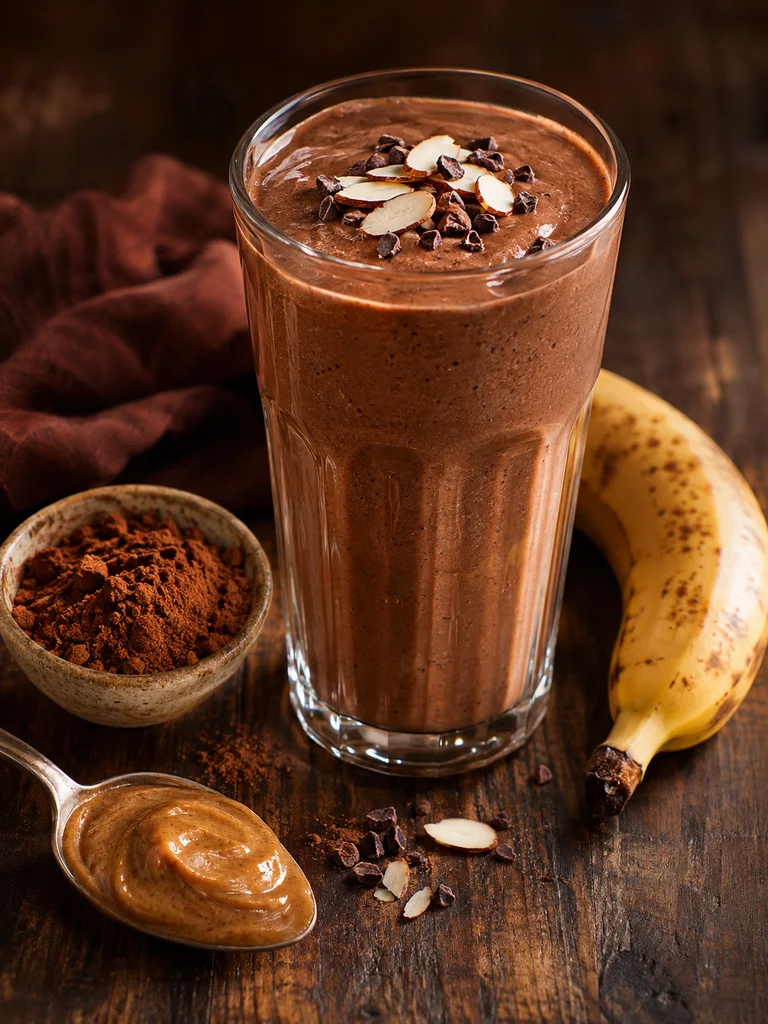
If you enjoy chocolate, this smoothie tastes like a lighter cocoa milkshake. Unsweetened cocoa contains flavanols, while chia, almond butter and milk add fiber, fats and protein. It is a tasty snack, not a substitute for skin treatment.
Prep time: 5 minutes | Servings: 1 | Difficulty: Easy
Ingredients
- 1 frozen banana
- 1 tablespoon unsweetened cocoa powder
- 1 tablespoon almond butter
- 1 tablespoon chia seeds
- 1 cup milk
- Pinch of cinnamon
- 1 pitted date (optional, for extra sweetness)
Instructions
- Add the milk to the blender, followed by the cocoa, almond butter and chia seeds.
- Add the banana, cinnamon and date if using.
- Blend for 60 seconds until thick and frothy.
- Top with a few cacao nibs or sliced almonds if you like.
Nutrition Highlights
- Unsweetened cocoa contains naturally occurring flavanols.
- Almond butter contributes vitamin E and unsaturated fat.
- Chia seeds add fiber and plant omega-3 ALA.
- Milk contributes protein and calcium.
Tip: Choose natural, unsweetened cocoa powder rather than hot cocoa mix, which is mostly sugar.
11. Sweet Potato Pie Smoothie
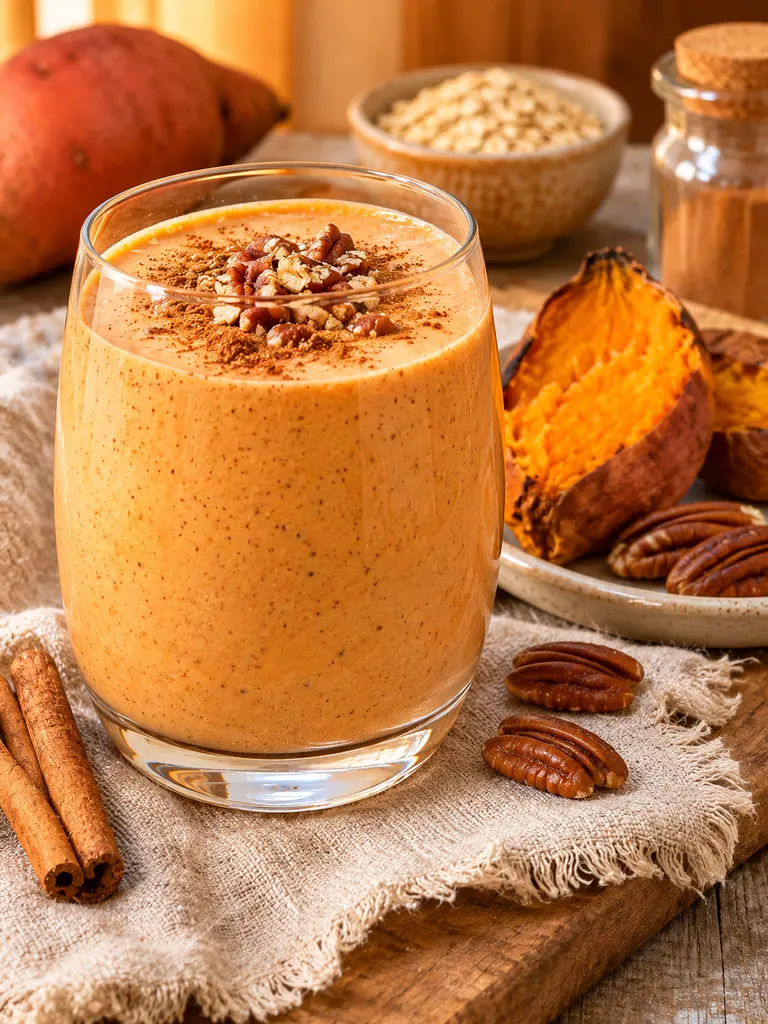
Leftover cooked sweet potato blends into a thick, creamy drink and is a convenient source of beta-carotene. Pair it with pecans and cinnamon for dessert-like flavor without relying on lots of added sugar.
Prep time: 5 minutes | Servings: 1 | Difficulty: Easy
Ingredients
- ½ cup roasted sweet potato, peeled and cooled
- ½ frozen banana
- ¾ cup milk
- ¼ cup plain Greek yogurt
- 1 tablespoon pecans
- ½ teaspoon cinnamon
- Pinch of nutmeg
- 1 teaspoon maple syrup (optional)
Instructions
- If you do not have leftover sweet potato, cook one until completely tender, then let it cool. Microwave time depends on its size, or roast at 400°F until soft.
- Add the milk, yogurt and sweet potato to the blender.
- Add the banana, pecans, spices and maple syrup.
- Blend until creamy. Garnish with a crushed pecan.
Nutrition Highlights
- Sweet potato provides beta-carotene, which the body can convert into vitamin A.
- Pecans contribute unsaturated fats and some minerals.
- Milk and yogurt supply protein.
- Cinnamon adds a sweet-spice flavor without sugar.
Tip: Roast three or four sweet potatoes on Sunday and keep them in the fridge for smoothies, sides and snacks all week.
12. Persimmon Ginger Cream Smoothie
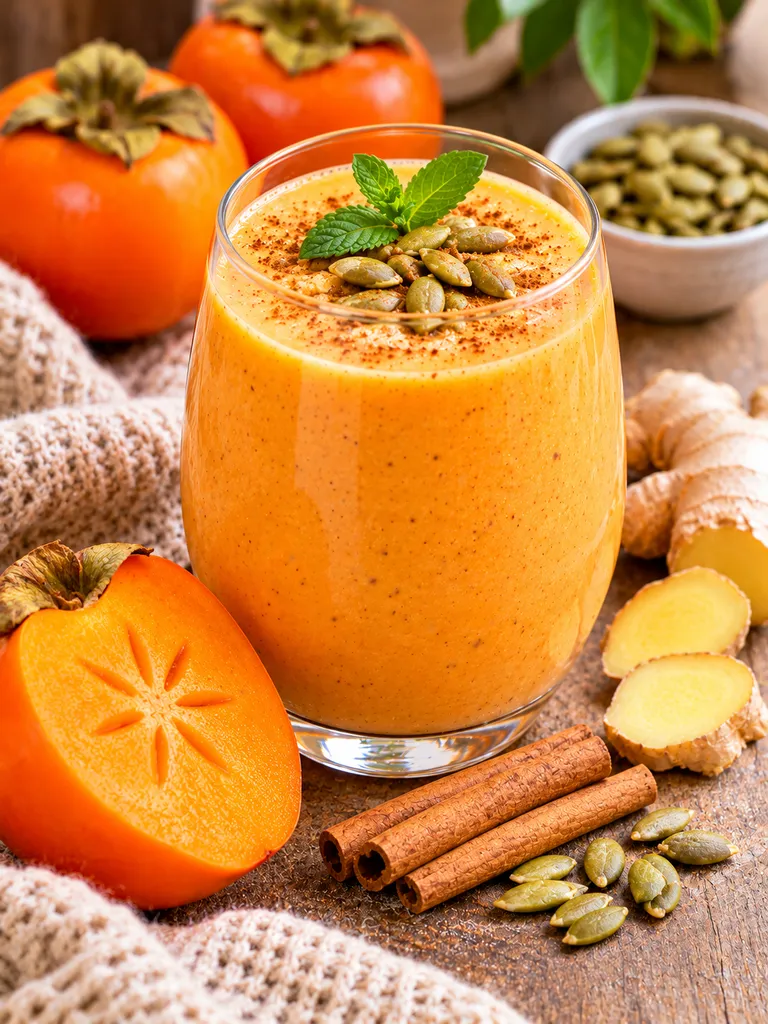
Persimmons are a wonderful late-fall and winter fruit. The squat Fuyu variety can be eaten when firm and ripe, and its gentle sweetness combines with ginger, vanilla and yogurt for a creamy smoothie.
Prep time: 5 minutes | Servings: 1 | Difficulty: Easy
Ingredients
- 1 ripe Fuyu persimmon, stem removed and chopped
- ½ cup plain Greek yogurt
- ½ cup milk
- ½-inch piece fresh ginger, peeled
- ½ teaspoon vanilla extract
- 1 tablespoon pumpkin seeds (pepitas)
- A few ice cubes or ¼ frozen banana for thickness
Instructions
- Add the milk, yogurt, ginger and pumpkin seeds to the blender and blend for 30 seconds.
- Add the persimmon, vanilla and ice or banana.
- Blend until smooth and creamy.
- Serve with a pinch of cinnamon on top.
Nutrition Highlights
- Persimmons contribute carotenoids and other plant compounds.
- Pumpkin seeds provide minerals such as zinc.
- Fresh ginger adds a warming, aromatic flavor.
- Greek yogurt provides protein; some varieties contain live cultures.
If you only find Hachiya persimmons (the acorn-shaped ones), wait until they are completely soft and jelly-like. Before they ripen fully, they can taste intensely astringent.
A Simple 7-Day Winter Glow Smoothie Plan
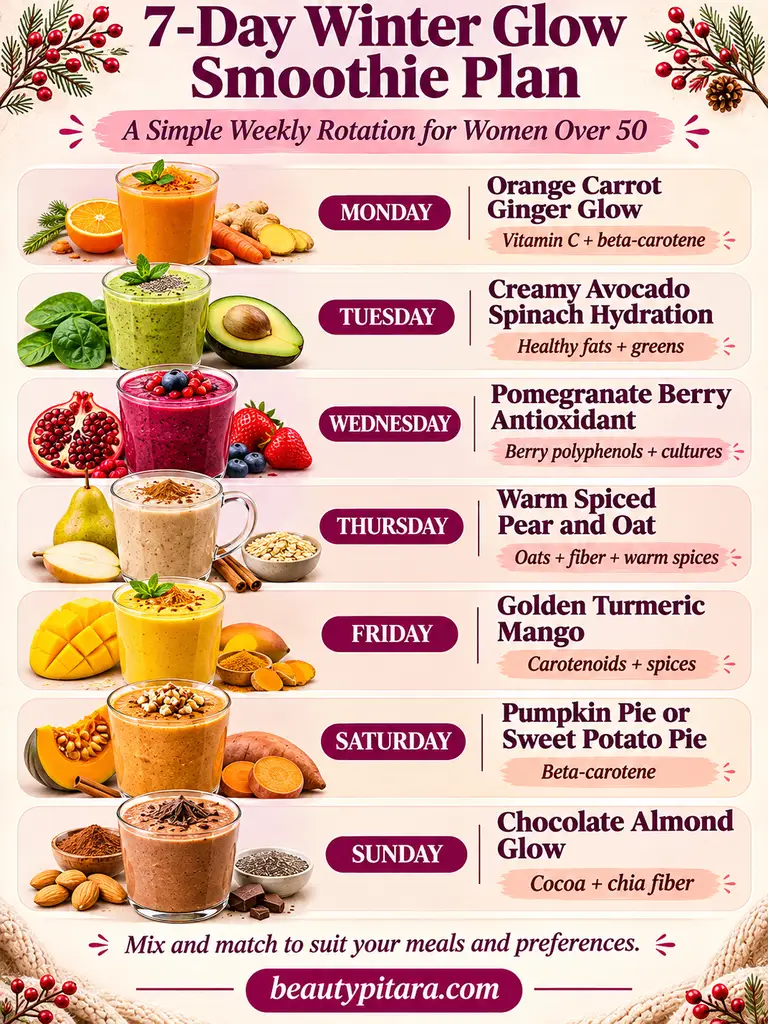
Use this seven-day rotation as inspiration, not a strict plan. Choose a portion that fits your appetite and usual meals, and vary the recipes across the week.
| Day | Smoothie | Nutrition focus |
|---|---|---|
| Monday | Orange Carrot Ginger Glow | Vitamin C and beta-carotene |
| Tuesday | Creamy Avocado Spinach Hydration | Unsaturated fats and greens |
| Wednesday | Pomegranate Berry Antioxidant | Berry polyphenols and possible live cultures |
| Thursday | Warm Spiced Pear and Oat | Oats, fiber and warm spices |
| Friday | Golden Turmeric Mango | Mango, carotenoids and spices |
| Saturday | Pumpkin Pie or Sweet Potato Pie | Beta-carotene from orange vegetables |
| Sunday | Chocolate Almond Glow | Unsweetened cocoa and chia fiber |
Make-ahead freezer smoothie packs
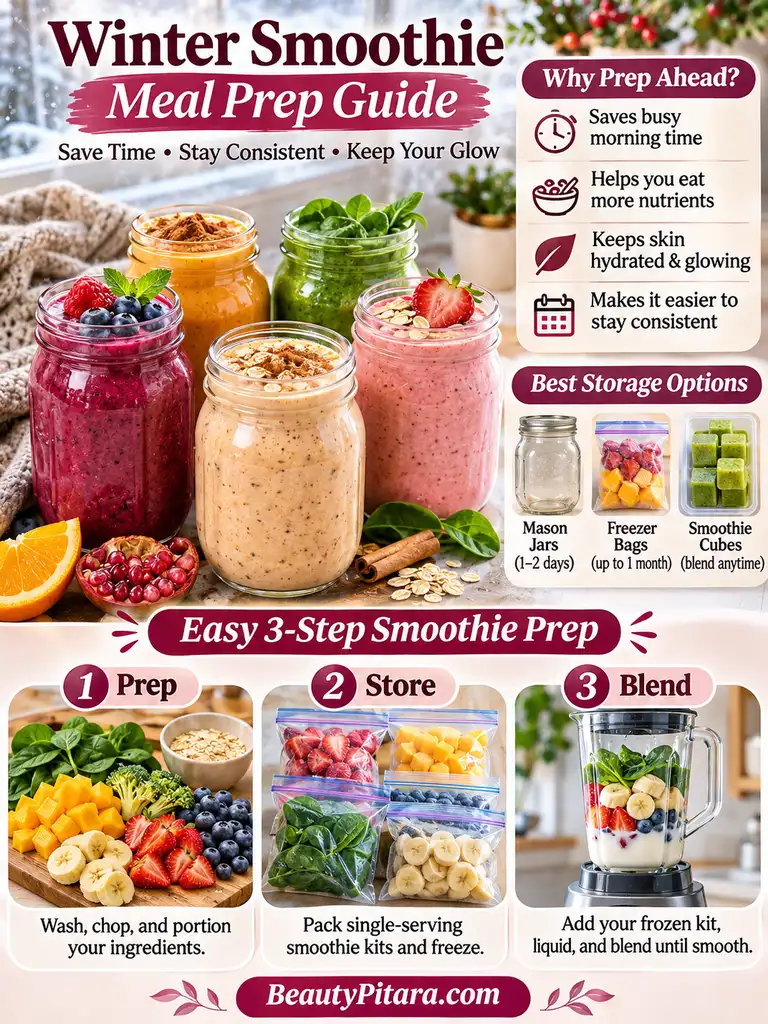
For easier mornings, portion whole or chopped fruit, vegetables and spices into food-safe freezer bags or containers. Freeze the packs flat, then add the liquid and any refrigerated yogurt or kefir just before blending. Label each pack with the ingredients and date; for the best quality, use within about three months. Do not put yogurt or other perishables into the freezer pack unless the recipe and container are suitable for freezing.
Common Smoothie Mistakes That Can Work Against Your Skin
Even a healthy smoothie can turn into a sugar bomb or leave you hungry if you’re not careful. Avoid these common mistakes.
- Using juice as the main liquid. Whole fruits retain fiber, while fruit juice can add carbohydrates quickly. Milk, plain kefir, water or an unsweetened alternative may be a better base.
- Using fruit alone. A mix of fruit, vegetables, protein and fat often makes a more satisfying drink. Fruit portion needs depend on your overall meals and medical needs.
- Forgetting protein. Plain yogurt, milk or a suitable higher-protein alternative can make a smoothie more filling.
- Choosing heavily sweetened yogurt. Check labels for added sugar and try plain yogurt when you want to control sweetness.
- Using smoothies as your only meals. A variety of solid foods helps provide different nutrients and textures, and smoothies may not supply everything in a full meal.
- Overlooking dietary restrictions. People taking warfarin should keep vitamin K intake consistent; kidney and diabetes-related diets may need individualized ingredient portions.
- Ignoring fullness cues. Enjoy the smoothie at a comfortable pace and notice whether the portion satisfies you.
Other Winter Habits That Boost Your Glow
A balanced diet is one piece of winter wellness, but direct skin care is especially important when the air is dry. These practical habits may make more difference to flaky or uncomfortable skin than any one smoothie.
- Sip warm water and herbal teas all day. If cold water doesn’t appeal to you in winter, keep a thermos of warm water with lemon or a caffeine-free herbal tea nearby.
- Run a humidifier. Adding moisture to indoor air, especially in your bedroom at night, can make a big difference for dry skin.
- Moisturize damp skin. Apply your moisturizer within a few minutes of washing your face or showering to lock in water.
- Keep showers warm, not hot. Hot water strips away your skin’s natural oils.
- Wear sunscreen every day. UV rays still reach your skin in winter, and snow reflects them too.
- Protect your sleep. Aim for a regular sleep schedule and enough rest for your individual needs, often around seven to nine hours for adults.
- Move your body. A brisk walk or gentle yoga boosts circulation and brings a natural flush to your cheeks.
Frequently Asked Questions
Can smoothies really improve skin after 50?
Smoothies help you eat more fruits, vegetables and nourishing ingredients. Vitamin C, essential fats and protein contribute to normal body function, but a smoothie has not been proven to reverse age-related skin changes. Pair good nutrition with moisturizer and sun protection.
How often should I drink a skin smoothie?
There is no required number. Enjoy smoothies when they are convenient, as part of your overall eating pattern. Choose portion sizes based on appetite and nutrition needs.
Is it okay to drink cold smoothies in winter?
Yes, if you enjoy them. For a cozier version, use room-temperature ingredients or try the pear-and-oat recipe, blending before warming it.
Are frozen fruits as healthy as fresh?
Frozen fruit is a nutritious and convenient choice, though vitamin content varies with the produce and storage. Choose unsweetened varieties when possible.
Which smoothie is best for very dry skin?
The avocado-spinach and chocolate-almond recipes contain unsaturated fats, but no smoothie can directly treat dry skin. Moisturizer, a gentle cleanser and a humidifier are more direct options.
Can I make these smoothies ahead of time?
Smoothies are best fresh. If you make one ahead, refrigerate it promptly in a covered container and use within about 24 hours; do not leave dairy smoothies at room temperature for extended periods.
Are these smoothies okay if I have diabetes?
People with diabetes can include smoothies, but the carbohydrate content of fruit, milk, dates and optional sweeteners matters. Use individualized portions and pair carbohydrates with protein and fiber. A registered dietitian can help you adjust any of these recipes.
Can I use a protein powder?
Yes, if it fits your diet. Check labels for ingredients, sweeteners and allergens. Plain Greek yogurt, milk, fortified soy milk or hemp seeds are also practical protein options.
Final Thoughts: Your Winter Glow Starts in Your Blender
Winter can be tough on skin, but food and skincare can work side by side. These recipes make it easy to rotate colorful produce, protein and healthy fats without complicated steps or expensive powders.
Start with two or three flavors you genuinely like. Stock your kitchen with the ingredients, try different textures and sweetness levels, and keep the ones that fit your routine. Consistency with balanced meals and gentle skincare matters more than any promise of an overnight glow.
The most helpful routine is one you enjoy enough to repeat. Pumpkin pie, chocolate almond and golden mango offer delicious ways to bring winter produce into the week.
Which winter smoothie would you make first? Save this list for your next grocery trip and return to it whenever you need a new cold-weather breakfast or snack idea.
Sources and Further Reading
For evidence-based background on nutrients and winter skincare, these public-health resources are useful starting points:
- NIH Office of Dietary Supplements — Vitamin C
- NIH Office of Dietary Supplements — Vitamin A and Carotenoids
- American Academy of Dermatology — Dry Skin Relief
- American Diabetes Association — Fruit and Diabetes
