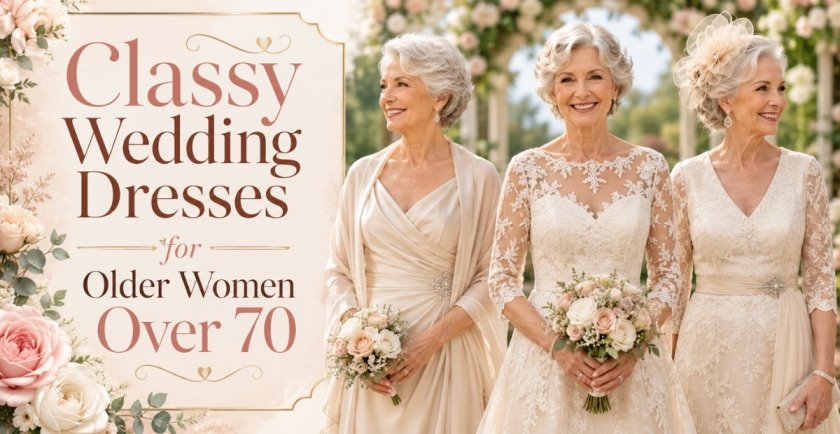
Choosing a wedding dress at 70, 75 or 80 can be surprisingly freeing. You already know far more about what you enjoy wearing, which fabrics bother you, whether you prefer your arms covered, and whether a dramatic train sounds romantic or simply inconvenient.
When looking for classy wedding dresses for older women over 70, do not begin with a list of rules about what an older bride is supposedly allowed to wear. Start with the practical question that matters: what will make you feel beautiful, comfortable and recognisably yourself when you walk into the ceremony?
For one bride, that may be a traditional ivory gown with lace sleeves. Another may feel far more at home in champagne crepe, a tea-length dress, a softly tailored pantsuit or a simple satin column gown. All of those can look bridal. The right answer depends on your taste, your body, your wedding setting and how you want to move through the day.
Comfort matters more than many bridal photographs admit. You will sit, stand, hug people, raise your arms, walk across different surfaces and possibly dance. A beautiful gown should support all of that rather than demanding constant adjustment. The 40 ideas below give you a wide range of elegant directions to consider.
1. Soft Ivory Lace A-Line Gown With Three-Quarter Sleeves
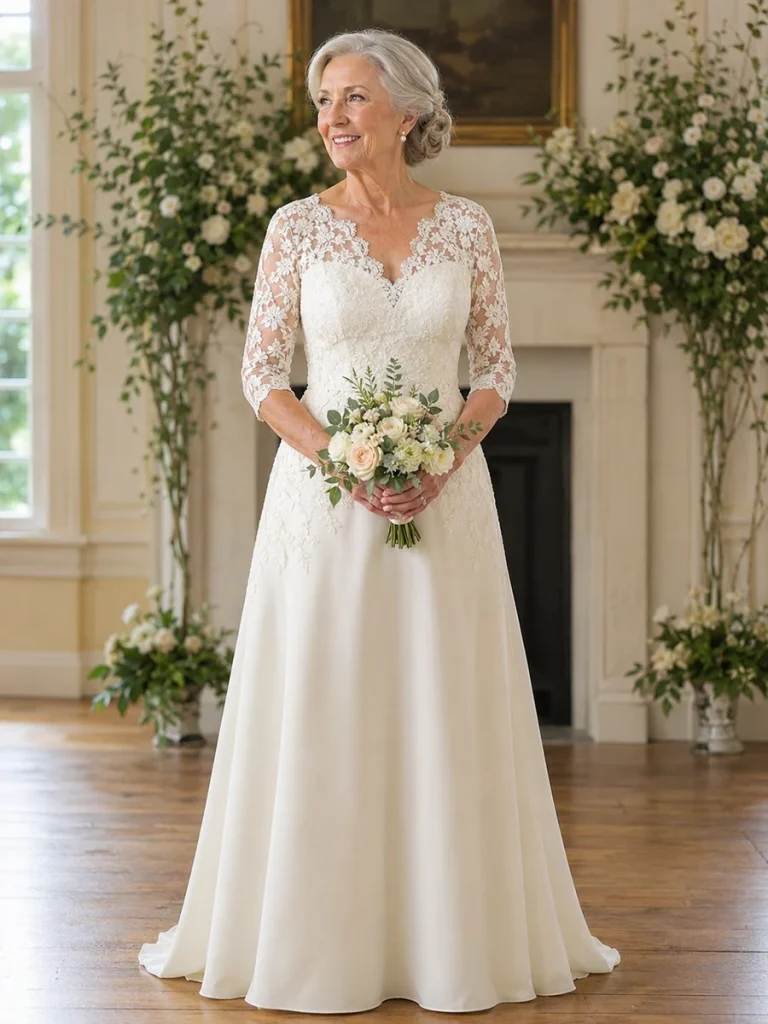
An A-line gown is one of the easiest places to start because it gives shape through the bodice without gripping the hips. Soft ivory lace keeps the look bridal while three-quarter sleeves add coverage without making the dress feel heavy. Look for lace that bends easily at the elbow and a skirt that falls rather than balloons. This is a lovely choice for a church, hotel, or country-house ceremony.
2. Champagne Chiffon Gown With Sheer Sleeves
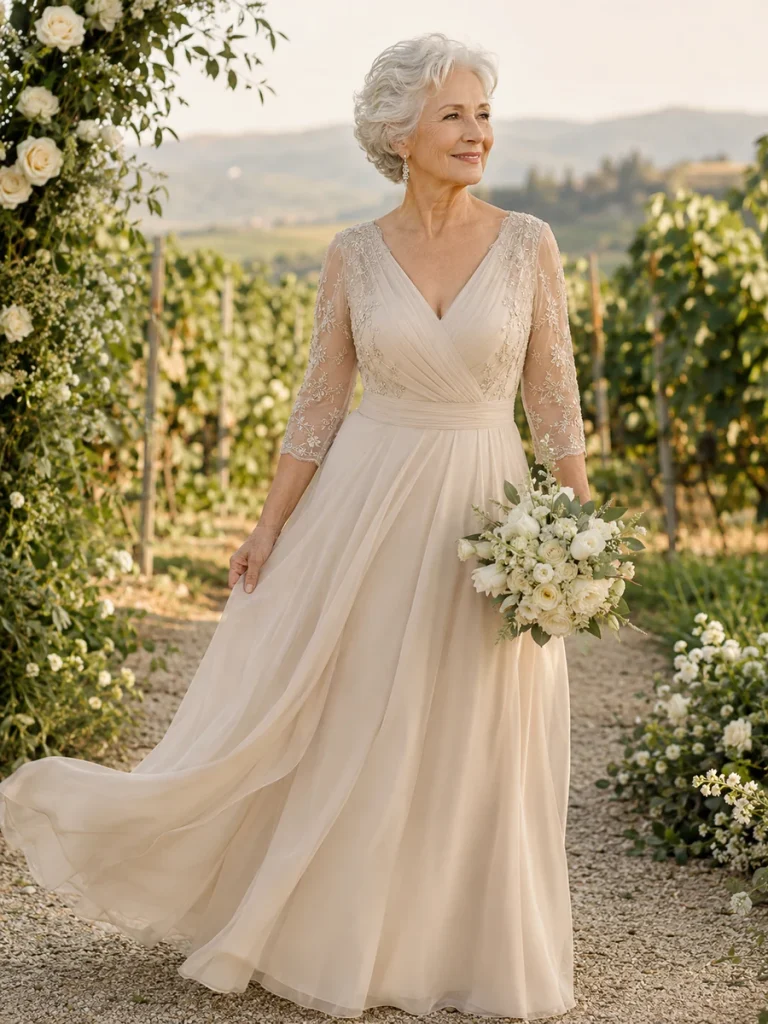
Champagne chiffon is warm, light and forgiving in photographs. A softly gathered waist and sheer embroidered sleeves give the dress movement while keeping it refined. If you are marrying outdoors or in warmer weather, this kind of fabric can feel much easier to wear than satin or heavily beaded tulle. A modest V-neck also draws attention upward toward the face.
3. Tea-Length Wedding Dress With a Lace Jacket
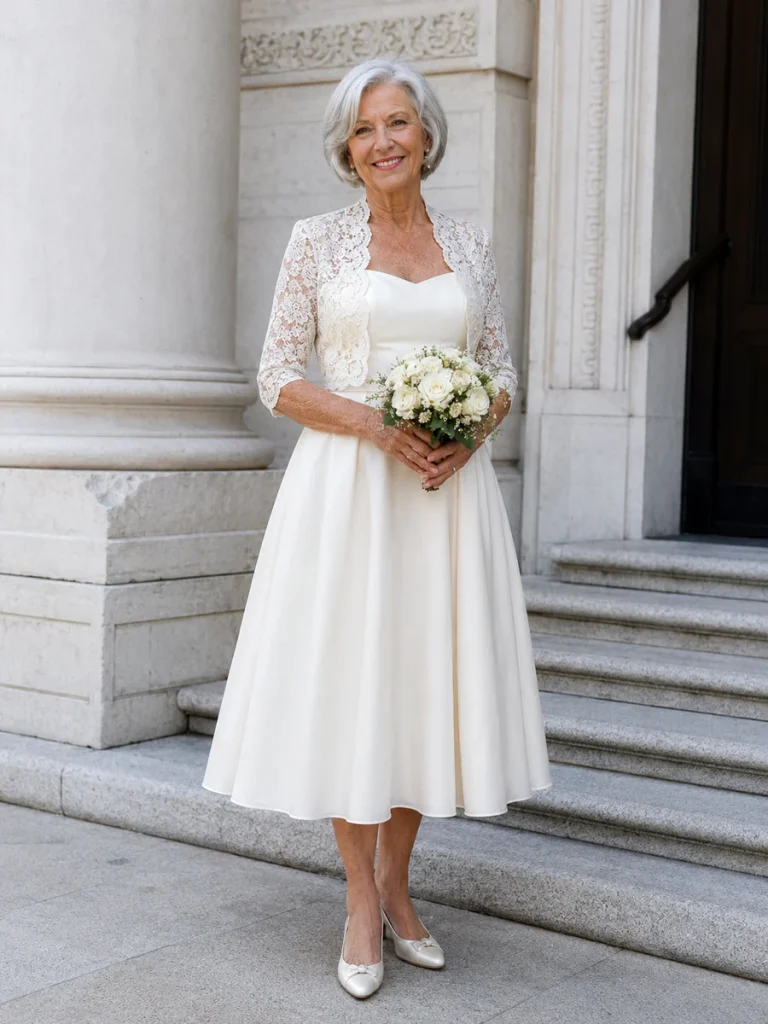
A tea-length dress is ideal when you want something bridal without managing a floor-length hem. Pairing it with a cropped lace jacket gives you a polished ceremony look and the option to remove a layer later. The shorter hem also lets beautiful shoes become part of the outfit. It suits courthouse weddings, restaurant receptions and smaller family celebrations especially well.
4. Ivory Wrap-Style Wedding Dress
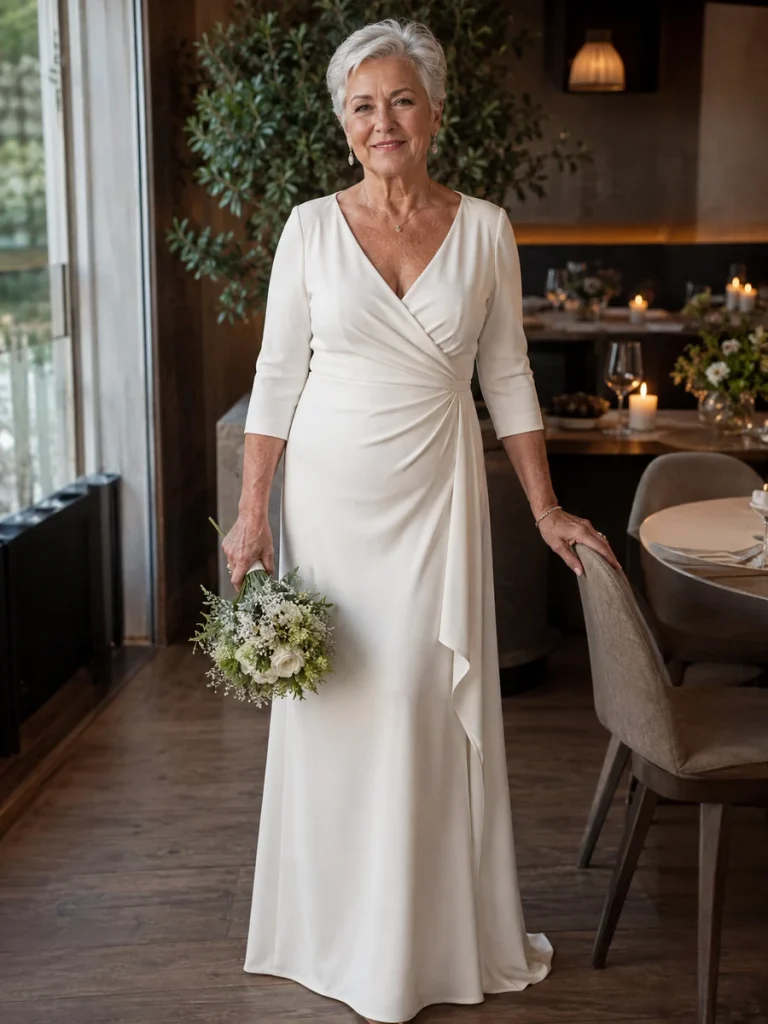
A wrap-style bodice creates a soft V shape and defines the waist without requiring stiff corsetry. Matte crepe works particularly well because it drapes cleanly and does not look overly shiny. Ask your seamstress to secure the crossover at the exact point where you feel comfortable so you never need to adjust it during the day.
5. Pearl-Embellished Long-Sleeve Gown
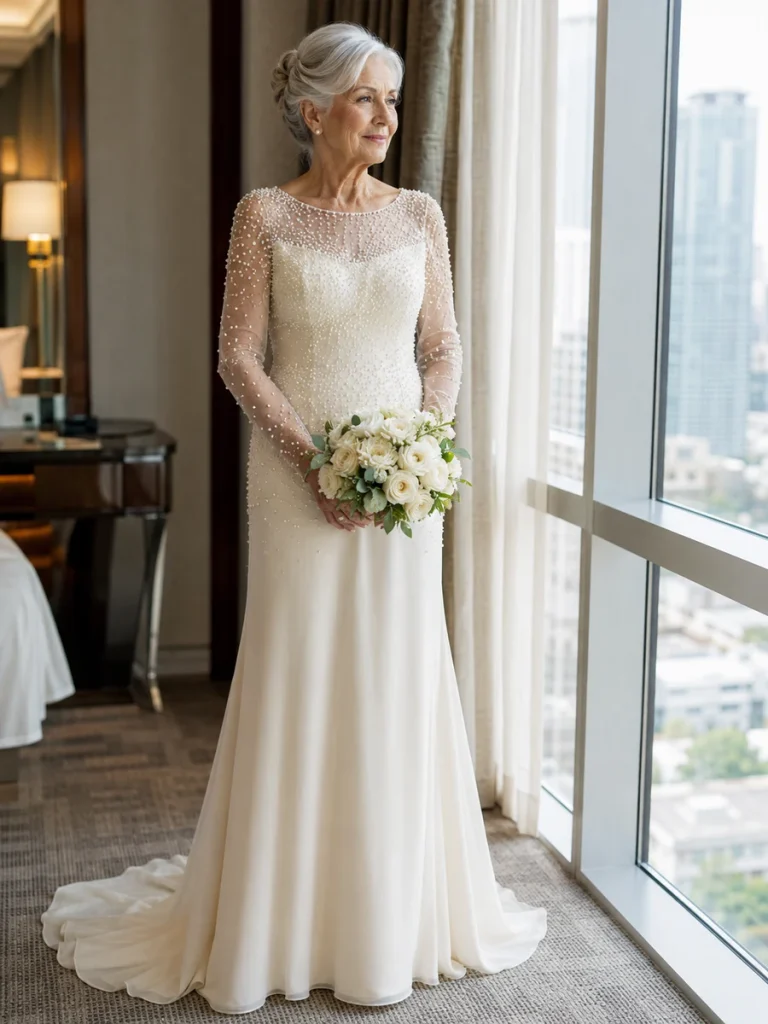
Pearls can add bridal detail without turning the entire gown into a heavily embellished piece. Tiny pearl beads scattered across sheer sleeves and the upper bodice catch the light in a subtle way. Keep the skirt simple so the texture near the face remains the focus. This style feels especially elegant for an evening celebration.
6. Crepe Column Dress With Cape Sleeves
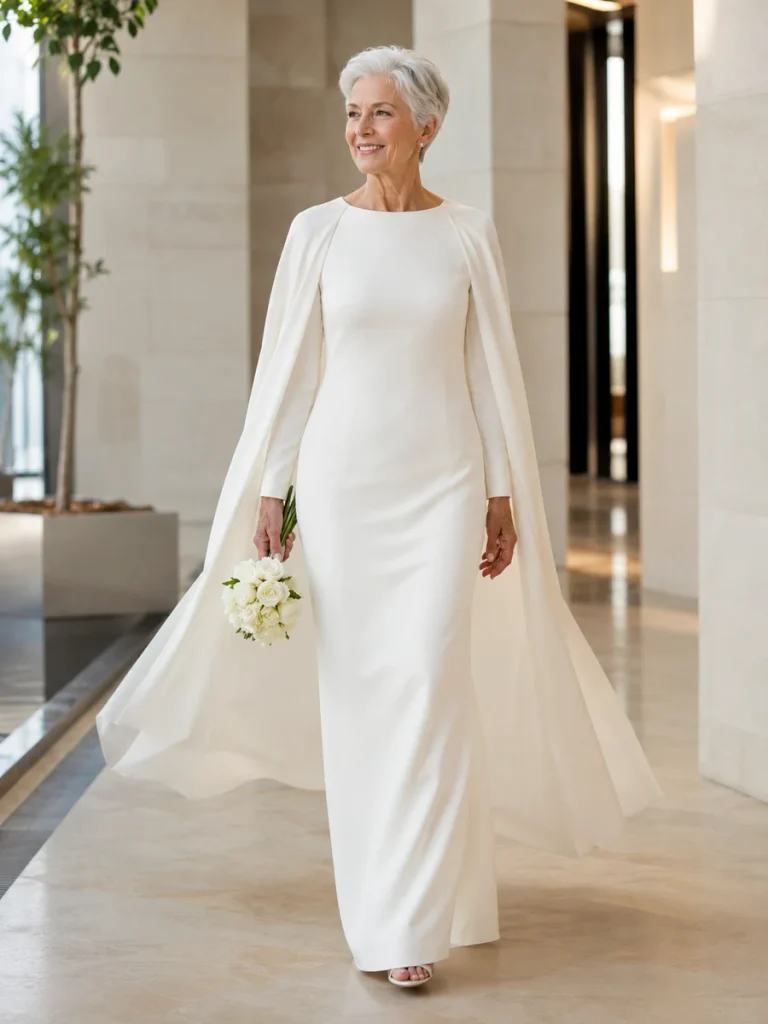
A clean crepe column gown can look striking when it has one strong detail. Cape sleeves create movement, offer arm coverage and give the dress drama without the weight of a traditional train. Because the cape already makes a statement, jewellery can stay minimal. This look works beautifully in modern hotels, galleries and city venues.
7. Vintage-Inspired Lace Midi Dress
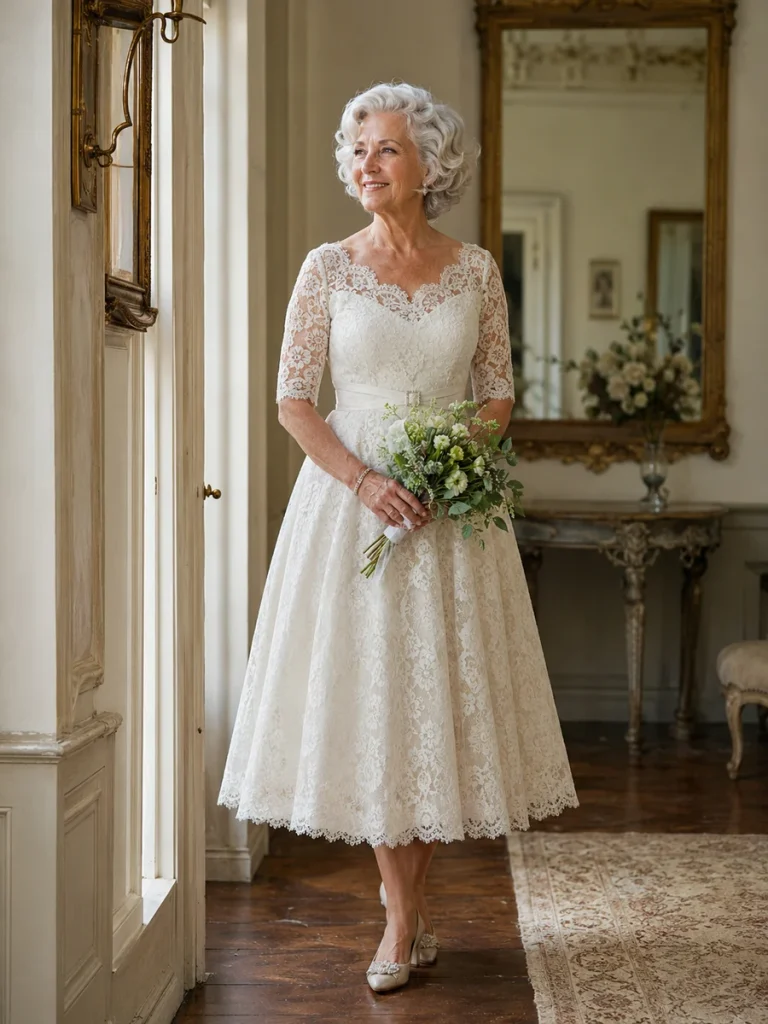
If you love vintage style, a lace midi dress can give you that feeling without looking like a costume. A defined waist, scalloped neckline and below-the-knee hem feel feminine and polished. Low satin pumps and small earrings are often enough to complete it. The result is especially charming for an afternoon ceremony.
8. Champagne Satin A-Line Dress With a Draped Waist
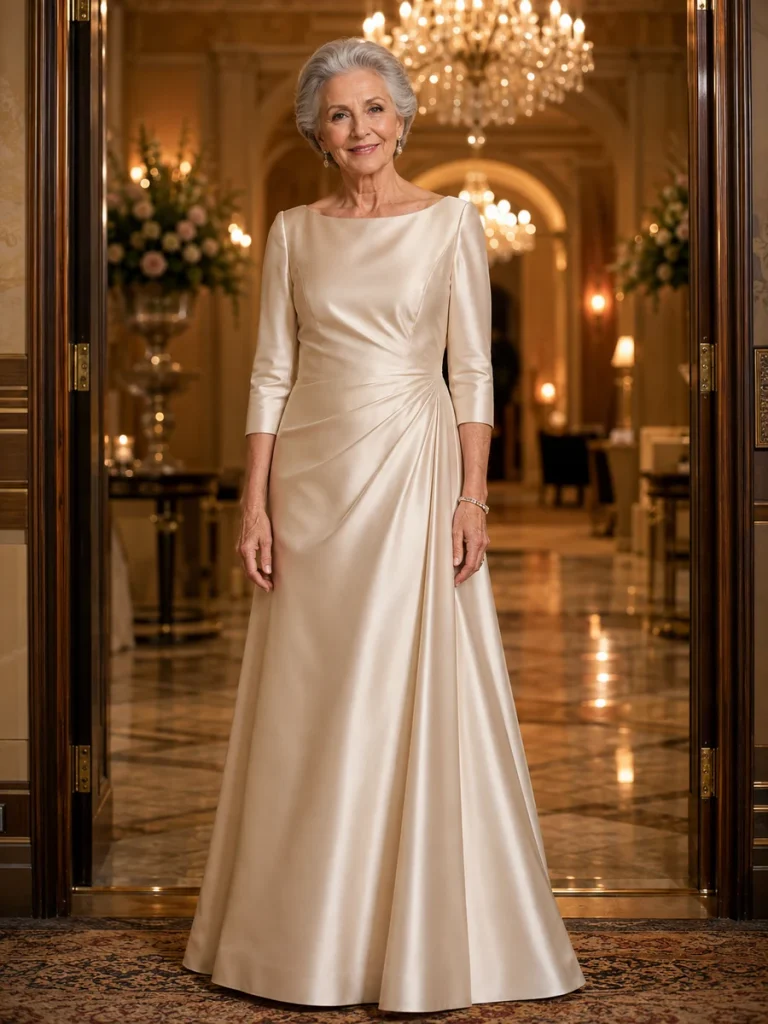
Satin looks best when the cut allows the fabric to do the work. Diagonal draping at the waist creates shape while a soft A-line skirt keeps the gown comfortable. Champagne or oyster satin can be gentler than bright white and often photographs with beautiful depth. Keep accessories quiet and let the sheen of the fabric stand out.
9. Ivory Gown With Delicate Illusion Sleeves
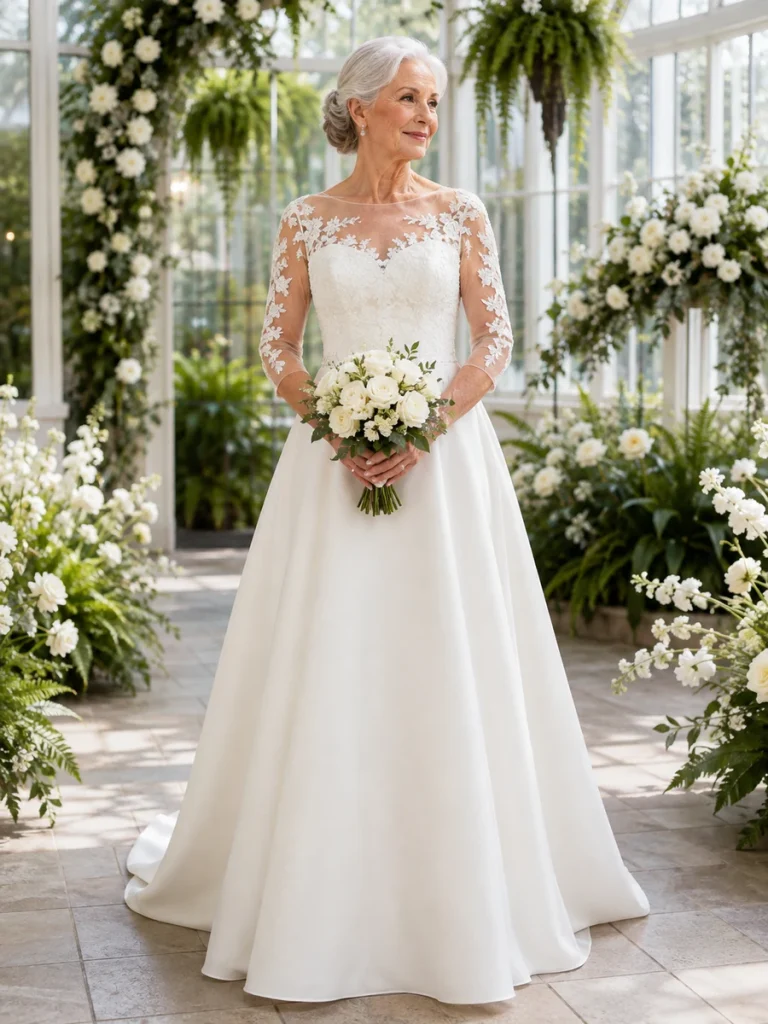
Illusion sleeves are a smart middle ground when you like the appearance of lighter coverage but still want lace over the arms. The key is softness. Rub the mesh against your inner arm before buying; if it feels scratchy in the fitting room, it will feel worse after several hours. A simple A-line skirt balances the detailed sleeves nicely.
10. Boat-Neck Wedding Gown With a Clean Silhouette
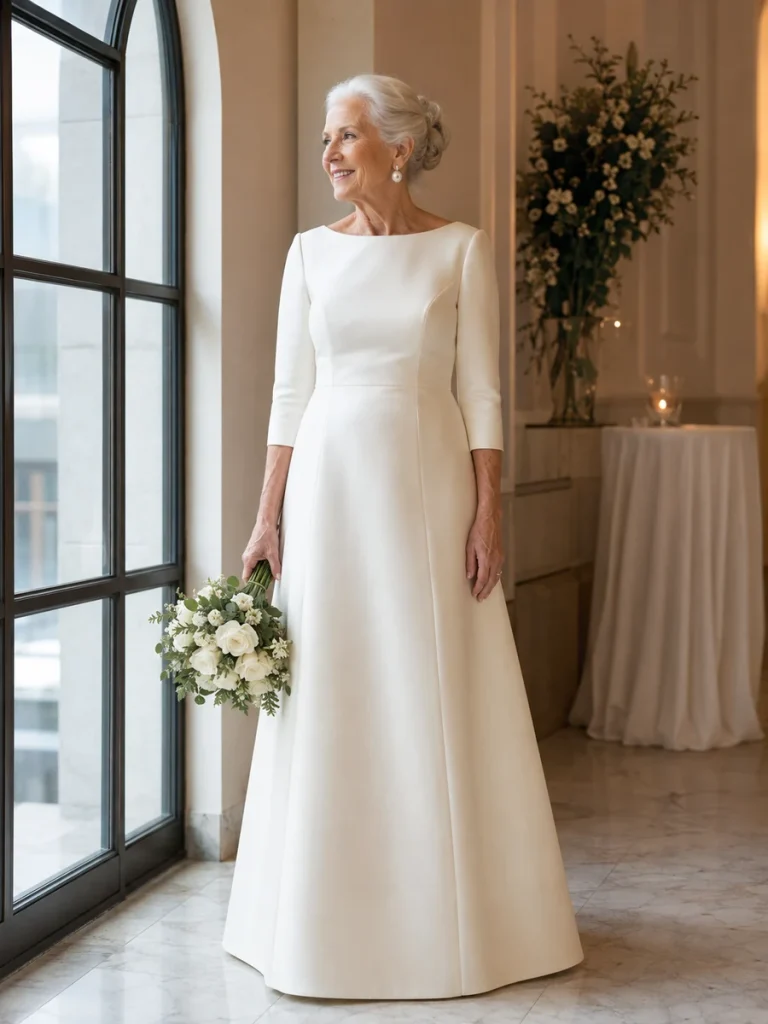
A boat neckline frames the collarbone and face without feeling revealing. Paired with smooth crepe or mikado, it creates a very clean, composed silhouette. Three-quarter sleeves keep the proportions light. Because the neckline already makes a strong horizontal line, earrings usually work better than a necklace.
11. Scalloped Lace Overlay Dress
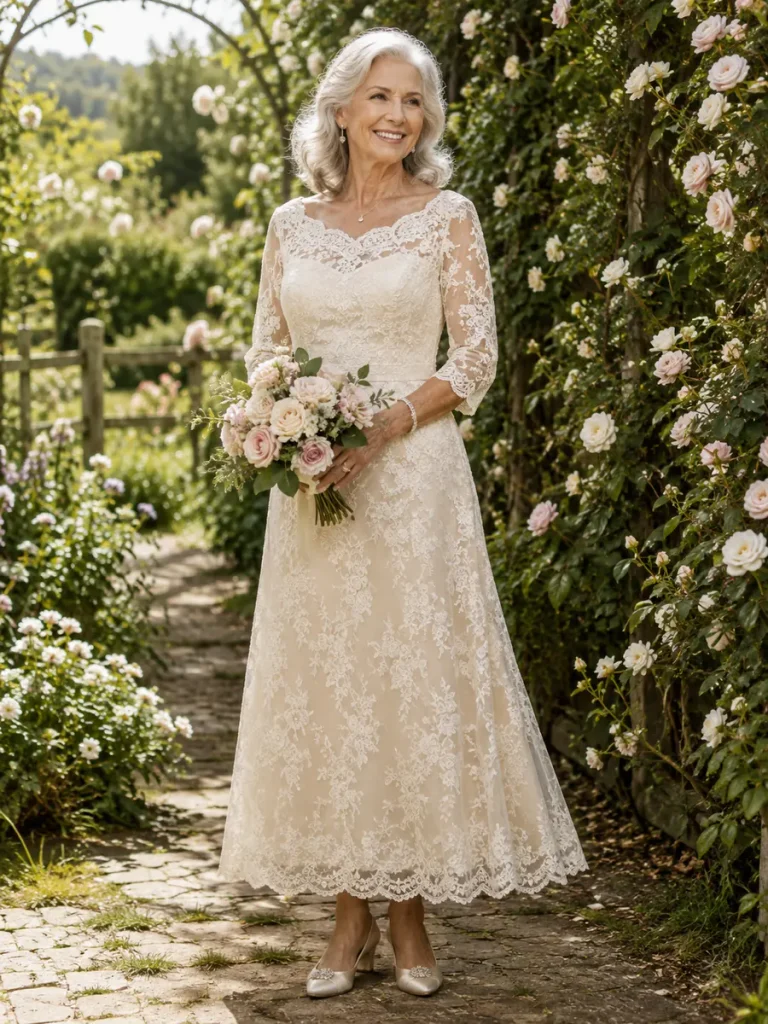
A lace overlay can make a simple underdress feel richer without adding heavy beadwork. Look for scalloped edges around the sleeves and hem and choose a lining shade that gives just enough contrast for the lace pattern to show. Champagne lining under ivory lace is especially pretty in garden light.
12. Minimal Ivory Dress With a Matching Jacket
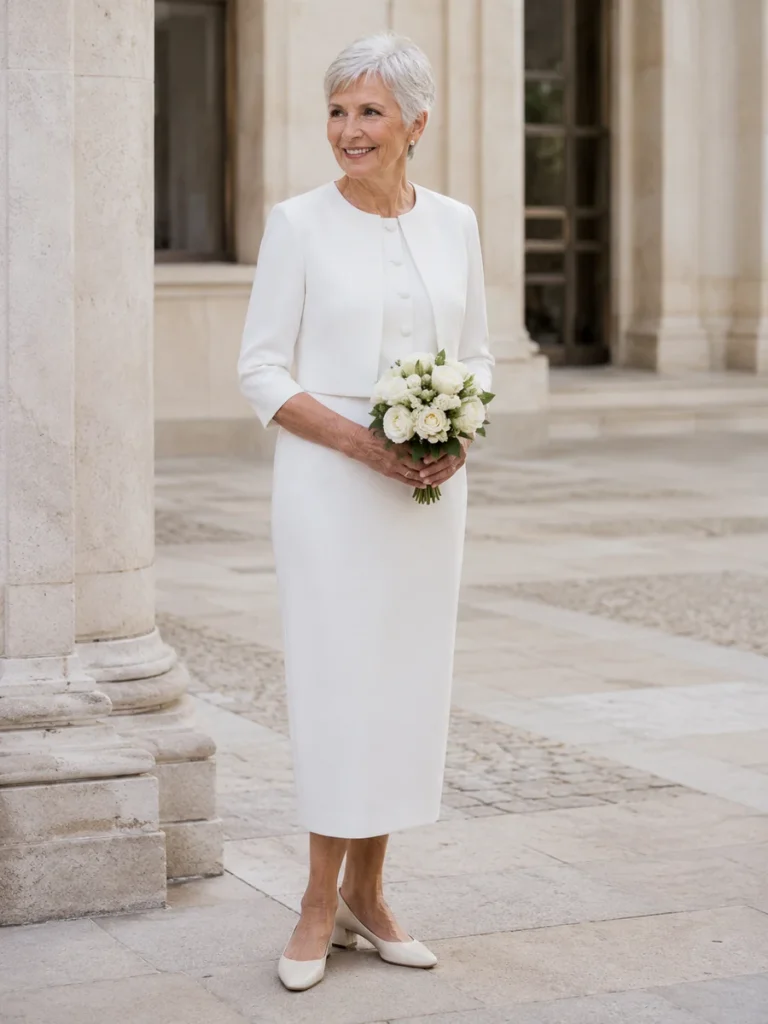
A simple ivory sheath with a matching jacket is one of the most practical choices in this guide. The jacket adds polish and coverage for the ceremony; remove it later and you have a cleaner reception look. Good tailoring matters more than decoration here, so pay attention to shoulder fit and sleeve length.
13. Blush-Champagne Wedding Gown
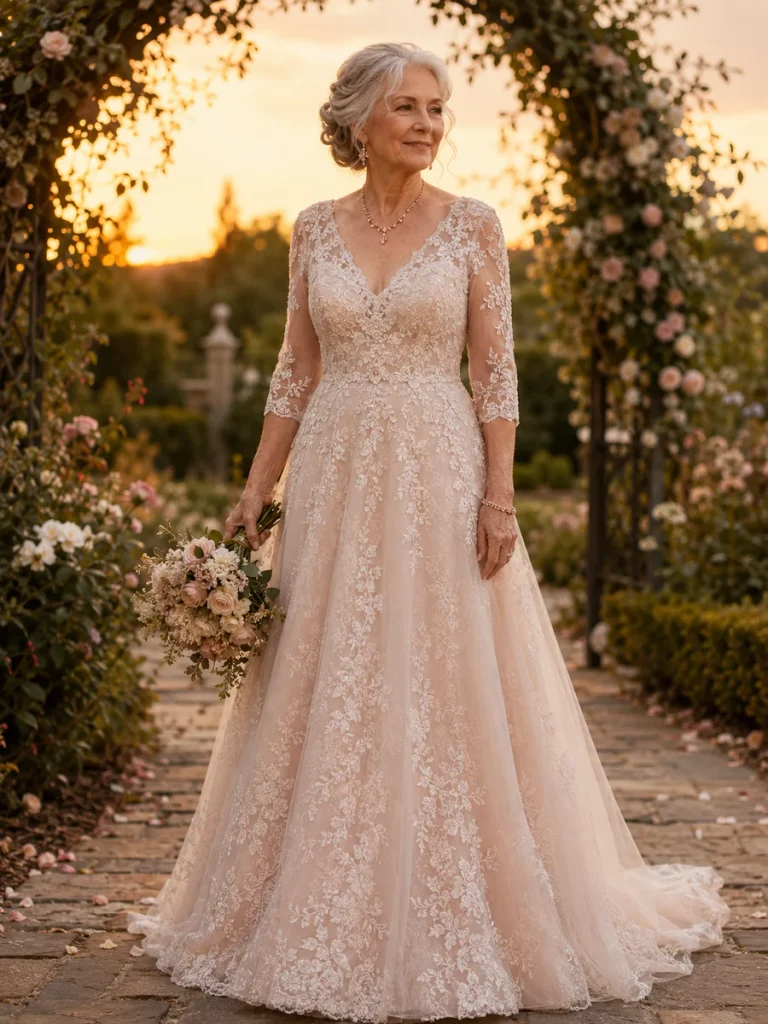
Blush-champagne is a beautiful option if bright white feels too stark. Keep the pink very muted—closer to dusty rose mixed with champagne than obvious pink. Ivory lace over the top creates depth and keeps the overall look bridal. Warm pearls or rose-gold jewellery pair naturally with this palette.
14. Empire-Waist Chiffon Gown
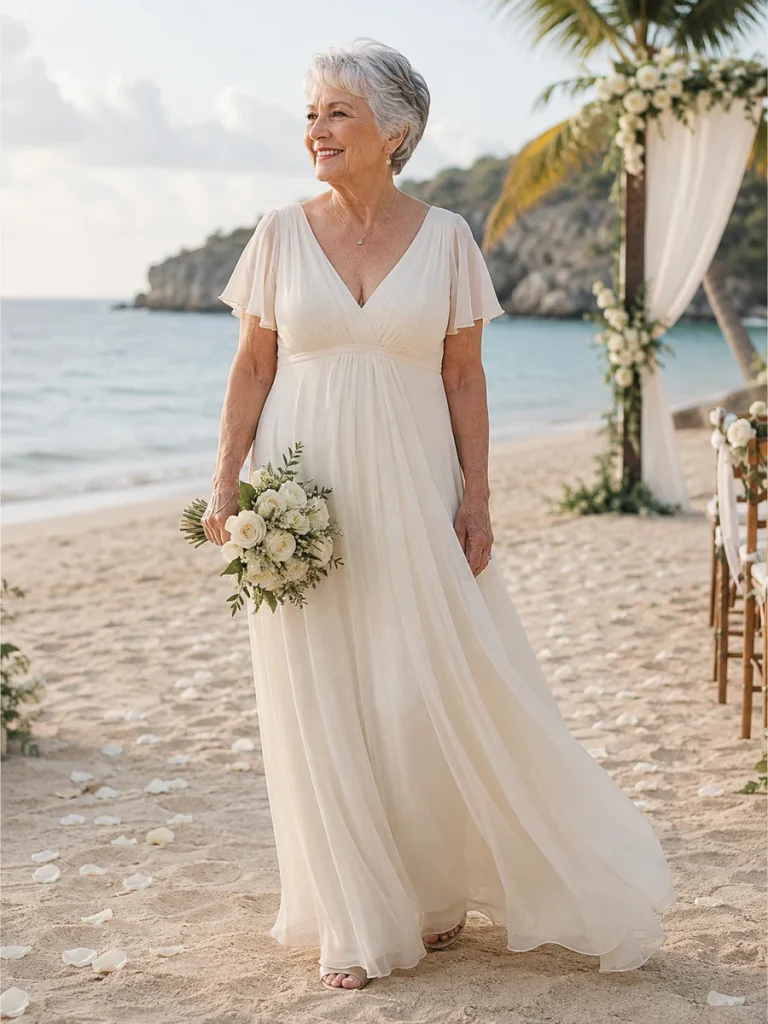
An empire waist can be wonderfully comfortable because the skirt falls from just beneath the bust. Chiffon keeps the silhouette airy, which makes this a strong choice for beach weddings and warm-weather ceremonies. Try several dresses because even a small change in where the empire seam sits can change the whole effect.
15. Embroidered Floral Tea-Length Dress
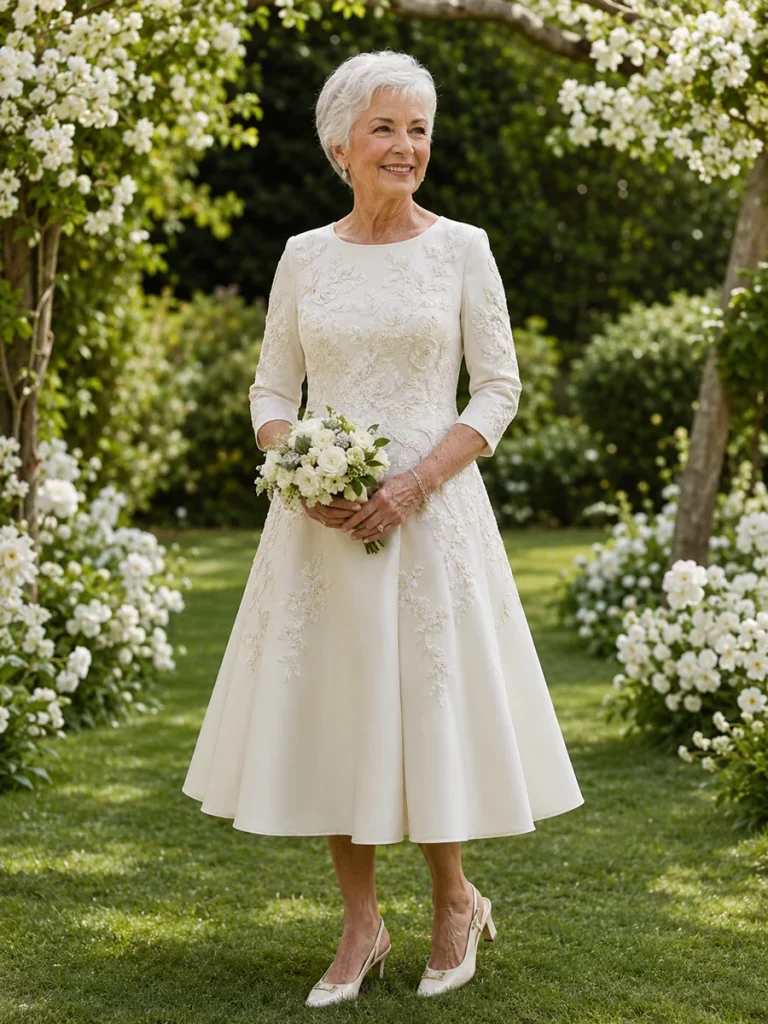
Tone-on-tone floral embroidery gives a wedding dress texture while remaining subtle from a distance. On a tea-length silhouette, the details are easy to appreciate and the outfit never feels too heavy. This style is especially attractive for spring garden weddings, afternoon ceremonies and intimate receptions.
Find Your Next Favorite Outfit
45 Velvet Christmas Dresses for Women Over 70 for Festive Celebrations
45 Classy Jewel Tone Dresses for Women Over 70 That Never Go Out of Style
45 Warm Midi Dresses for Women Over 70 for Effortlessly Elegant Winter Style
45 Chic Fall Travel Outfits for Women Over 60 for Effortless Autumn Style
45 Classy Winter Wedding Dresses for Grandma to Look Beautiful
45 Fall Club Outfits for Plus-Size Women That Look Chic and Confident
16. V-Neck Lace Dress With Full Sleeves
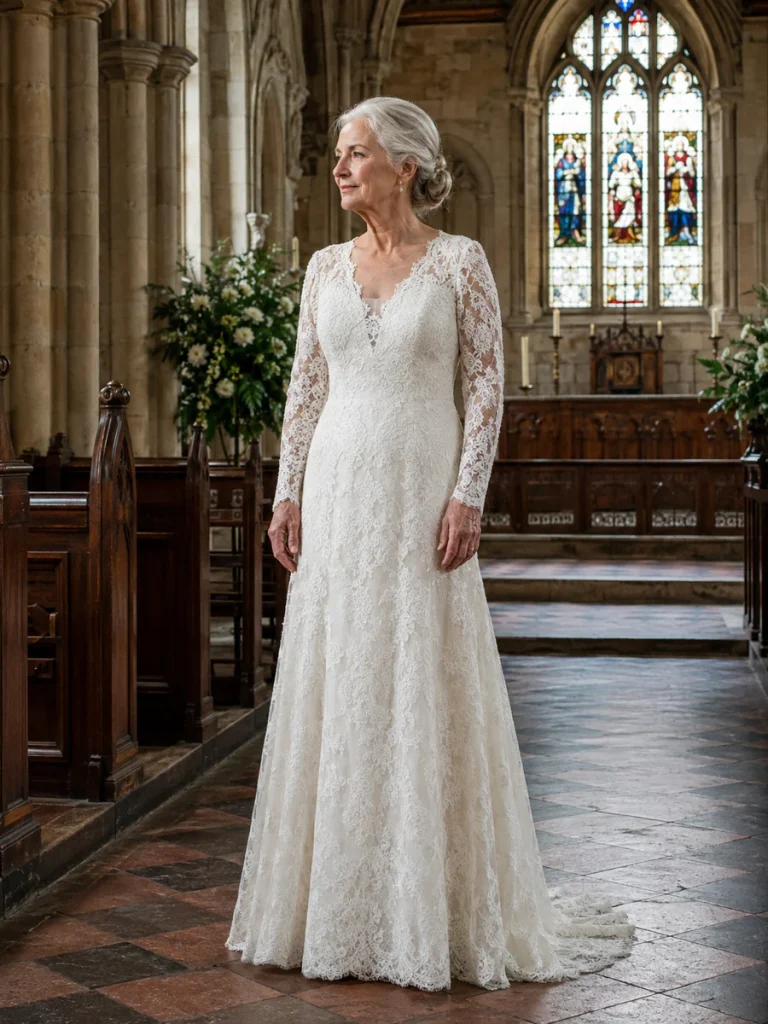
A moderate V-neck can lengthen the upper body beautifully, especially when balanced by full lace sleeves. If you want extra coverage, an illusion panel can be added without changing the basic neckline. Check that the sleeve lining and lace allow easy movement at the shoulders and elbows.
17. Satin Dress With a Portrait Collar
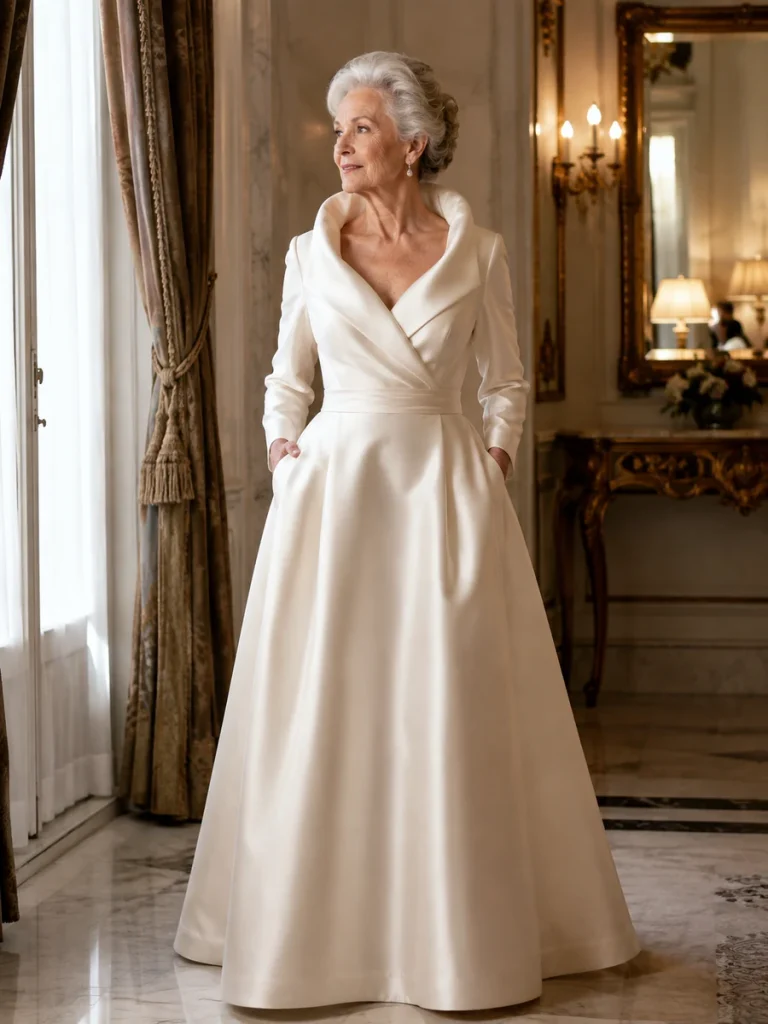
A portrait collar has an old-Hollywood elegance that works particularly well in satin. It frames the collarbone and gives a plain gown a strong focal point without beads or lace. Wear your hair up or swept back so the neckline remains visible, and skip the necklace if the collar already feels complete.
18. Pleated Chiffon Wedding Gown
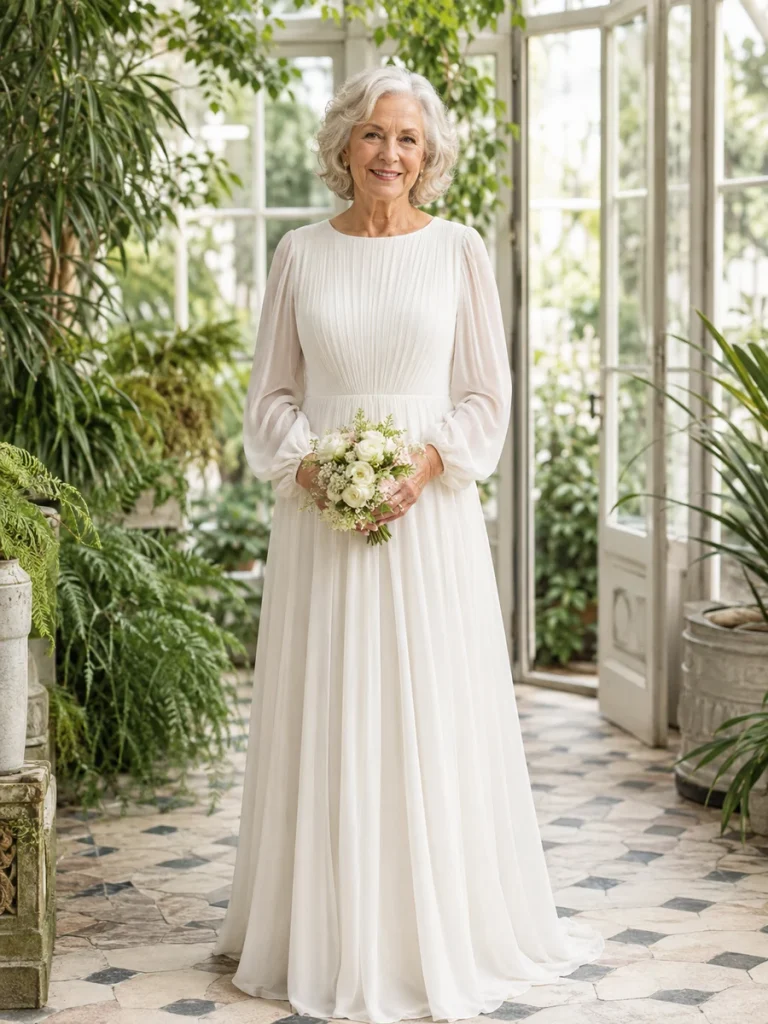
Fine vertical pleats can make chiffon feel more tailored while preserving its softness. A pleated bodice, lightly gathered sleeves and flowing skirt create movement without the stiffness of structured fabric. This is a good option for brides who want an easy dress that still looks finished and intentional.
19. Wedding Dress With a Flowing Cape Overlay
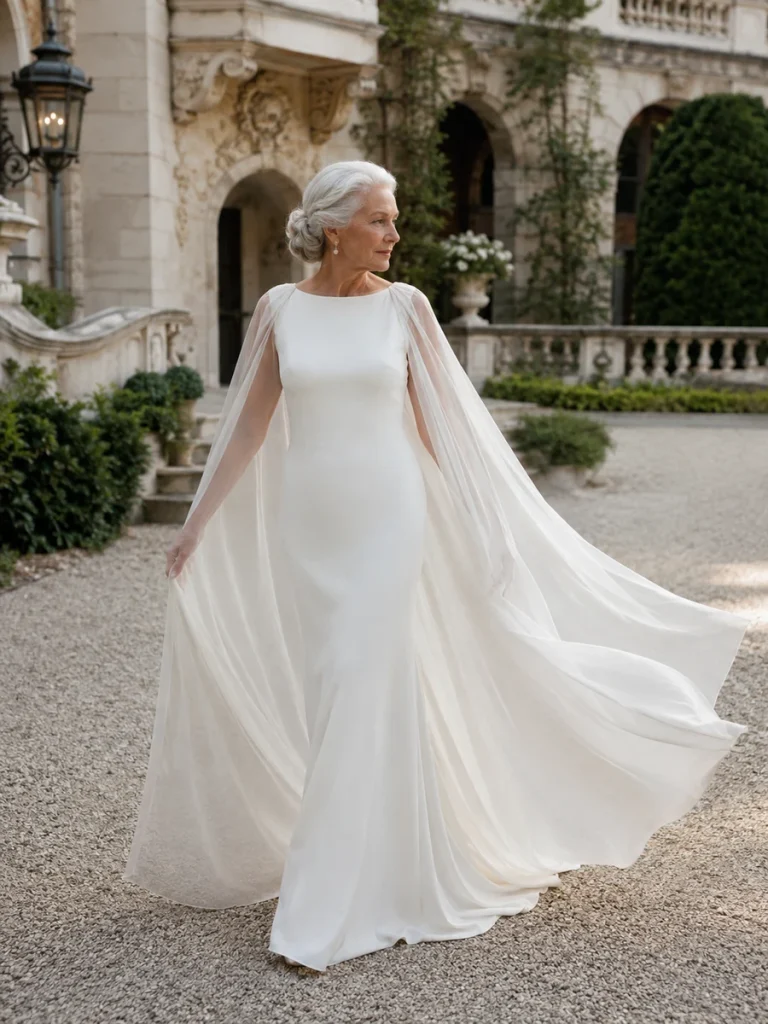
A long chiffon cape can turn a very simple gown into something memorable. It offers soft arm and back coverage while keeping the front of the dress clean. If the wedding is outdoors, test the cape in a breeze before committing; you want movement, not fabric that constantly needs managing.
20. Beaded Bodice With an A-Line Chiffon Skirt
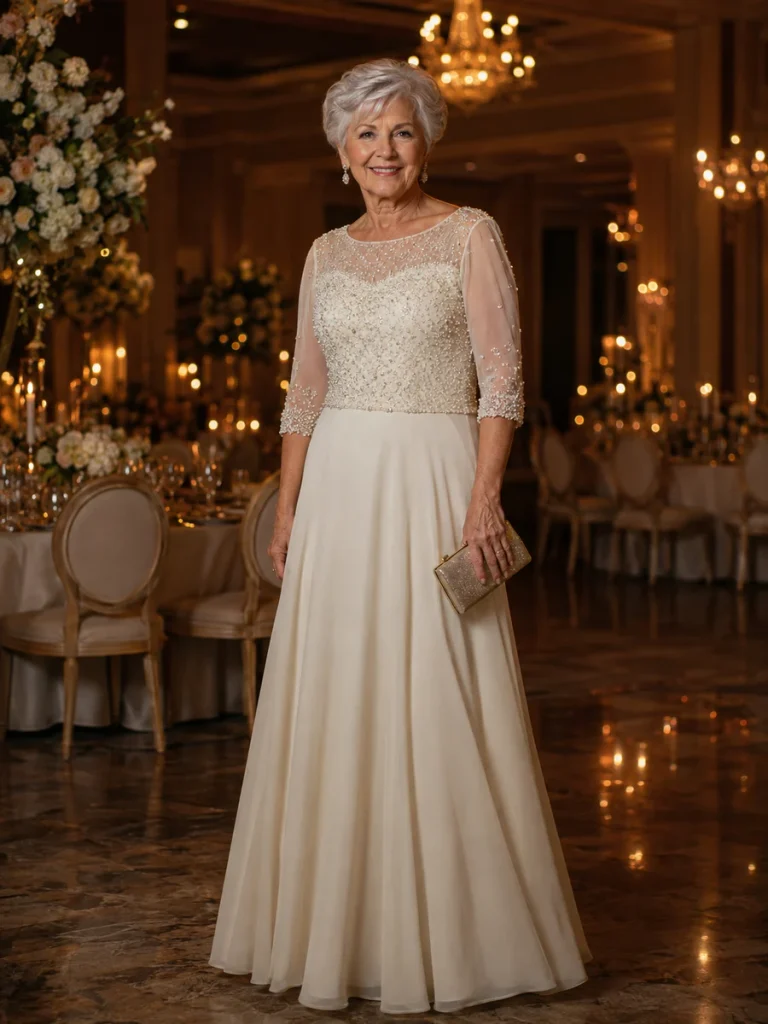
If you enjoy a little sparkle, concentrate it near the face. A beaded bodice with tiny crystals or pearls paired with a plain chiffon skirt gives you shimmer without excessive weight. Evening receptions are ideal for this treatment because warm lights catch the beadwork beautifully.
21. High-Neck Lace Wedding Gown
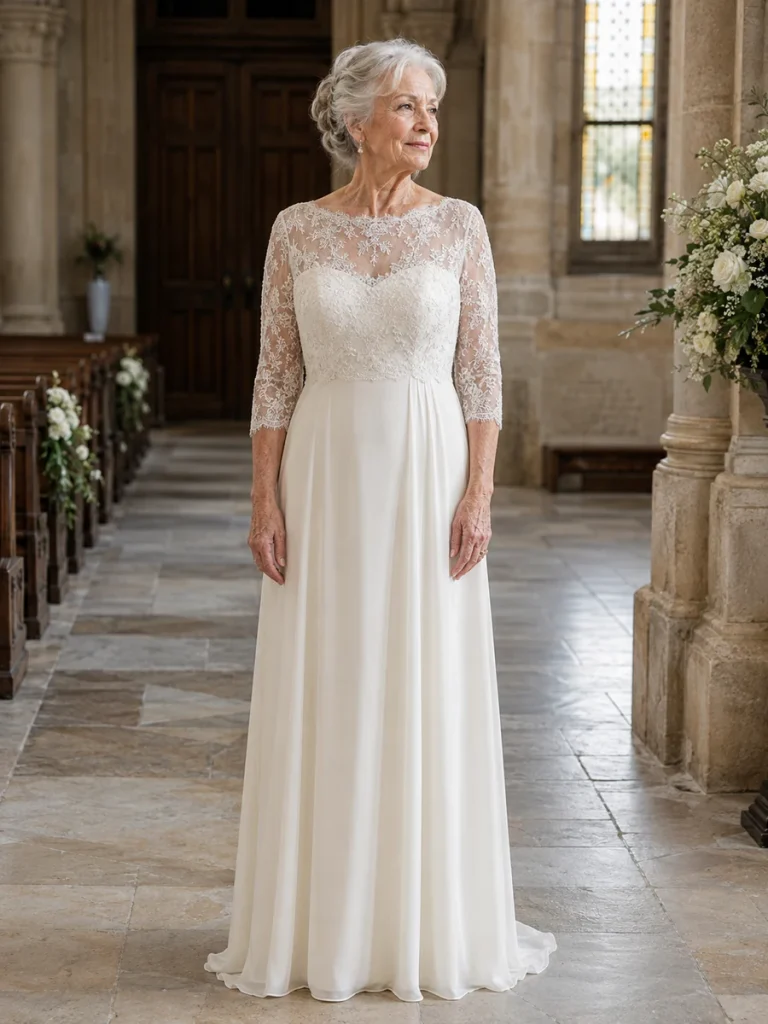
A high lace neckline can look refined rather than severe when the lace itself is fine and slightly sheer. Keep the skirt simple so the upper half does not feel visually heavy. This silhouette suits formal church weddings and cooler-weather ceremonies particularly well.
22. Ivory Midi Dress With Bell Sleeves
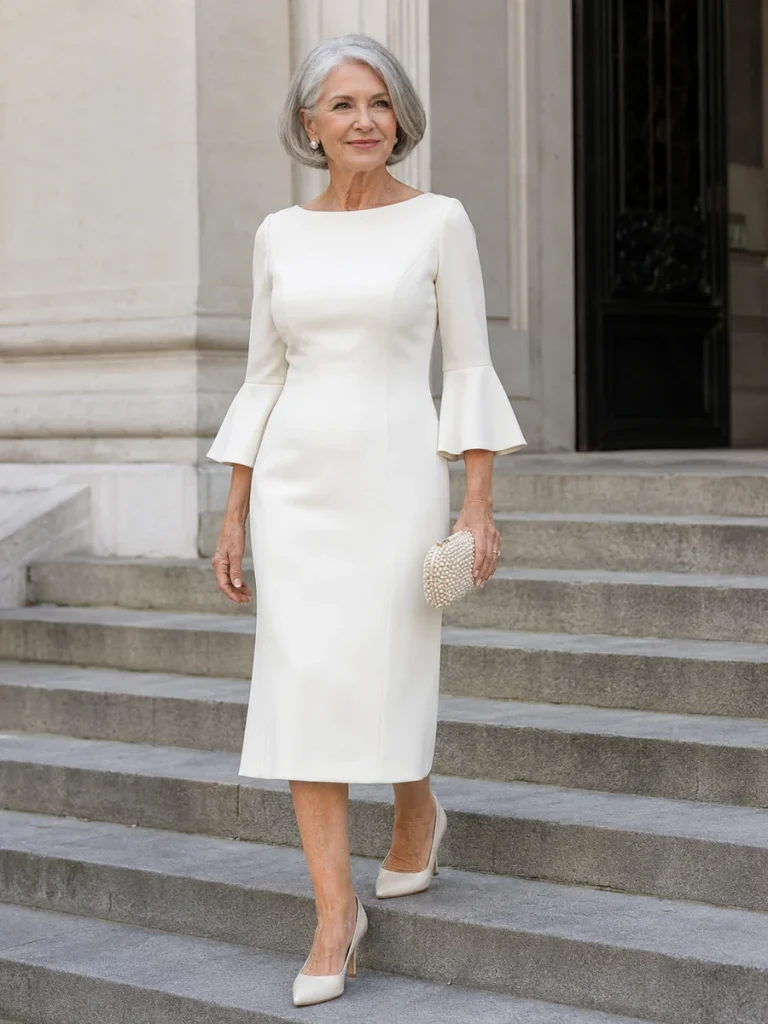
Bell sleeves add personality to a simple midi dress. The flare should begin below the elbow and stay controlled rather than becoming oversized. With a clean body and below-the-knee hem, the result feels stylish, modern and easy to move in—excellent for a civil ceremony.
23. Champagne Dress With an Embroidered Jacket
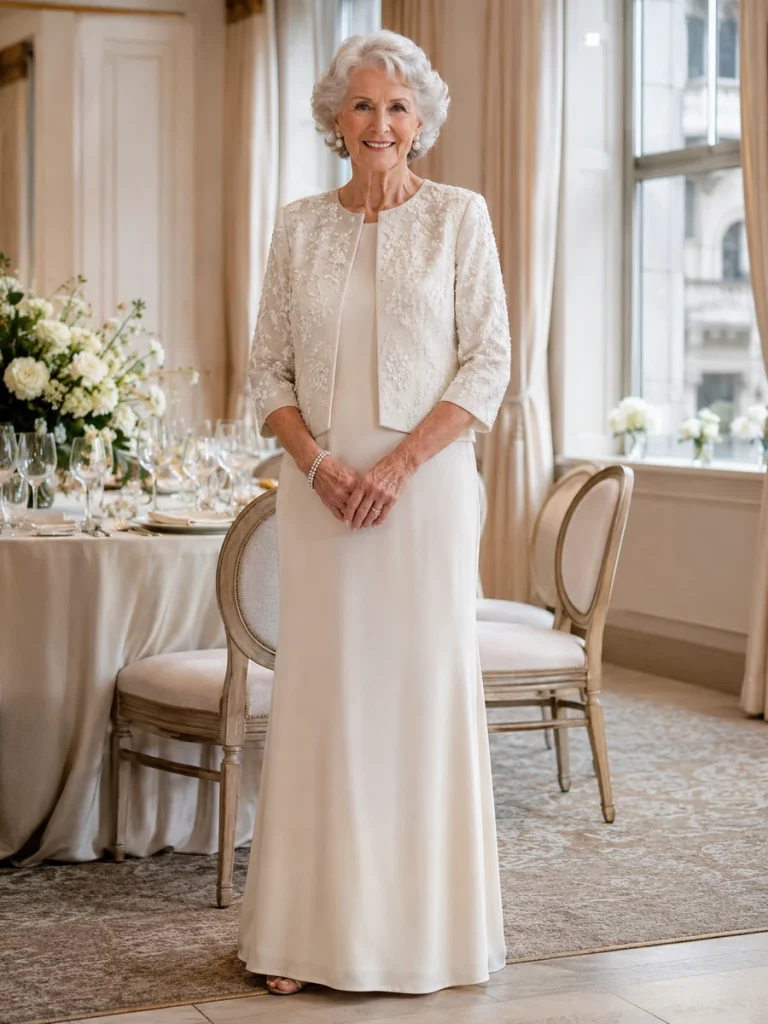
A champagne dress with an embroidered jacket gives you two looks without changing outfits. Wear the jacket during the vows and formal photographs, then remove it for dinner or dancing. Choose embroidery that echoes the dress rather than competing with it, such as fine floral threadwork or tiny pearls.
24. Crepe Gown With a Draped Neckline
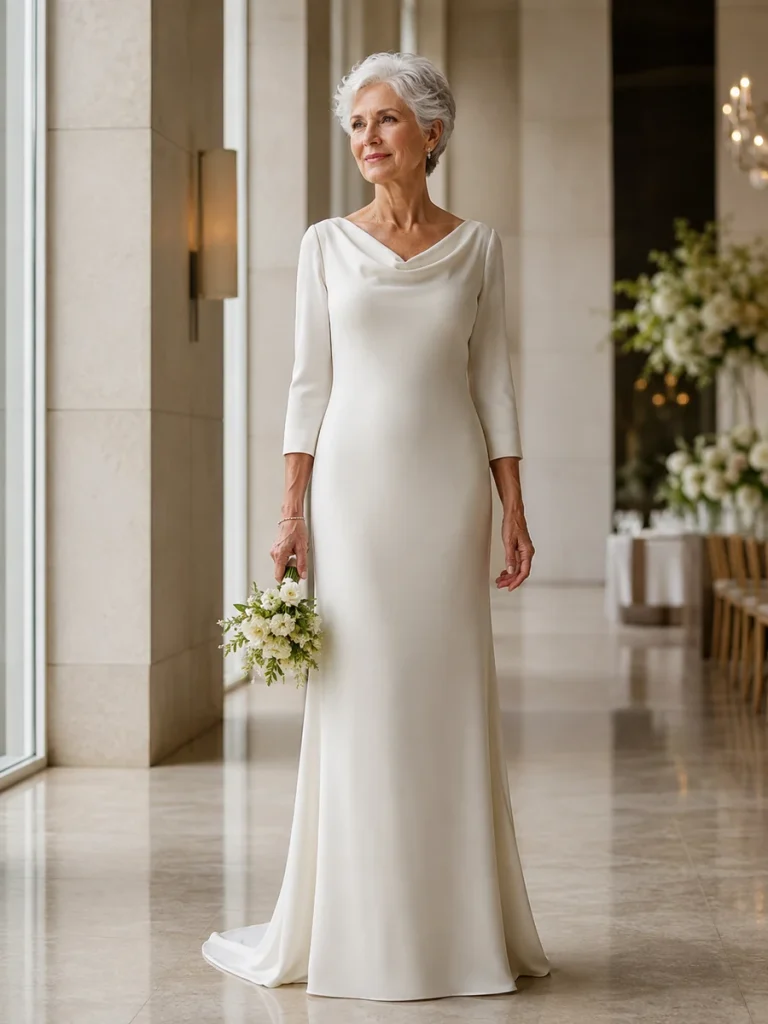
A shallow cowl or softly draped neckline is an elegant way to add interest to plain crepe. The rest of the gown can stay very simple. During your fitting, sit down and move your shoulders to make sure the drape stays where you want it; this neckline should feel effortless, not fussy.
25. Floral Appliqué Dress With Sheer Sleeves
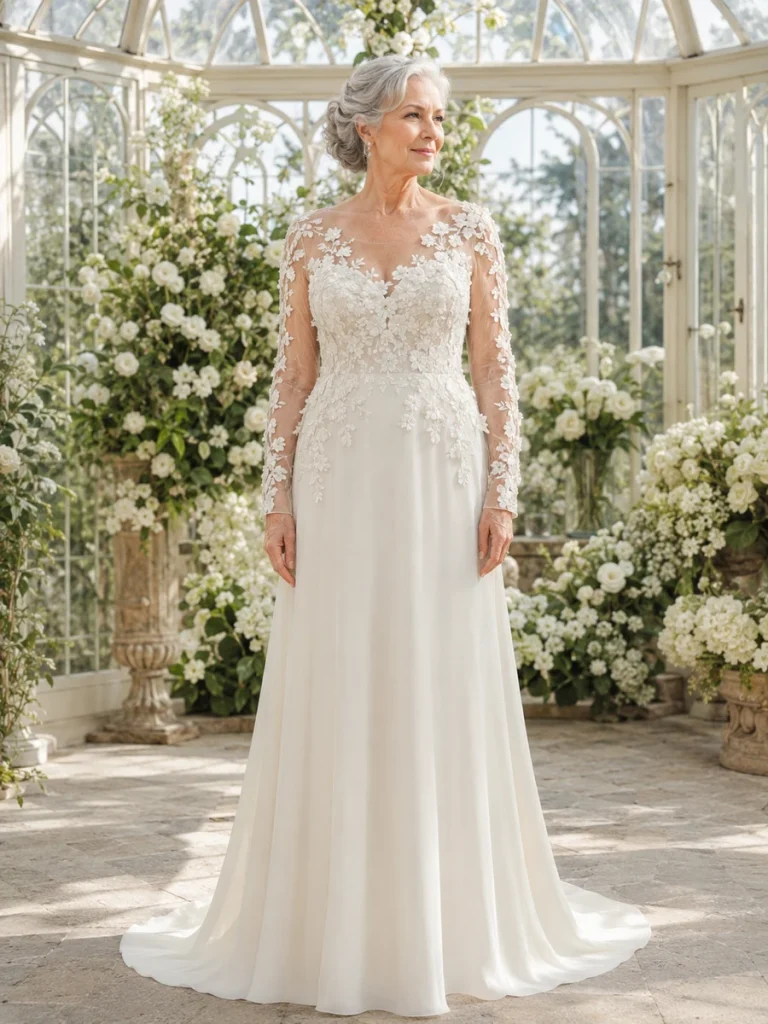
Three-dimensional floral appliqués look best when they are placed selectively. Concentrate them around the bodice, shoulders and upper sleeves, then let the decoration fade as it approaches the waist. A plain skirt keeps the look light and ensures the flowers frame your face instead of overwhelming the whole gown.
26. Ivory Wedding Pantsuit With a Lace Top
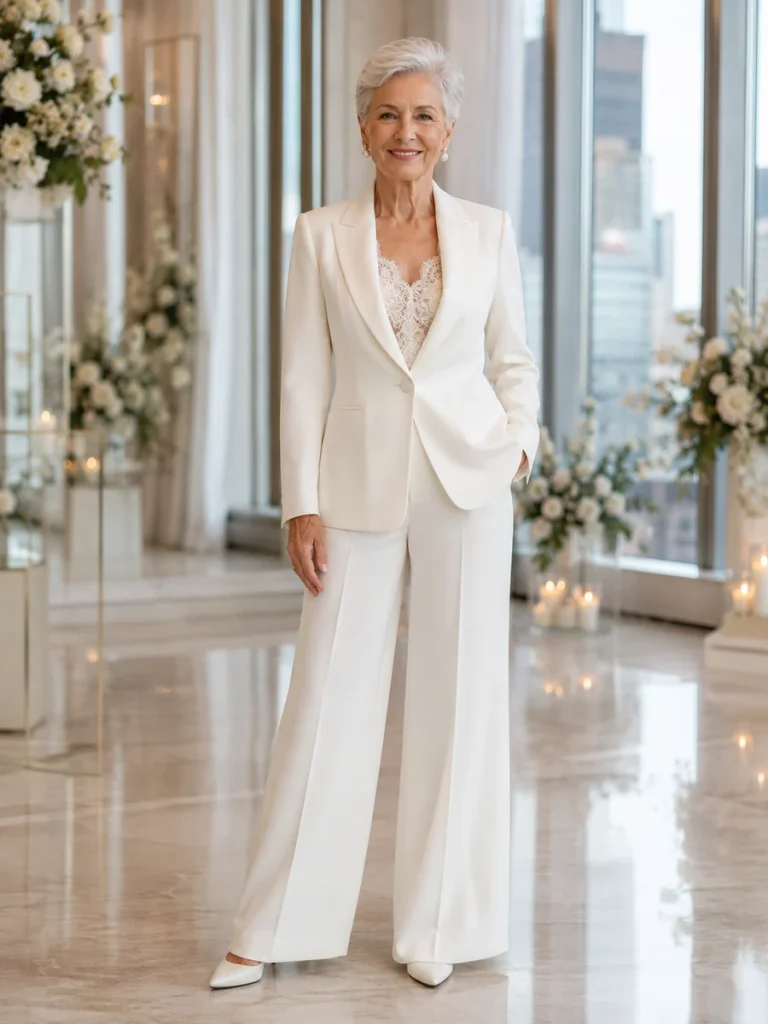
If dresses have never felt like you, an ivory trouser suit can be every bit as bridal. Wide-leg trousers, a beautifully shaped jacket and a lace top underneath create a polished silhouette with plenty of comfort. This is especially good for city weddings, civil ceremonies and brides who love tailored clothes.
27. Ivory Gown With a Waterfall Jacket
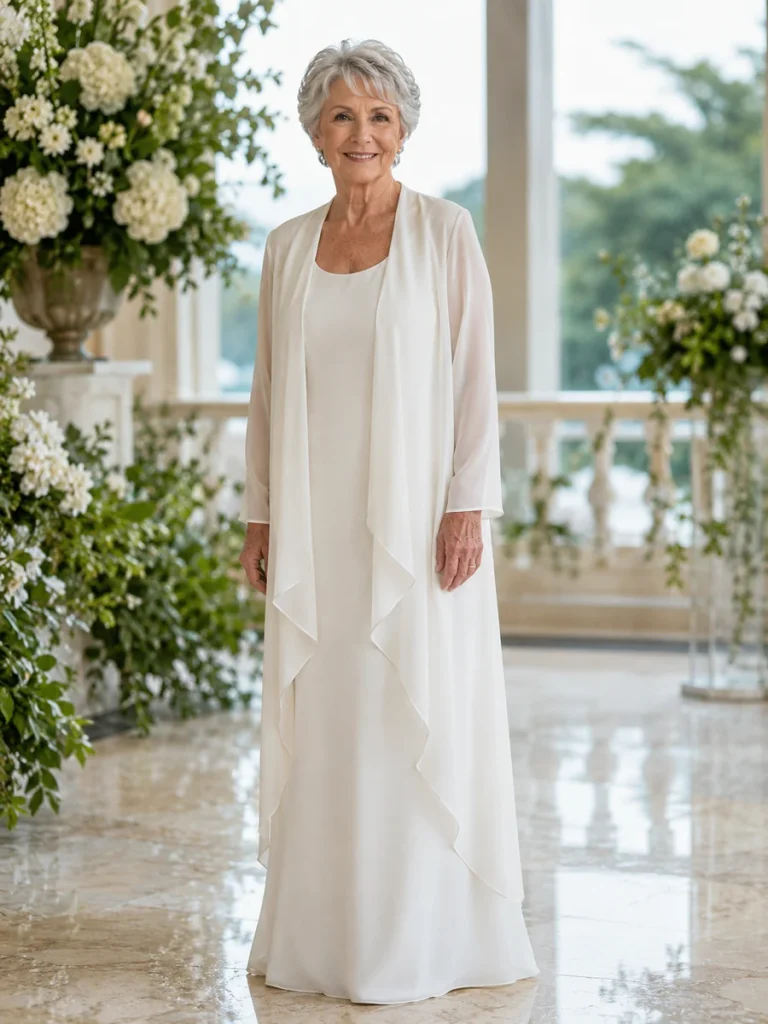
A waterfall jacket gives coverage without the stiffness of a traditional blazer. The open front creates long vertical lines while soft georgette or chiffon moves easily with the body. Layer it over a plain floor-length gown and let the drape provide the detail.
28. Satin Wedding Dress With a Gentle Cowl Neck
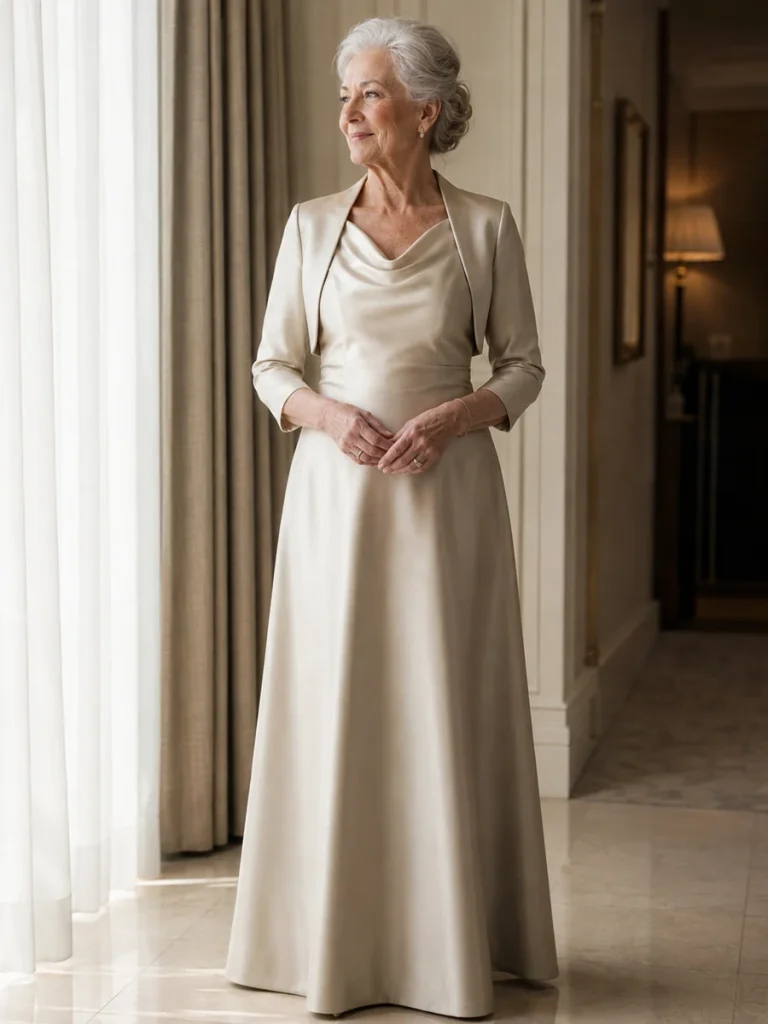
A gentle cowl neckline softens satin and keeps the upper half of the dress from looking rigid. Choose a shallow drape rather than a plunging one, and add a small bolero if you like shoulder coverage. Matte satin is often easier to wear and photograph than very glossy fabric.
29. Lace Bodice With a Flowing Chiffon Skirt
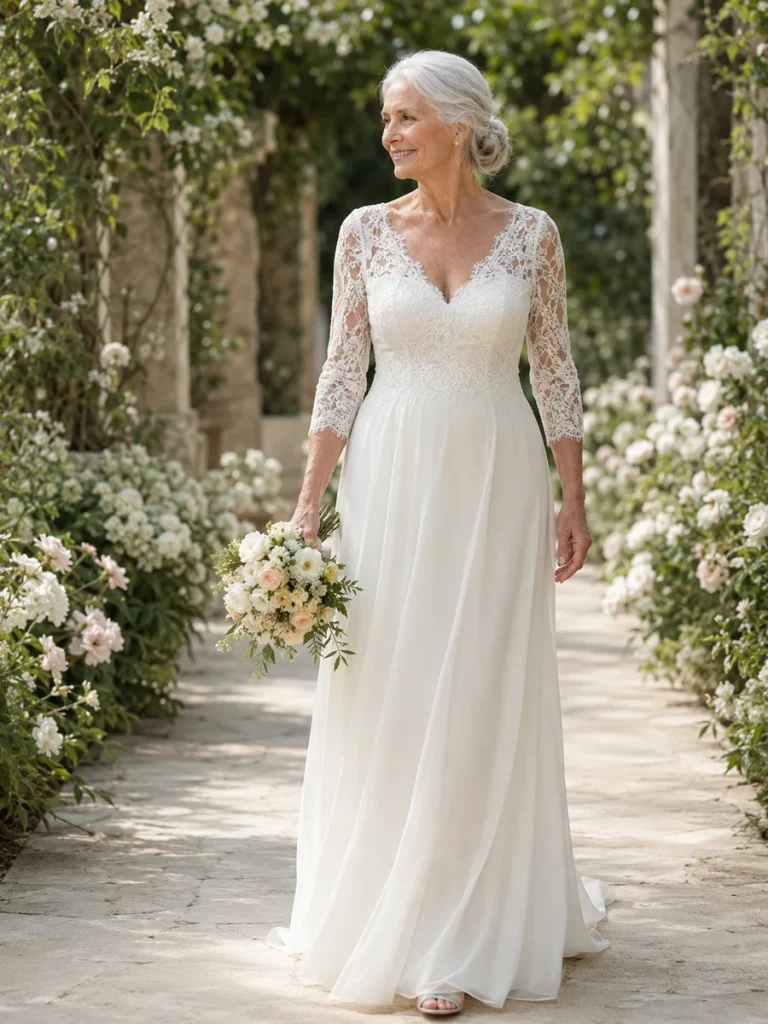
Combining a lace bodice with a chiffon skirt gives you traditional bridal texture on top and light movement below. Make sure the transition at the waist is smooth; a thick band can interrupt the silhouette. This pairing works wonderfully for outdoor weddings because the skirt moves naturally as you walk.
30. Pearl-Button Wedding Dress
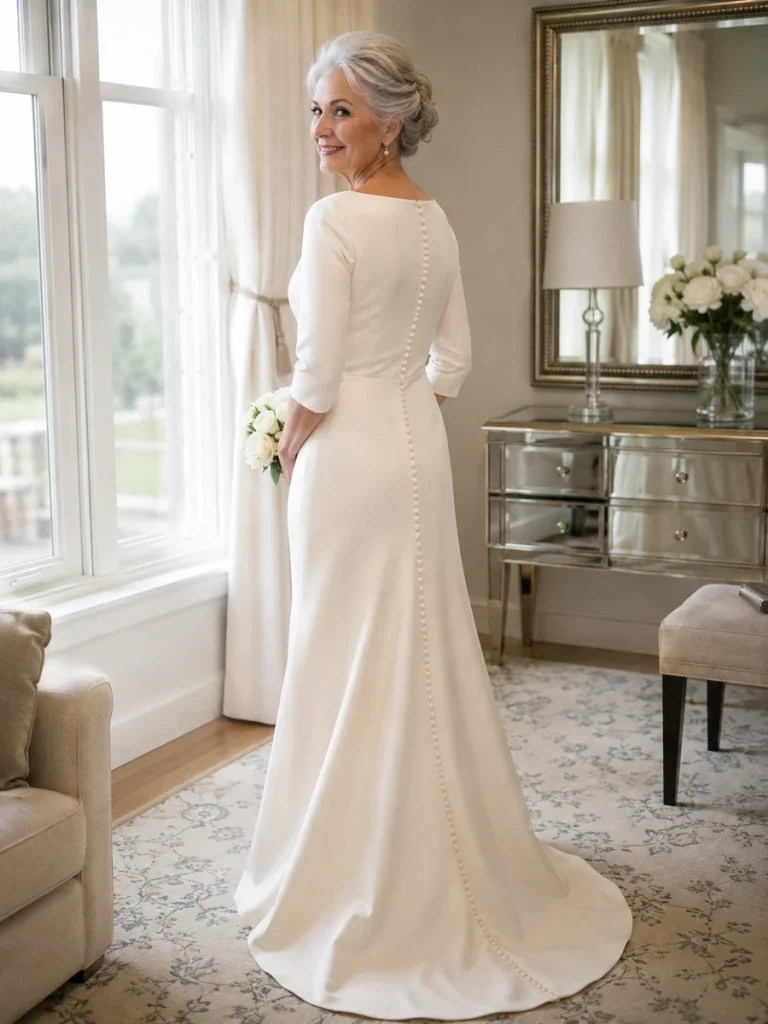
Pearl buttons down the back are one of those details guests notice as you walk away. They work especially well on otherwise simple crepe or satin gowns. Decorative buttons over a hidden zipper give you the same look without the frustration of fastening dozens of tiny loops.
More Gorgeous Hair Ideas
45 Best Wash and Wear Haircuts for Women Over 60 That Are Easy to Maintain
45 Classy and Modern Fall Wedding Hairstyles for Women Over 60 Worth Trying
45 Graceful Wedding Hairstyle for Women Over 70 Ideas Perfect for Mature Hair
45 Feminine Short Haircuts for Women Over 60
45 Flattering Butterfly Haircut With Bangs for Women Over 50
45 Christmas Medium Hairstyles for Women Over 50
31. Silver-Ivory Wedding Gown
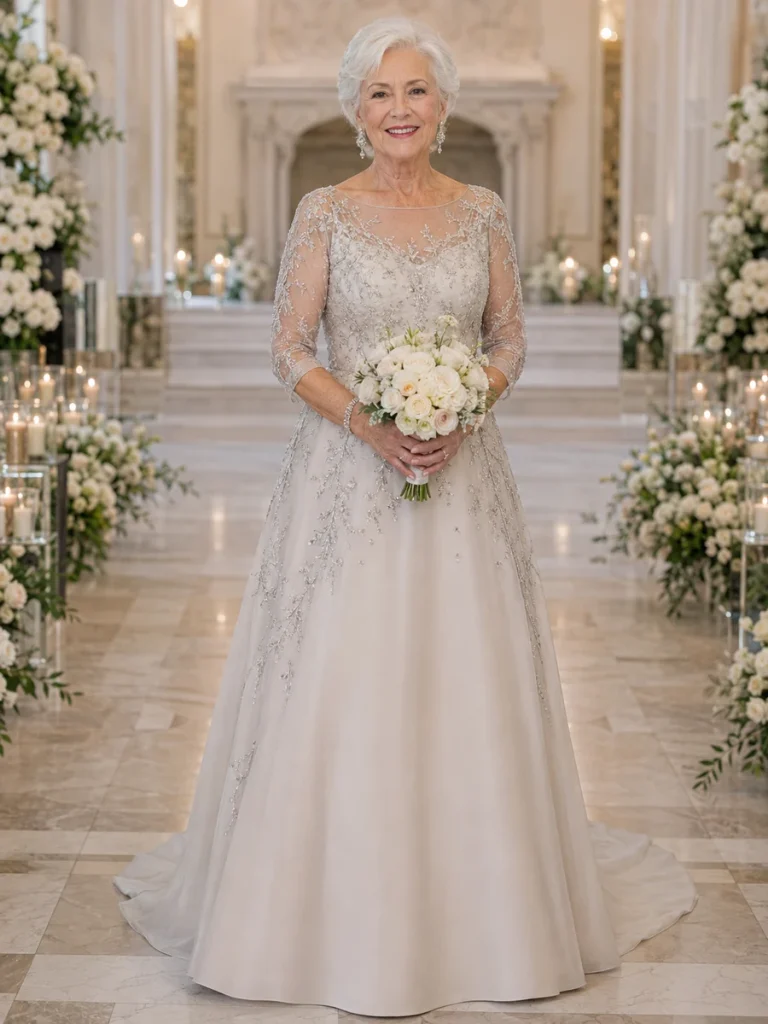
Silver-ivory is a sophisticated alternative when pure white feels too bright and champagne feels too warm. Cool embroidery or very fine silver beading adds depth without making the gown look metallic. It is especially lovely for winter ceremonies and evening weddings.
32. Champagne Dress With a Beaded Capelet
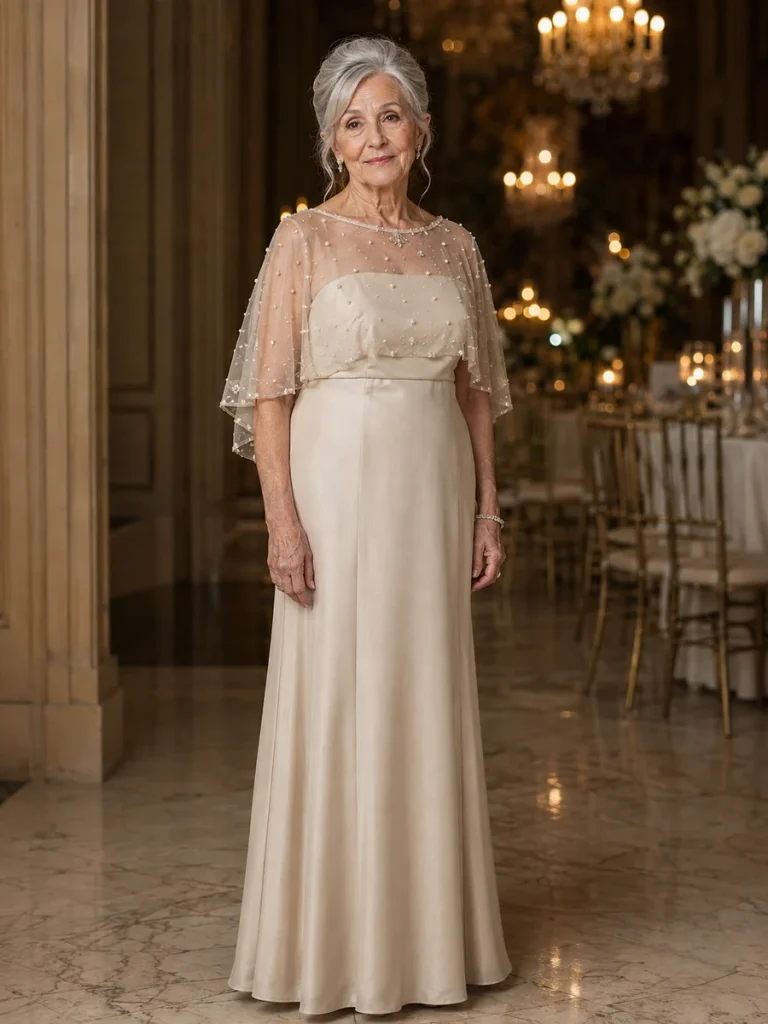
A sheer beaded capelet is an easy way to cover the upper arms while keeping the gown underneath clean and simple. Because it is removable, you can change the mood of the outfit after the ceremony. Keep the beadwork small so the effect stays soft rather than costume-like.
33. Floral Embroidered Garden Wedding Dress
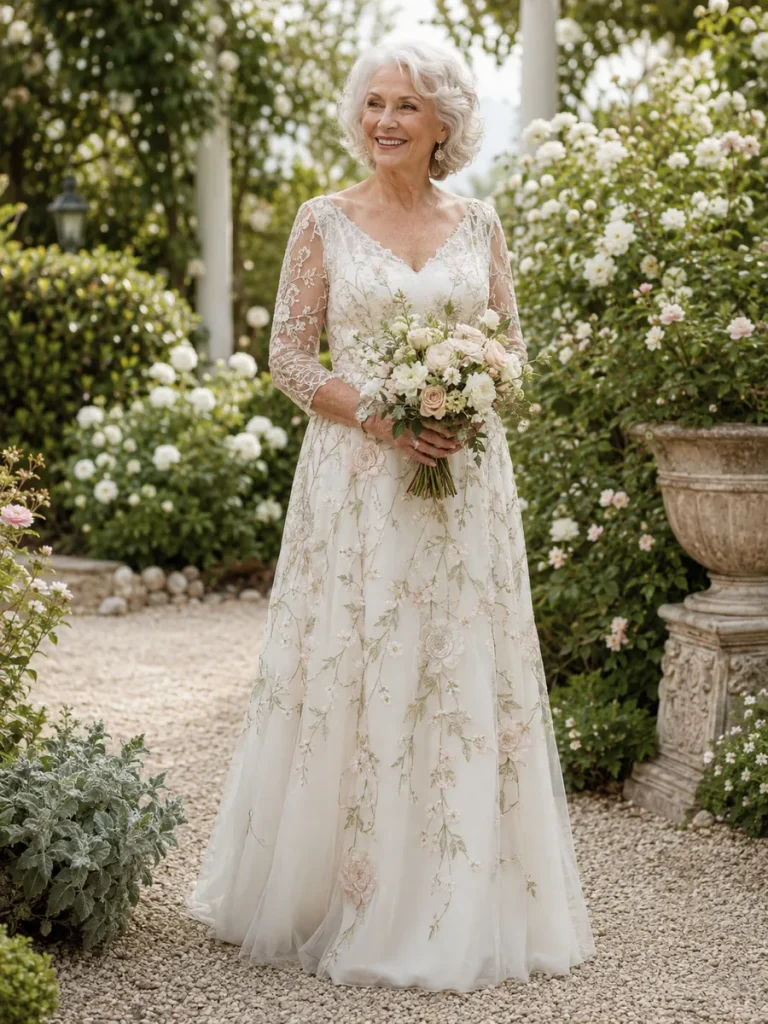
For a garden wedding, botanical embroidery can echo the setting beautifully. Choose pale sage, blush and champagne threads on an ivory base rather than strong colours. From a distance the gown still reads as bridal, while close-up photographs reveal the floral detail.
34. Long Lace Jacket Over a Simple Gown
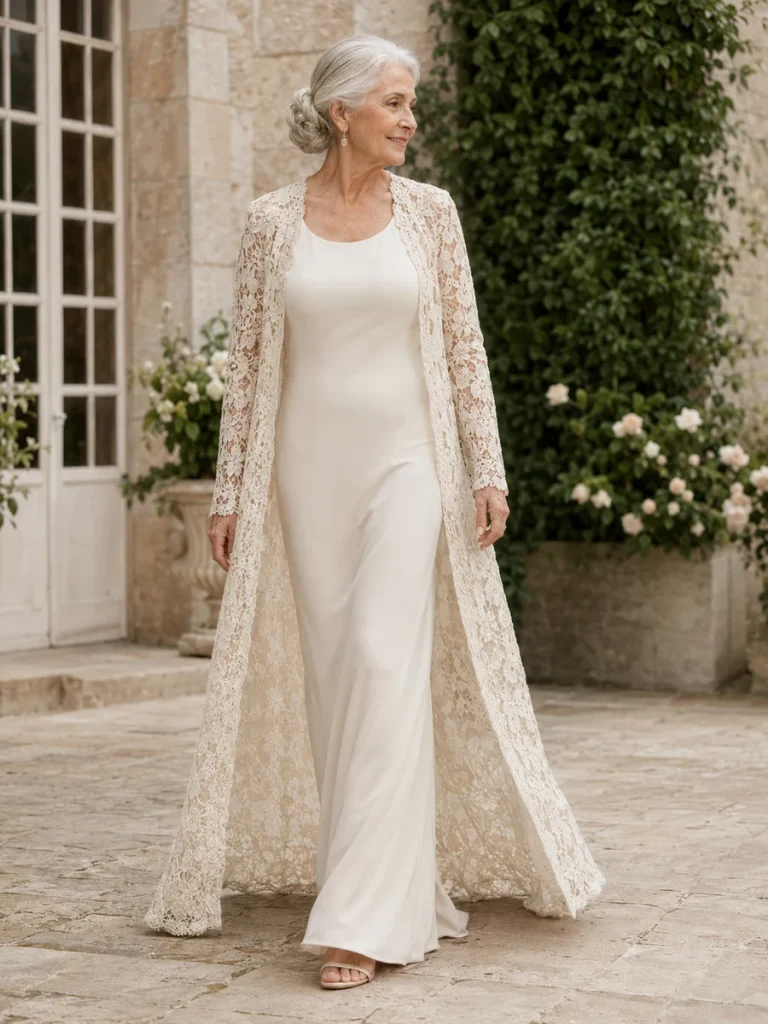
A long lace jacket can completely change a plain column gown. Worn open, it creates flattering vertical lines and gives you full sleeve coverage without hiding the dress beneath. Remove it later and you have a second look with almost no effort.
35. Grecian-Inspired Wedding Dress
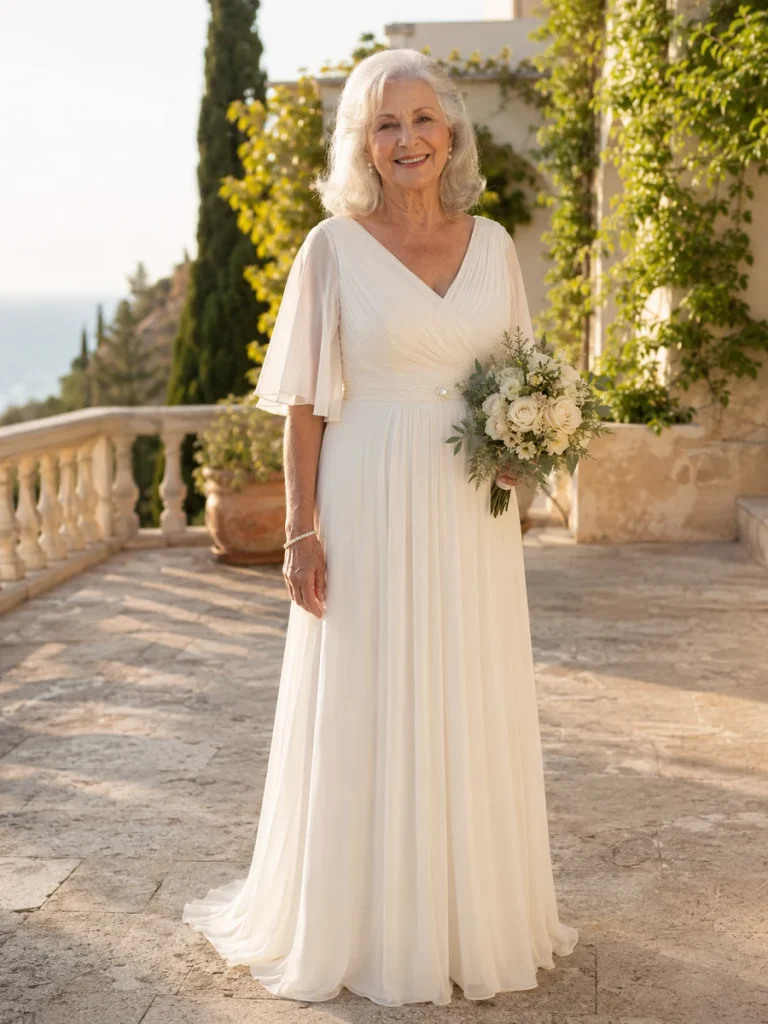
Grecian-inspired gowns are at their best when the pleating is soft and the skirt is light. A slightly raised waist and flowing sleeves create movement while remaining comfortable in warm weather. Avoid overcomplicating the design; one small pearl or crystal detail at the waist is enough.
36. Fit-and-Flare Dress With Three-Quarter Sleeves
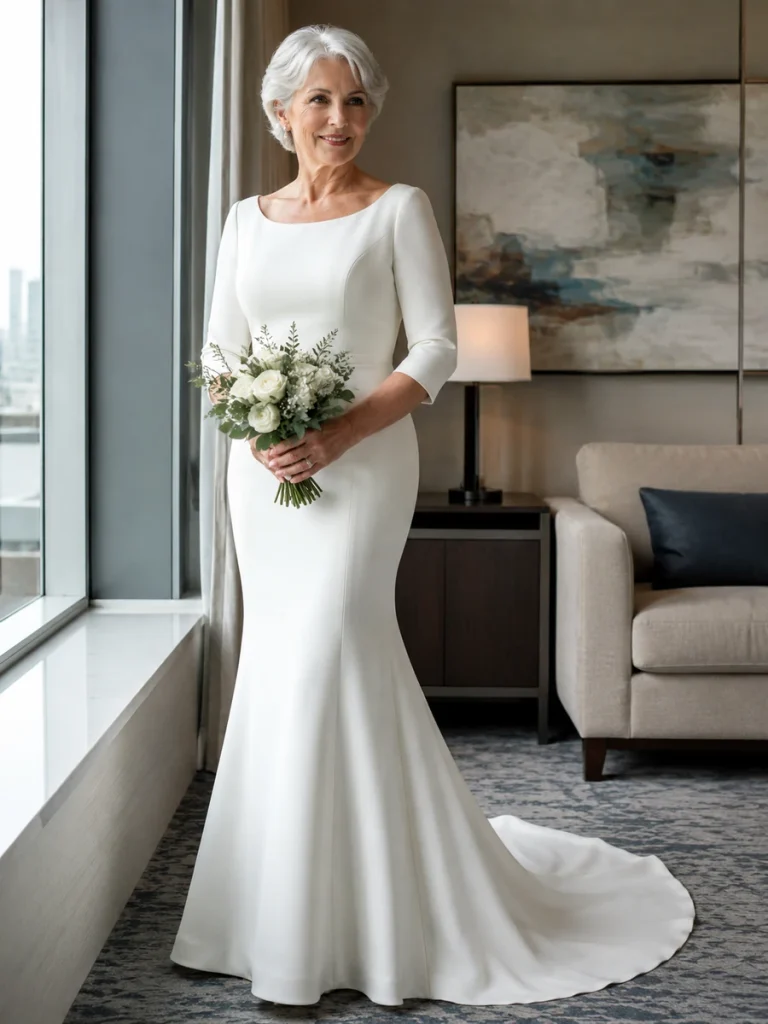
Age is not a reason to avoid a shaped silhouette. A gentle fit-and-flare can follow the waist and hips while still leaving enough room to sit and walk comfortably. Choose a fabric with body, such as crepe, and test the dress from every angle during the fitting.
37. Wedding Gown With Asymmetrical Draping
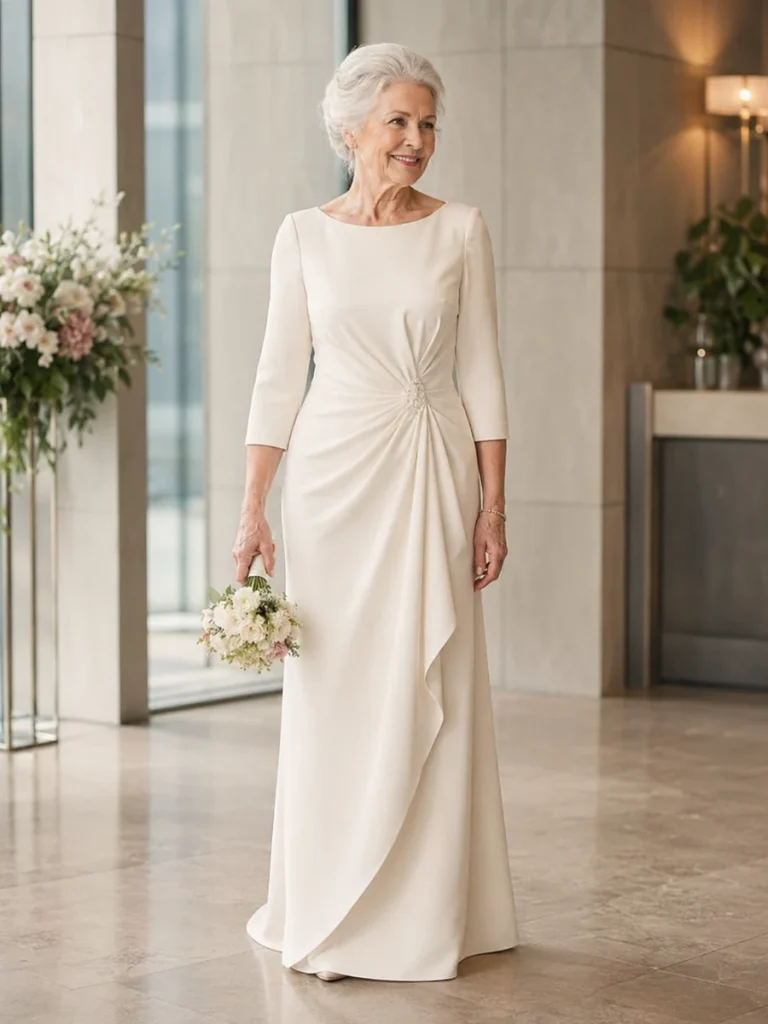
Asymmetrical draping is a clever way to create shape without beads or lace. Fabric gathered to one side of the waist adds movement and gives a simple gown visual interest. Keep the neckline and jewellery understated so the draping remains the main feature.
38. Romantic Lace Tea-Length Dress
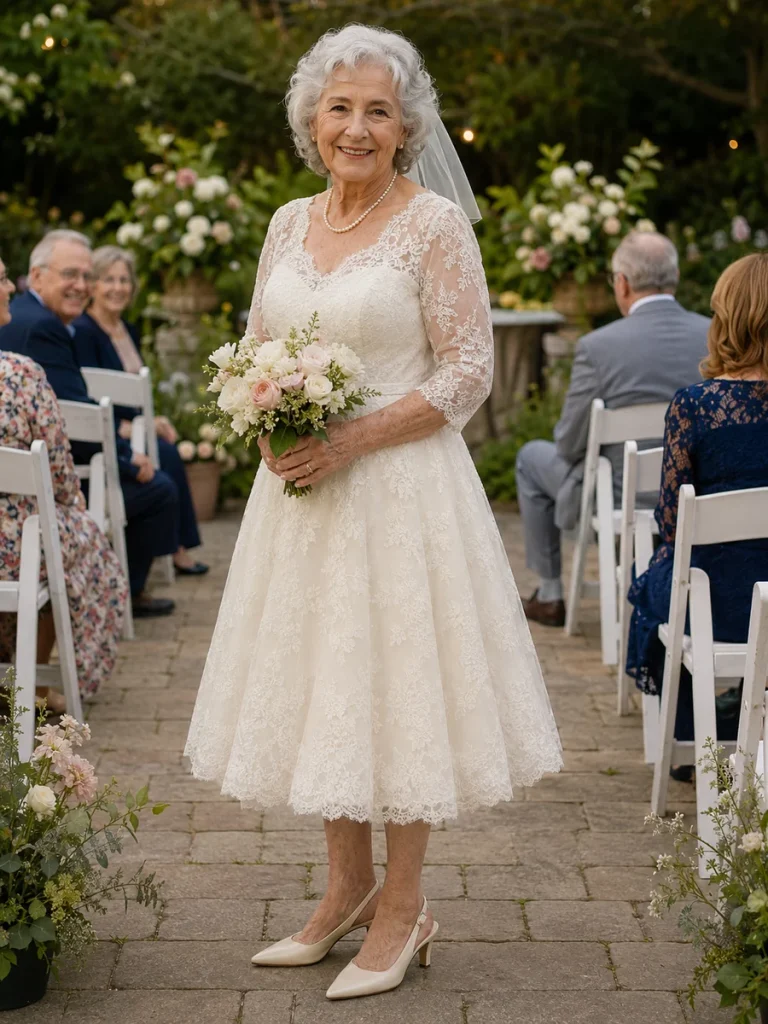
A romantic tea-length lace dress is a lovely choice for an intimate wedding or vow renewal. The shorter length feels light, shows off your shoes and makes walking easier. A small veil can make the look feel more ceremonial without overwhelming the outfit.
39. Minimal Long-Sleeve Satin Gown
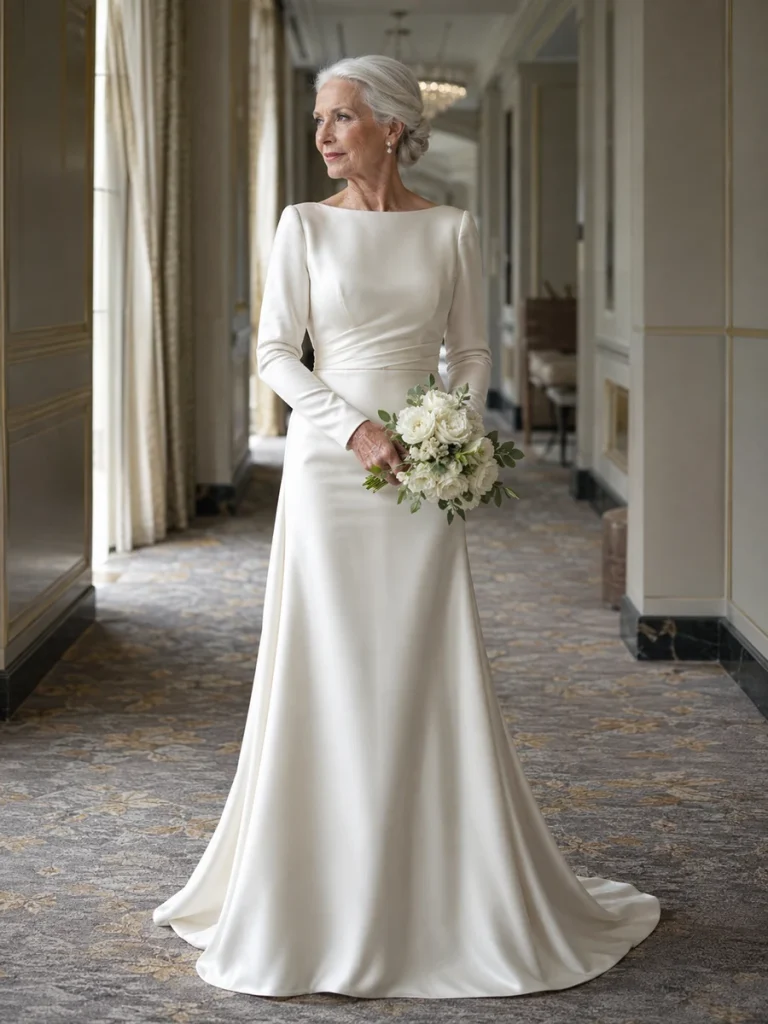
A completely plain long-sleeve satin gown can be one of the strongest looks in the room. With no lace or embellishment to distract the eye, fit and fabric become everything. This is where skilled tailoring pays off. The result is clean, graceful and quietly luxurious.
40. Timeless A-Line Dress With a Lace Cape
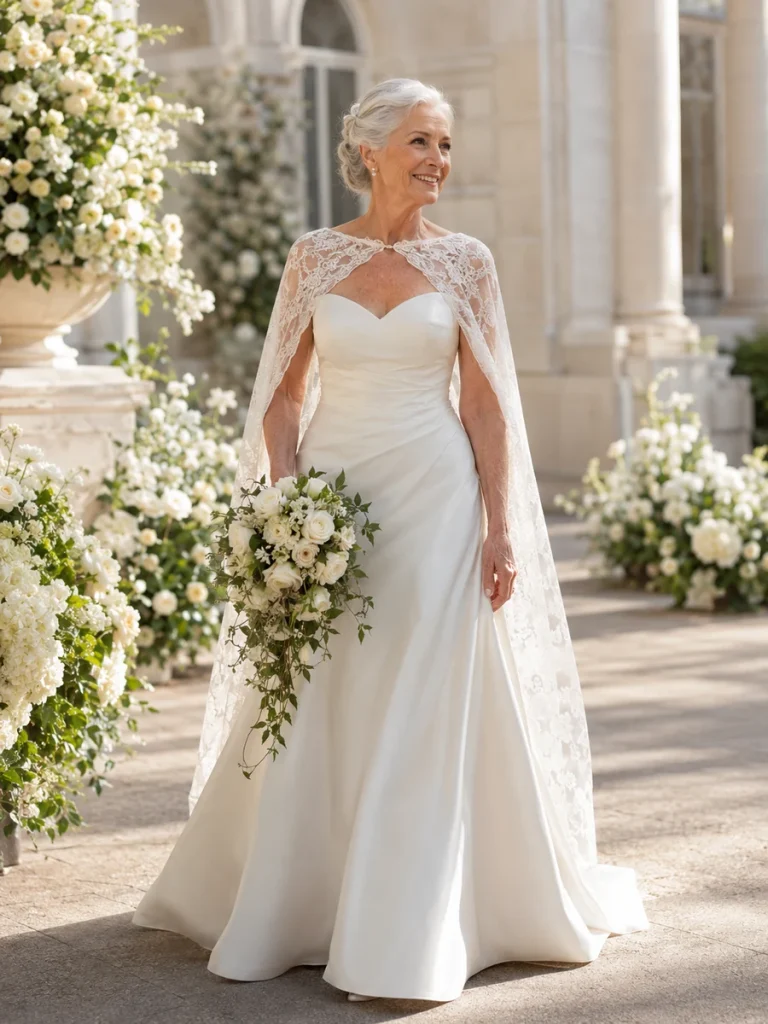
A classic A-line gown topped with a lace cape gives you tradition and drama without a heavy train. The cape adds movement and coverage while the dress underneath stays simple. Choose a distinctive lace pattern or pearl fastening at the neck to make the look feel personal.
What Wedding Dress Shape Works Well After 70?
There is no single silhouette that belongs to women over 70. Bodies vary too much for that kind of rule to be useful. Instead, judge the dress by how it fits your shoulders, waist, hips and movement.
A-line dresses are popular because they define the upper body and gradually widen through the skirt. Column dresses create a straighter line and look especially polished in substantial crepe. Empire-waist gowns can feel light and easy, while tea-length and midi dresses make walking much simpler. If you enjoy a more shaped look, try a fit-and-flare rather than assuming it is off limits.
Sleeves Are a Choice, Not a Requirement
Many searches for classy wedding dresses for older women over 70 immediately lead to gowns with covered arms. Sleeves can be beautiful, but they are not compulsory. If you like sleeveless dresses, wear one. If you prefer coverage, you have far more choices than a basic full sleeve.
- Three-quarter lace sleeves
- Sheer embroidered sleeves
- Flutter sleeves
- Chiffon bishop sleeves
- Cape sleeves
- Bell sleeves
- Removable jackets
- Soft capelets
During a fitting, raise your arms, reach forward and pretend you are hugging someone. If the sleeves pull across your shoulders or cut into your underarms, ask for an alteration or try another dress.
White, Ivory, Champagne or Something Else?
Wear white if you want white. Age does not change your right to wear a traditional bridal colour. Still, trying several shades next to your face is worth the time because the difference can be surprising.
Soft ivory is warmer than brilliant white. Champagne adds depth. Oyster sits somewhere between ivory, beige and pale grey. Blush-champagne gives a barely-there rosy effect, while silver-ivory can be especially flattering with cool-toned hair and winter settings.
Take a few photographs in natural light before deciding. Boutique lighting can make the same fabric look very different.
Fabric Can Change How the Entire Dress Feels
Two gowns with almost identical cuts can behave completely differently because of fabric. Crepe tends to feel clean and modern. Chiffon is light and airy. Lace adds texture, but always test whether it scratches. Satin ranges from fluid and draped to heavy and architectural. Georgette is useful for flowing layers and jackets, while mikado holds a stronger shape.
Do not judge fabric only by appearance. Pick up the skirt. Feel the weight. Bend your arms. Sit for a few minutes. Your wedding day lasts much longer than a fitting-room photograph.
Match the Dress to the Ceremony
A courthouse bride may enjoy a midi dress, trouser suit or simple crepe sheath because those styles are easy to manage through hallways, steps and city streets. A church ceremony can suit lace sleeves, jackets and classic A-line gowns. Garden weddings favour softer fabrics and manageable hems. Beach ceremonies are easier in chiffon, lightweight crepe and dresses without heavy trains. Ballrooms give you more freedom to use satin, beadwork, longer hems and dramatic capes.
Picture the actual route you will walk. Are there stairs? Grass? Gravel? Sand? A long car ride? Those details are often more useful than a generic rule about what older brides should wear.
The Bridal Boutique Should Listen to You
If a consultant immediately puts you into a shapeless, fully covered gown simply because of your age, speak up. Tell them what you actually like. Bring photographs of necklines, sleeves, fabrics and silhouettes that catch your attention. The models in those photographs do not need to be your age; you are showing the consultant design details, not asking to become someone else.
And try one wildcard. The dress you would never choose from the hanger sometimes becomes the one you remember.
Good Alterations Matter More Than the Size Label
Budget for tailoring from the beginning. A dress in your usual size may still need the shoulders lifted, the hem shortened, the waist adjusted or the sleeves reshaped. A skilled seamstress can also add bust support, an illusion panel, removable sleeves, a bustle or different fastenings.
If you use a walking aid or expect to sit for much of the ceremony, bring that information into the fitting. The dress should work with your life, not just with the bridal platform.
Do the Sitting Test Before You Buy
Sit down in the dress for several minutes. Does the neckline move? Does boning dig into your ribs? Does the waist suddenly feel tight? Can you stand up easily? These questions sound ordinary, but they matter enormously after several hours.
A good wedding dress should not require your attention every few minutes.
Think Carefully About Shoes
Low block heels, kitten heels, elegant flats, dressy loafers and soft satin pumps can all look bridal. Pick the height you can comfortably wear rather than the height you think a wedding demands. Wear the shoes at home several times before the ceremony and bring the exact pair to your hem fitting.
Accessories Work Best When They Do Not Compete
If the gown has a detailed neckline, skip the necklace and choose earrings. If you are wearing a dramatic cape, keep the hair accessory simple. If the dress is minimalist, that is when a brooch, pearl earrings or special pair of shoes can stand out.
You do not need every bridal accessory at once. One memorable detail is often enough.
Can a Bride Over 70 Wear a Veil?
Absolutely. A veil is not restricted by age or by whether this is your first wedding. Fingertip and elbow-length veils are easy to manage, while a longer veil can make a very simple dress feel instantly ceremonial. If a veil is not your style, try a pearl comb, flowers, a headband or nothing at all.
Second Wedding? You Still Get to Look Like a Bride
There is no requirement to make a second wedding deliberately less bridal. If you want an ivory gown and veil, wear them. If you already did the traditional gown once and would rather choose a champagne midi dress or tailored suit, do that instead. The ceremony belongs to your present life, not an old etiquette book.
A Few Details Worth Checking Carefully
- Heavy beadwork: beautiful, but tiring after several hours.
- Very long trains: impressive in photographs, less convenient for walking.
- Tight cuffs: uncomfortable if your hands swell during a long day.
- Scratchy lace: test it against your inner arm before ordering.
- Tiny back buttons: decorative buttons over a hidden zipper are often easier.
- Constant adjustment: if you keep pulling at a neckline in the fitting room, keep looking.
Frequently Asked Questions
What style of wedding dress looks good on a 70-year-old bride?
A-line, column, empire-waist, tea-length and softly fitted gowns can all look beautiful. Your proportions, comfort and personal taste matter more than your age.
Can a woman over 70 wear a white wedding dress?
Yes. White and ivory are bridal colours, not age categories. Choose the shade that looks best next to your skin and hair.
What is a good wedding dress for a second marriage after 70?
Anything from a traditional lace gown to a champagne midi dress, tailored pantsuit or clean crepe column can work. Match the formality to your ceremony and your own style.
Do older brides need sleeves?
No. Sleeves are a style choice. Wear them because you like the look or want the coverage, not because someone says your age requires them.
Can a bride over 70 wear a fitted gown?
Of course. If you like a shaped silhouette, try it. Make sure you can sit, walk and breathe comfortably and choose a fabric that supports the cut.
What colours are especially elegant for older brides?
Soft ivory, champagne, oyster, blush-champagne, pearl and silver-ivory are all beautiful options. Natural light photographs are the best way to compare them.
Should older brides avoid sparkle?
Not at all. Small pearls, fine crystal beading or a beaded capelet can add light without overwhelming the gown.
What shoes work best?
The pair you can wear confidently for hours. Low block heels, kitten heels, flats and wedges can all look polished and bridal.
Before You Buy the Dress, Try This
Walk around. Sit down. Stand up. Raise both arms. Reach forward. Turn around. Take several normal steps. Ask someone to photograph you from the front, side and back. Then stay in the dress for another ten minutes.
After the first excitement settles, you will notice whether the sleeves itch, the waistband presses, the neckline moves or the fabric feels heavier than expected. You may also discover that you forget you are wearing the gown because it feels so natural. That is often an excellent sign.
Your Dress Does Not Need to Make You Look Younger
You do not need a gown that promises to make a 72-year-old bride look 52. You need a gown that makes a 72-year-old bride look wonderful.
Silver hair beside ivory lace can be striking. Natural lines on a smiling face belong in wedding photographs. A woman with decades of life behind her does not need to imitate a twenty-something bride to look romantic.
So when you browse classy wedding dresses for older women over 70, save the dresses that make you stop. Try different fabrics. Question rules that do not make sense. Spend your alteration budget where it matters. Make sure you can walk, sit and hug people comfortably.
Then look in the mirror again. If you see yourself rather than somebody else’s idea of what an older bride should be, you are probably very close to the right dress.
