Let’s start with a moment you probably recognize.
You wake up, and for just a second, you’re fine. Then you swing your legs over the side of the bed — and there it is. That stiffness in your knees. That tightness across your hips. Maybe a low, dull ache in your lower back that fades once you’ve been moving for a few minutes. You stand at the bathroom sink and stretch your fingers open, waiting for your hands to catch up with your morning.
You’ve mentioned it to your doctor. She nodded, said something about “normal aging,” and suggested you try some supplements. But then you went to the vitamin aisle — or opened Amazon — and suddenly you were staring at forty-seven different options with labels that all sound equally important, and you quietly put two in your cart and hoped for the best.
Sound familiar? You are so not alone.
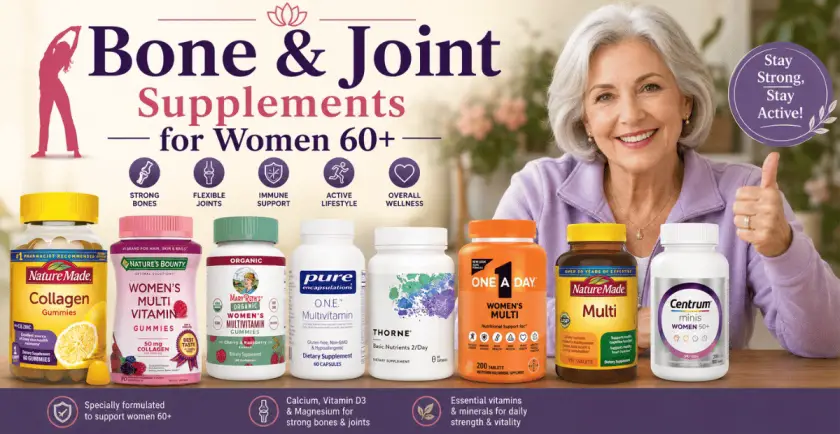
Millions of American women over 60 are navigating exactly this — the physical changes that come with this season of life, the well-meaning but often vague advice, and the overwhelming supplement market. This guide is here to change that. We’re going to walk through why your bones and joints change after 60, what nutrients are genuinely supported by science, how to pick a supplement you’ll actually take, and introduce you to eight carefully selected products — each one matched to a different woman, a different lifestyle, a different set of needs.
By the end, you’ll know exactly what you’re looking for. Let’s get into it.
When you click on certain links within my blog posts, it may lead you to a product page where you have the opportunity to make a purchase. Please note that if you decide to make a purchase through those links, I may earn a commission from the retailer or brand. For more information, please visit the Affiliate Disclosure page on my blog.
What’s Actually Happening to Your Bones After 60 (And Why It Matters Right Now)
Your skeleton is not the static, fixed structure it looks like in a diagram. Bone is living tissue, constantly being broken down and rebuilt in a process called remodeling. When you were young, the rebuilding kept pace with the breakdown. After menopause, that balance shifts — and for many women, it shifts significantly.
Estrogen, the hormone that drops during menopause, plays a major protective role in bone density. When estrogen levels fall, bone-breaking cells (called osteoclasts) become more active than bone-building cells (osteoblasts). The result? Bone density decreases. Bones that were once dense and strong become slightly more porous, more brittle, more vulnerable to fracture. The National Osteoporosis Foundation estimates that about half of all women over 50 will break a bone because of osteoporosis at some point in their lives.
But here’s what often gets less attention: your body’s ability to absorb the nutrients that maintain bone also declines with age. You might be eating a reasonably calcium-rich diet and still running low, because your gut simply isn’t absorbing it as efficiently. Your skin makes less vitamin D from sunlight. Your kidneys are less effective at converting vitamin D into its active form. And if you’re taking any common medications — acid reflux drugs, blood pressure medications, certain diabetes drugs — those can deplete bone-critical nutrients even further.
Meanwhile, your joints are on their own parallel journey. The cartilage that cushions the ends of your bones — think of it as the shock absorber in your knees, hips, and hands — gets thinner and less resilient over time. The synovial fluid that lubricates those joints decreases. The muscles and tendons surrounding your joints lose some of their tone and flexibility, meaning the joint itself bears more impact. This is why so many women over 60 feel stiffness after sitting, aching after walking, or that familiar grinding sensation in the knees going down stairs.
None of this is a disaster. But it is a signal that your body has different needs now than it did at 45 — and addressing those needs proactively can make an enormous difference in how you feel day to day, and in your long-term health trajectory.
The 7 Nutrients Your Bones and Joints Are Asking For
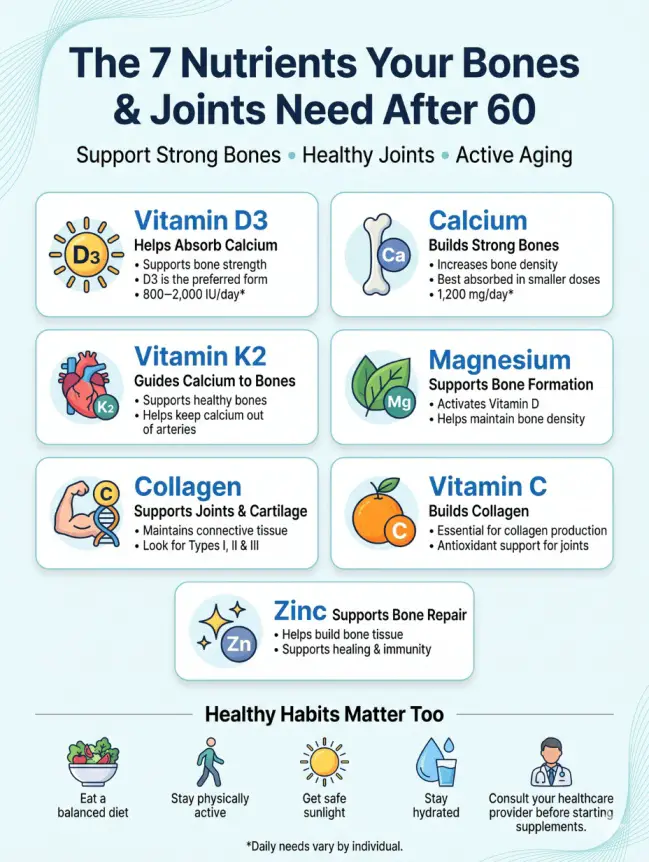
Before we look at specific products, you need to understand what’s in them — and why it matters. Here’s a plain-English breakdown of the nutrients that have real, meaningful roles in bone and joint health for women over 60.
1. Vitamin D3
This is arguably the most important nutrient for bone health after 60, and it’s also one of the most commonly deficient. Vitamin D is what allows your body to actually absorb calcium from food. Without adequate vitamin D, you can eat all the dairy and leafy greens in the world and still be calcium-deficient at the bone level. D3 (cholecalciferol) is the preferred form — it raises blood levels more effectively than D2. Most women over 60 benefit from 800 to 2,000 IU per day, though your doctor can test your levels and give you a personalized target.
2. Calcium
The main mineral in bone, calcium is what gives bone its density and strength. The recommended intake for women over 50 is about 1,200 mg per day from all sources combined (food plus supplements). The key word is combined — because most women get at least 500–700 mg from food, you often don’t need to supplement with huge doses. More is not better with calcium; excess supplemental calcium has been associated with kidney stones and, in some research, cardiovascular concerns. Aim to fill the gap between what you eat and 1,200 mg, and split doses if supplementing, since your body absorbs calcium better in amounts under 500 mg at a time.
3. Vitamin K2
Think of vitamin K2 as the traffic director for calcium. It activates proteins that guide calcium into bone and teeth — and just as importantly, helps keep it from depositing in arteries, where it doesn’t belong. K2 is often absent from standard multivitamins (they usually include K1 instead), but the more sophisticated formulas include it. If you take blood thinners like warfarin, talk to your doctor before taking any vitamin K supplement.
4. Magnesium
About 60% of your body’s magnesium is stored in bone. It’s needed for over 300 enzymatic reactions and plays a direct role in bone crystal formation and the activity of vitamin D. Many American women are mildly deficient in magnesium, especially those who eat a lot of processed food or take proton pump inhibitors (acid reflux medications). Low magnesium is associated with lower bone density and increased fracture risk.
5. Collagen
Collagen is the protein scaffold that bone is built on — the framework that calcium and other minerals attach to. It’s also a primary component of cartilage, tendons, and ligaments. After 60, your body produces less collagen naturally. Supplementing with hydrolyzed collagen (collagen peptides) has shown promising results in some studies for joint comfort, skin elasticity, and supporting connective tissue. It’s worth noting that collagen for joints is a slightly different discussion than collagen for skin — look for Types I, II, and III for comprehensive support.
6. Vitamin C
Your body cannot make collagen without vitamin C. This vitamin is the essential cofactor for collagen synthesis, and it also functions as an antioxidant in joint tissue, helping to reduce oxidative stress that can accelerate cartilage breakdown. Vitamin C pairs naturally with collagen supplements for this reason.
7. Zinc
Zinc has a quiet but important role in bone metabolism — it’s involved in the activity of bone-building cells and the synthesis of proteins in bone matrix. It also supports immune function and wound healing, which matters for tissue maintenance and repair throughout your body, including joint tissue.
How to Choose the Right Supplement: Your Practical Checklist
Now that you know what you’re looking for, here’s how to evaluate any supplement before you buy it.
✅ Is it made for women your age?
A supplement formulated for “Women 50+” or “Women 60+” has been tailored to your specific life stage. Women’s formulas often have iron-free formulations (since post-menopausal women don’t need extra iron), adjusted calcium levels, and higher vitamin D. Generic adult multivitamins are often designed around the needs of younger adults.
✅ Is it third-party tested?
The supplement industry is self-regulated in the United States, which means what’s on the label isn’t always what’s in the bottle. Look for independent verification seals: USP Verified, NSF International, or ConsumerLab approved. These mean an outside lab tested the product for ingredient accuracy and purity.
✅ Can you actually take it every day?
The absolute best supplement is the one you actually swallow consistently. If big tablets make you gag, choose a mini tablet, capsule, or gummy. If you forget pills, a gummy on your nightstand might work better than a capsule you have to take with food. Be honest with yourself about what you’ll stick with.
✅ What form are the nutrients in?
The form matters. Magnesium glycinate or citrate absorbs better than magnesium oxide. Folate as methylfolate is better utilized than folic acid, especially if you have an MTHFR gene variant (more common than you’d think). Vitamin D3 is more effective than D2. Higher-quality supplements will often list these “better absorbed” forms on the label.
✅ Does it interact with anything you’re taking?
This is non-negotiable: talk to your doctor or pharmacist before adding a new supplement if you take any prescription medications. Vitamin K interacts with blood thinners. Calcium can interfere with thyroid medications and certain antibiotics. Magnesium can affect some heart and blood pressure drugs. Your doctor is your partner here, not an obstacle.
✅ What’s your budget — and how long will it last?
A 280-count bottle versus a 60-count bottle at a similar price point tells you a lot about cost-per-dose. Calculate the price per day rather than the price on the label. Sometimes a higher upfront cost is actually cheaper daily than a budget option that runs out in a month.
8 Bone & Joint Supplements for Women 60+ Worth Knowing About
These eight picks span different formats, price points, and health priorities. Find the description that sounds most like you.
1. Centrum Minis Women 50+ — Best for Women Who Hate Swallowing Big Pills

Let’s get the most common complaint out of the way first. If you’ve ever gagged on a standard supplement tablet, felt like you were swallowing a horse pill, or simply avoided taking vitamins because the tablets are just too big — the Centrum Minis formula was built with you in mind.
These are small-format multivitamin/multimineral tablets, specifically designed for women 50 and older, delivering a comprehensive blend that includes vitamin D for calcium absorption, the B vitamins that support energy, antioxidants for cellular protection, and key minerals your bones rely on. Because the formula is built for women in the 50+ life stage, it skips unnecessary iron while targeting nutrients this age group tends to run low on.
With 280 tablets per bottle, this is also exceptional value — nearly a full year’s supply in one purchase. Keep them on your nightstand or next to the coffee maker, and taking two a day becomes second nature. For a woman who has struggled with supplement consistency because of tablet size, this is a genuinely life-changing switch.
Best for: Women who avoid vitamins because of large tablet size; women who want a long-lasting, age-appropriate daily foundation
➡ Check current price on Amazon
2. Nature Made Multi — Best for the Woman Who Trusts Third-Party Testing
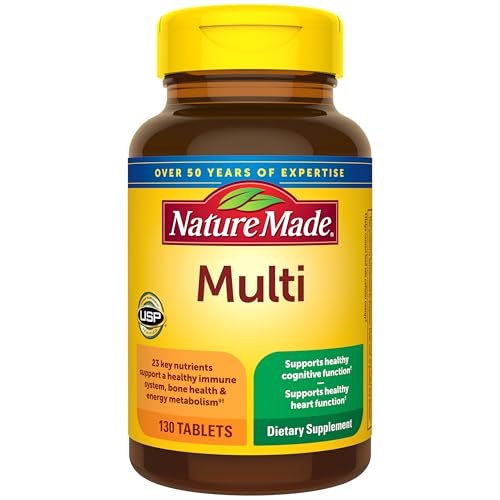
You’ve been burned before. You bought a supplement that made big promises, and three months later you couldn’t tell if it made any difference at all. You’ve started reading labels and wondering: is what they claim actually in here?
This is where USP Verification matters — and why the Nature Made Multi earns its place on this list. Nature Made is one of the most widely USP-Verified supplement brands in the United States, meaning an independent laboratory has tested this product to confirm that the nutrients listed on the label are present at the stated levels, that it’s free of harmful contaminants, and that it will dissolve properly in your body.
This multivitamin delivers 23 key nutrients that collectively support healthy immune function, bone health, energy metabolism, cognitive function, and heart function. For a woman over 60 who wants confidence that she’s getting what she’s paying for, USP verification is the gold standard — and Nature Made delivers it at a very accessible price point. The 130-tablet bottle is a solid four-month supply.
Best for: Women who prioritize third-party verification; women who want a trustworthy, comprehensive multi at a fair price
➡ Check current price on Amazon
3. One A Day Women’s Multi — Best for the Woman Who Wants Simple and Affordable

Not everyone wants to spend hours researching. Sometimes you just want one good tablet, once a day, that covers the bases without costing a fortune or requiring a biology degree to evaluate. If that’s you, the One A Day Women’s Multi is one of the most trusted, most straightforward options on the market.
Made by Bayer — one of the most recognized healthcare companies in the world — this formula specifically lists bone health as one of its support areas, alongside physical energy, immune health, skin health, heart health, and healthy muscle function. It’s a well-rounded women’s formula that addresses the everyday needs of women who want to stay active and feel their best.
The 200-tablet bottle is an outstanding value — that’s more than six months of daily supplementation. Keep it simple, keep it consistent, and let this do the work in the background while you get on with living your life. Sometimes the most sophisticated choice is the one you’ll actually stick with.
Best for: Women who want a no-fuss, trustworthy daily multi; women on a budget who don’t want to compromise on quality
➡ Check current price on Amazon
4. Thorne Basic Nutrients 2/Day — Best for the Woman Who Reads Every Label

You know the difference between magnesium oxide and magnesium glycinate. You’ve looked up methylfolate. You’ve asked your functional medicine doctor about nutrient absorption, and you’d rather pay a bit more for a formula that actually delivers what it promises at the cellular level. This is your supplement.
Thorne is one of the most respected names in professional-grade nutritional supplements, frequently recommended by integrative physicians and naturopathic doctors. The Basic Nutrients 2/Day formula uses well-researched, highly bioavailable forms of key vitamins and minerals — including vitamin D3, vitamin K (to support the direction of calcium into bones), and magnesium in an absorbable form. The 2-capsule daily serving size allows Thorne to pack in a significantly more comprehensive nutrient profile than a single tablet can carry.
For a woman who has done the research and knows she wants quality forms, not just high numbers on a label, Thorne Basic Nutrients 2/Day delivers practitioner-level nutrition in a daily habit. It is an investment, but so is your skeleton.
Best for: Health-conscious women who research ingredient forms; women working with a functional or integrative health practitioner
➡ Check current price on Amazon
5. Pure Encapsulations O.N.E. Multivitamin — Best for Sensitive Stomachs

Does your stomach flip when you take vitamins on an empty stomach? Have you experienced nausea, heartburn, or digestive upset from supplements in the past? Do you have food sensitivities, allergies, or a digestive condition that makes you careful about what you put in your body? This is the formula designed for you.
Pure Encapsulations is a brand built around the principle of hypoallergenic nutrition — no unnecessary additives, no common allergens, no artificial colors or flavors. The O.N.E. Multivitamin (which stands for Once-daily Nutrient Essentials) is gluten-free, non-GMO, and hypoallergenic, and it includes a sustained-release form of CoQ10, which supports cellular energy production in addition to core vitamin and mineral coverage.
It comes in a single capsule format, which is gentle and easy to digest. The comprehensive formula covers the vitamins and minerals your bones rely on — including vitamin D, vitamin K, and key minerals — in a clean, carefully constructed form. For a woman over 60 with a sensitive system, this is what “clean supplement” actually looks like.
Best for: Women with sensitive digestion, food sensitivities, or allergies; women who want the cleanest possible formulation
➡ Check current price on Amazon
6. MaryRuth’s Organic Women’s Multivitamin Gummies — Best for the Organic-First Woman

You shop at the farmer’s market. You read ingredient labels on your food. You’ve switched to organic wherever you can and you feel strongly that what goes into your body should be as clean and natural as possible. Why should your supplements be any different?
MaryRuth’s Organic Women’s Multivitamin Gummies are USDA Certified Organic, vegan, and non-GMO — and they actually taste like something you’d look forward to, in cherry and raspberry flavors. They deliver vitamins C, D, and E; B6 and B12; biotin; and zinc — covering the bone-critical vitamin D and zinc alongside a broader women’s health nutrient profile.
For a woman who has always felt slightly conflicted about taking synthetic supplements while otherwise living an organic lifestyle, MaryRuth’s closes that gap beautifully. Take two gummies a day and consider them your clean, green daily foundation. The bonus: they’re so good that you actually remember to take them.
Best for: Women who prioritize organic, plant-based living; women who want a gummy format without compromising on clean ingredients
➡ Check current price on Amazon
7. Nature’s Bounty Women’s Multivitamin + Collagen Gummies — Best for Joint Comfort Focus

You’re less concerned about bone density numbers and more focused on something very practical: your knees hurt when you go downstairs, your hips ache after a long walk, and you want to feel more comfortable in your body from day to day. You don’t want a complicated protocol. You want something simple that might actually help your joints feel better.
Nature’s Bounty Women’s Multivitamin Gummies are unique on this list because they do double duty: a comprehensive women’s multivitamin combined with 50 mg of collagen per serving. Collagen is a primary structural protein in cartilage, tendons, and ligaments — the connective tissue your joints depend on — and supplementing with it has been associated with improved joint comfort in some research, particularly for women experiencing age-related joint changes.
You get the immune support, bone-health vitamins, and energy metabolism of a solid women’s multi, plus the collagen your joints are asking for, in a delicious mixed berry and raspberry gummy that doesn’t feel like medicine at all. Nature’s Bounty is also the #1 brand for hair, skin & nails — which means your joints, skin, and nails get support simultaneously. For a woman who wants joint-first supplementation in the most effortless possible format, this is a strong choice.
Best for: Women whose primary concern is joint comfort and flexibility; women who want collagen and multivitamin support in one step
➡ Check current price on Amazon
8. Nature Made Collagen Gummies with Vitamin C & Zinc — Best as a Collagen Add-On

Maybe you already love your multivitamin and aren’t looking to switch — you just want to add something targeted for your skin, joints, and connective tissue. Or maybe you’ve heard a lot about collagen lately and want to try it in the most commitment-free, enjoyable way possible.
Nature Made Collagen Gummies deliver collagen alongside vitamin C and zinc — exactly the supporting nutrients your body uses to actually synthesize collagen. Vitamin C is the essential cofactor for collagen production, and zinc plays a key role in tissue repair and maintenance throughout the body, including in the connective tissue of your joints.
It’s one gummy a day, lemon flavored, made by the #1 pharmacist-recommended vitamin and supplement brand, USP-quality verified, and available at a very accessible price point. If you want to dip your toe into collagen supplementation without overhauling your whole routine, start here. It layers beautifully on top of any of the multivitamin options listed above.
Best for: Women who want to add collagen to an existing routine; women new to collagen who want a low-commitment starting point
➡ Check current price on Amazon
How to Build Your Own Simple Supplement Routine After 60
One of the most common mistakes women make is going from zero to five supplements overnight, then feeling overwhelmed, forgetting doses, and giving up entirely. Here’s a gentler, more sustainable approach.
Step 1: Start with one daily foundation
Pick one women’s multivitamin that matches your lifestyle and form preference from the list above. That’s it. Just one thing, every day, for four weeks. Get that habit established before you add anything else.
Step 2: Assess after a month
After four weeks, check in with yourself. Are you taking it consistently? Have you noticed any changes (more energy, less fatigue, better mood)? At this point, if joint comfort is a priority, consider adding a collagen supplement — either the Nature Made Collagen Gummies as an add-on, or switch to Nature’s Bounty Women’s Multi with Collagen for a combined approach.
Step 3: Get your labs done
Ask your doctor for a vitamin D blood test (25-OH vitamin D). This is a standard blood test that will tell you exactly where you stand. Many women over 60 are deficient, and knowing your number lets you supplement appropriately rather than guessing. If your level is very low, your doctor may recommend a higher-dose vitamin D supplement separately.
Step 4: Adjust with your doctor’s input
Bring your supplement bottles to your next appointment. Your doctor can check for interactions with any medications you take, advise on appropriate calcium intake given your specific health history, and help you avoid over-supplementing (which is a real risk with fat-soluble vitamins like A and D).
Step 5: Stack your habits
The most effective supplement routine is the one attached to a habit you already have. Take your supplements with your morning coffee, your evening meal, or when you brush your teeth at night. Stack the new habit onto an existing one and it becomes automatic within two to three weeks.
Lifestyle Habits That Work Alongside Your Supplements
No supplement is a magic pill — and the women who see the best long-term results are the ones who combine smart supplementation with a few key lifestyle habits. None of these require a gym membership or a complete life overhaul.
Weight-Bearing Exercise
Bone responds to load. When you walk, do gentle strength work, or stand and move throughout the day, you’re sending a biological signal that your skeleton needs to stay strong. Weight-bearing and resistance exercise are among the most powerful tools for maintaining bone density after 60. You don’t need to lift heavy — light resistance bands, body-weight exercises, and consistent daily walking all count.
Strength and Balance Training
Muscle strength supports your joints by absorbing impact and reducing the load on cartilage. Better balance reduces the risk of falls, which is where bone fractures most often occur. Yoga, tai chi, Pilates, and simple standing balance exercises are all excellent options that most women can do at home.
Protein at Every Meal
Bone matrix is partly protein, and muscle — which protects your joints — is entirely protein. After 60, your body becomes slightly less efficient at using dietary protein, so many experts recommend modestly higher protein intake for older adults. Try to include a protein source at every meal: eggs, Greek yogurt, legumes, fish, chicken, or plant-based proteins.
Stay Hydrated
Cartilage is about 70–80% water. Even mild dehydration can make joints feel stiffer and more uncomfortable. Aim for at least 6–8 glasses of water daily, and pay attention to how much better you feel on well-hydrated days — it’s often noticeable.
Anti-Inflammatory Eating
A diet rich in colorful fruits and vegetables, fatty fish, olive oil, nuts, and whole grains helps reduce the systemic inflammation that underlies much of the joint discomfort women experience after 60. This doesn’t mean perfection — it means leaning toward foods that nourish and away from processed foods that inflame.
Sun (With Sense)
Your skin makes vitamin D when exposed to direct sunlight, and getting 10–20 minutes of mid-morning sun on your arms and legs a few times a week supports your body’s natural vitamin D production. This doesn’t replace supplementation — especially in winter, or if you live in northern states — but it’s a free, feel-good boost for your bone health.
Frequently Asked Questions About Bone & Joint Supplements for Women Over 60
What is the single most important supplement for bone health after 60?
If you could only choose one nutrient, most experts would point to vitamin D3, because without adequate vitamin D, your body can’t properly absorb calcium — no matter how much you consume. That said, bone health involves multiple nutrients working together, and a well-formulated women’s multivitamin is generally the best starting point because it addresses several deficiencies simultaneously.
How long does it take for bone supplements to work?
Bone health improvements happen gradually and are not felt day to day — they’re measured over months and years. You won’t “feel” your bone density improving. What you may notice more quickly (within weeks) is improved energy (if you were deficient in B vitamins or vitamin D) and potentially some improvement in joint comfort with collagen supplementation. Think of bone supplements as long-term investments, not quick fixes.
Should I take calcium supplements?
This depends on how much you’re getting from food. Most women over 60 need about 1,200 mg total per day. If your diet is relatively calcium-rich (dairy, fortified foods, leafy greens), a multivitamin that includes modest calcium may be sufficient. If you eat very little dairy or calcium-rich food, a separate calcium supplement may be appropriate — but this is worth discussing with your doctor, since excessive calcium supplementation carries its own risks.
Do collagen supplements really help joint pain?
The research is promising, though not yet definitive. Several studies have found that hydrolyzed collagen supplementation is associated with reduced joint discomfort and improved mobility, particularly in people with osteoarthritis. The mechanism makes biological sense — collagen is a key structural protein in cartilage, and providing the raw materials your body uses to maintain it appears to have a supportive effect. It’s not a cure, but many women find it genuinely helpful.
Can I take all these supplements at once?
For most healthy women, taking a women’s multivitamin alongside a collagen supplement is safe and well-tolerated. The more important question is interactions with medications. Always review your supplement choices with your doctor or pharmacist, especially if you take blood thinners, thyroid medication, blood pressure drugs, or acid-reducing medication.
Are gummy vitamins as effective as tablets or capsules?
For most nutrients, gummies deliver comparable amounts, and for many women they’re far more likely to be taken consistently — which makes them more effective in practice. The main consideration is that gummies sometimes contain lower amounts of certain minerals (particularly calcium) due to formulation constraints, and they typically contain some added sugar. If you’re diabetic or managing blood sugar carefully, check the sugar content and talk to your doctor.
What if I already eat pretty well — do I still need supplements?
Probably, yes — at least vitamin D and possibly calcium. Even a genuinely healthy diet rarely provides enough vitamin D (it’s found in very few foods naturally). And as noted above, your body’s ability to absorb nutrients from food decreases with age, meaning that what you eat and what your cells actually receive can be meaningfully different. A quality women’s multivitamin fills those gaps efficiently and affordably.
Is it safe to take vitamins every day indefinitely?
For water-soluble vitamins (like vitamin C and the B vitamins), excess is generally excreted in urine and long-term daily use is safe at standard supplement doses. For fat-soluble vitamins (A, D, E, K), they can accumulate in the body over time, so sticking to recommended doses and getting periodic blood tests (especially for vitamin D) is sensible. Annual lab work with your doctor is the best way to monitor.
A Quick Comparison: Finding Your Match
| Product | Format | Best For | Key Standout |
|---|---|---|---|
| Centrum Minis Women 50+ | Mini tablet | Pill-averse women | Small size, 280-count value |
| Nature Made Multi | Tablet | Trust-focused women | USP Verified, 23 nutrients |
| One A Day Women’s Multi | Tablet | Budget-conscious women | Bone health listed, 200-count |
| Thorne Basic Nutrients 2/Day | Capsule | Quality-obsessed women | Practitioner-grade bioavailability |
| Pure Encapsulations O.N.E. | Capsule | Sensitive stomach women | Hypoallergenic, gluten-free |
| MaryRuth’s Women’s Multivitamin | Gummy | Organic lifestyle women | USDA Organic, vegan, delicious |
| Nature’s Bounty Women’s Multi + Collagen | Gummy | Joint-comfort focused women | Collagen + multi in one step |
| Nature Made Collagen Gummies | Gummy | Collagen add-on seekers | C + Zinc for collagen synthesis |
The Bottom Line: Your Bones Have Been Carrying You for 60+ Years
Here’s a perspective shift worth sitting with for a moment.
Your skeleton has supported every step you’ve taken, every child you’ve lifted, every garden you’ve tended, every morning you’ve gotten out of bed and gone about your life. Your joints have absorbed decades of impact and kept you moving through it all. They have been working for you, quietly and faithfully, for more than six decades.
Now they’re asking for a little more support. And the beautiful thing is: you can actually give it to them. Not with some complicated, expensive protocol that takes over your life — but with a few small, consistent daily choices that quietly build on each other over time.
Pick the supplement above that sounds most like you. Talk to your doctor about your vitamin D level and your specific calcium needs. Take a walk today. Drink a glass of water. These things matter. They add up. And they’re worth doing — not because you’re “getting old,” but because you plan to be very much alive and very much active for a long time to come.
Your future self — the one who’s still hiking, still gardening, still dancing at her grandkids’ weddings — starts with the choices you make today.
Medical Disclaimer: This article is intended for general informational and educational purposes only. It does not constitute medical advice, diagnosis, or treatment. These statements have not been evaluated by the Food and Drug Administration. The products mentioned are not intended to diagnose, treat, cure, or prevent any disease. Always consult your physician, pharmacist, or qualified healthcare provider before starting any new supplement, especially if you are pregnant, nursing, have a health condition, or take prescription medications. Individual results vary.
