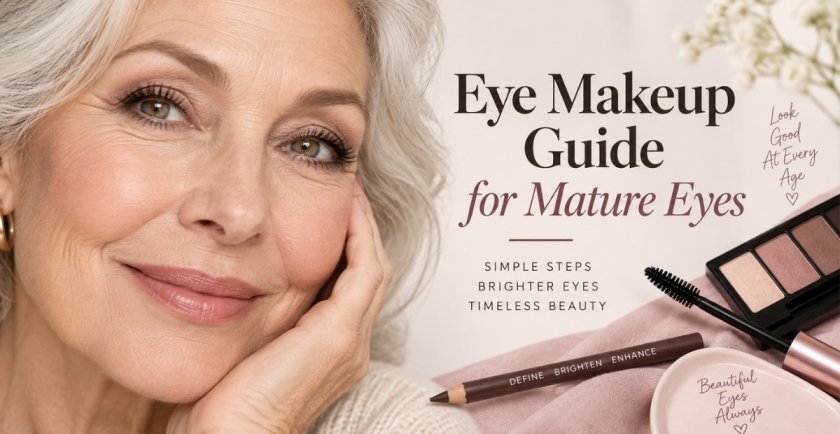
Of everything that changes on the face after 60, the eye area changes the most — and it changes the fastest. Eyelids lose elasticity and can become hooded. The skin around the eyes thins and turns crepey. Lashes and brows thin out. The outer corners can start to droop slightly. Even the color of the iris often softens with age. And yet most eye makeup tutorials are still written for smooth, taut, 25-year-old lids, which is exactly why so many women over 60 feel like eyeshadow “just doesn’t work the way it used to.”
It’s not that your eyes have gotten harder to do makeup on. It’s that the old techniques were never built for the eyes you have now. Once you understand what’s actually changed and adjust your technique to match it, eye makeup after 60 can look more open, more lifted, and more youthful than it has in years — often with less product and less time than your old routine required.
This guide walks through every part of the eye makeup process step by step, adjusted specifically for mature eyes, with cruelty-free product picks along the way.
This post contains affiliate links. If you make a purchase through one of these links, I may earn a small commission at no extra cost to you. I only recommend products I’d genuinely suggest to a friend.
Table of Contents
- How the Eye Area Changes After 60
- Eye Prep: Priming and Hydrating the Lid
- Eyeshadow Techniques for Hooded Eyes
- Eyeshadow Techniques for Downturned Outer Corners
- Eyeliner That Doesn’t Age the Eyes
- Mascara and Lash Care for Thinning Lashes
- Under-Eye Concealer and Brightening
- Eyebrows: Framing the Eye
- Makeup Tips If You Wear Glasses
- Eye Makeup Colors That Flatter Mature Eyes
- Common Eye Makeup Mistakes to Avoid After 60
- Tools Worth Owning
- A Simple 5-Minute Eye Makeup Routine
- Cruelty-Free Brands for Eye Makeup
- FAQ
How the Eye Area Changes After 60
Before getting into technique, it helps to understand exactly what’s happening structurally, because every tip in this guide is really just a response to one of these changes.
Hooding. As skin loses collagen and elasticity, the skin above the crease can begin to fold down over the natural crease line, sometimes covering it entirely when eyes are open. This is why eyeshadow placed only in the “textbook” crease location often disappears completely.
Crepiness. The skin on the eyelid is some of the thinnest skin on the entire body, so it’s often one of the first places fine, crepey texture becomes visible. This texture behaves very differently with shimmer versus matte formulas.
Thinning lashes and brows. Hair follicles slow down everywhere as we age, and lash and brow hair are no exception. Lashes often become shorter, sparser, and more brittle, which changes what mascara formulas can realistically do.
Drooping outer corners. The outer corner of the eye can begin to turn slightly downward, a shift often called “hound-dog eyes.” This changes where shading should — and shouldn’t — go.
Softening iris color. Many people notice their eye color appears to lighten or soften slightly with age, which can shift which eyeshadow tones look most flattering.
Drier lids. Like the rest of the face, eyelid skin produces less oil over time, meaning eyeshadow can look patchier or crease into fine lines more easily than it used to, even though ironically the reason is dryness rather than oiliness.
None of these changes are flaws — they’re just new starting points. Every technique below is built specifically around them.
Eye Prep: Priming and Hydrating the Lid
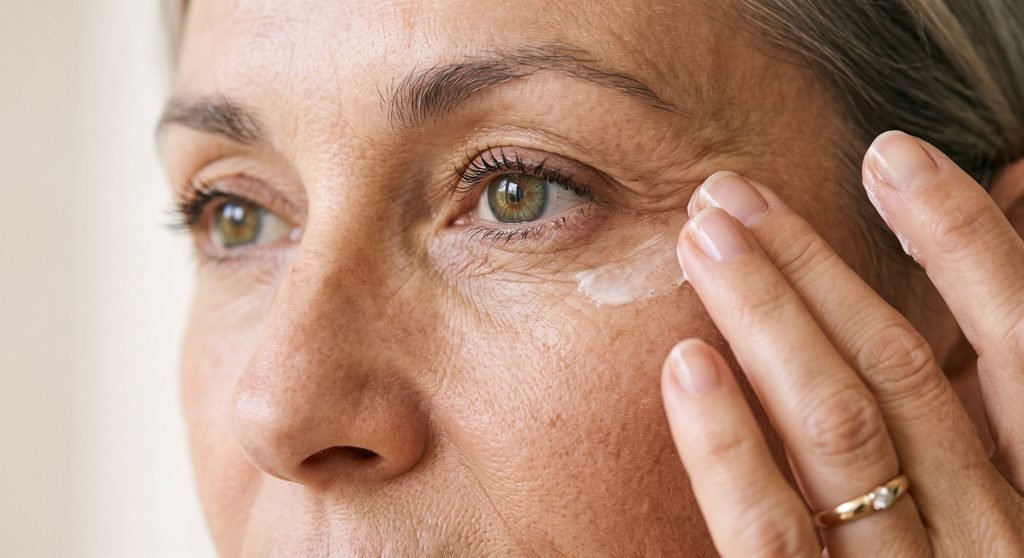
Skipping eye prep is the single biggest reason eyeshadow looks patchy, creases within an hour, or grabs onto every line on the lid. Because eyelid skin is thinner and drier after 60, this step matters even more than it did in your 30s or 40s.
Start with a lightweight, hydrating eye cream, patted on gently with your ring finger (which applies the least pressure) at least a few minutes before you begin any makeup. Let it fully absorb — applying primer over a still-wet eye cream is what causes shadow to slide or crease later in the day.
Once the eye cream has absorbed, apply a thin layer of eye primer, but choose carefully: many classic eye primers are designed to control oil and grip pigment on oilier lids, which can actually feel tacky and emphasize texture on drier, more mature lids. Look for primers described as “hydrating” or “cream-based” rather than mattifying, and apply with a fingertip rather than a brush for the most even, thin layer.
Try These Cruelty-Free Picks:

- 100% Pure Coffee Bean Caffeine Eye Cream — lightweight, brightening, and fully vegan
- Milani Stay Put Eye Primer — a budget-friendly, hydrating formula that still helps shadow last
- e.l.f. Eyelid Primer & Corrector — color-correcting base that also helps neutralize discoloration on the lid
Eyeshadow Techniques for Hooded Eyes
This is the single most requested — and most misunderstood — part of mature eye makeup. The good news is that hooded eyes respond extremely well to a few specific adjustments.
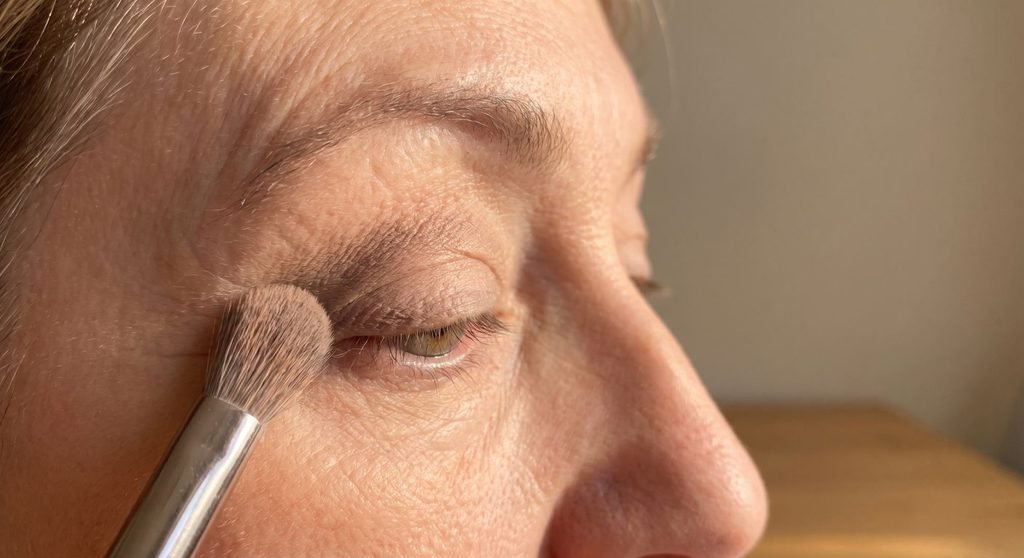
Place your crease color higher than feels natural. Because hooding covers the true crease when eyes are open, blend your medium-depth transition shade slightly above where you can feel your actual crease, roughly in the hollow of the brow bone area. This is the single change that makes the most visible difference for hooded eyes.
Use the “floating crease” technique for definition. Rather than blending shadow strictly into the physical crease (which disappears under hooding), sweep a soft matte shade in a wide, soft arc slightly above it, blending the edges thoroughly so there’s no harsh line. This creates the illusion of a defined crease that remains visible even when the eye is open.
Keep shimmer to the inner two-thirds of the lid only, applied with a fingertip for the most controlled, precise placement, and stop well short of the crease. Shimmer that travels up into hooded, crepey skin tends to emphasize texture rather than add light.
Blend, blend, and blend again. Hooded eyes are less forgiving of harsh lines than smooth lids, since any visible edge becomes more obvious once the hood settles back down over it. A small, fluffy blending brush used in gentle circular motions is worth the extra thirty seconds every time.
Skip heavy, dark shadow all over the lid. A fully dark, smoky lid tends to make hooded eyes look smaller and more closed-off rather than more dramatic. Depth works far better concentrated in a small area at the outer corner than spread across the whole lid.
Try These Cruelty-Free Picks:
- Tarte Tarteist PRO Amazonian Clay Palette — a well-edited neutral palette with the matte and soft-shimmer shades this technique calls for
- e.l.f. Bite-Size Eyeshadow Palette — an affordable, travel-friendly neutral option
Eyeshadow Techniques for Downturned Outer Corners
If the outer corners of your eyes have started to droop slightly, a small shading adjustment can visually lift them back up in seconds.
Take your deepest matte shadow shade and apply it in a small, soft wing shape starting at the outer corner of the eye, angling slightly upward and outward toward the end of the eyebrow rather than following the natural downward slope of the eye. Blend the top edge softly so there’s no hard line, but keep the lower edge along the lash line a bit more defined. This small upward angle is often called the “cat-eye lift,” and it works with shadow alone — no liquid liner required.
The one thing to avoid here is doing the opposite by accident: many classic smoky-eye tutorials darken the outer corner following the eye’s natural shape, which on a downturned eye actually emphasizes and exaggerates the droop rather than lifting it. Always angle up and out, never down and out.
Eyeliner That Doesn’t Age the Eyes
Eyeliner is another area where a technique that worked beautifully at 30 can genuinely age the eyes at 60. Thick, sharply drawn liquid liner along the entire upper lash line tends to look harsher against thinner, more delicate lid skin, and can visually shrink the eye rather than define it.
A few adjustments make a significant difference:
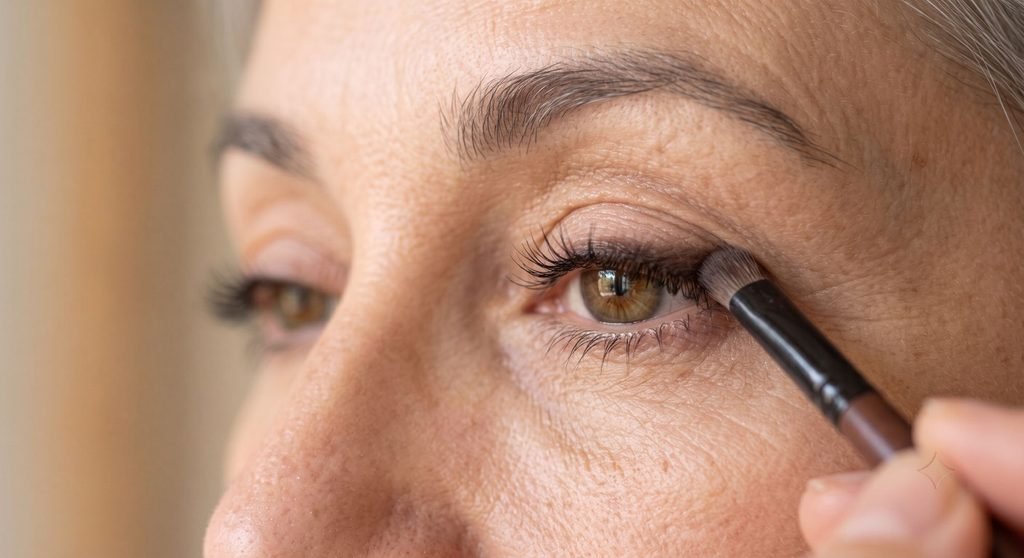
- Try tightlining instead of a visible line. Gently pressing a soft pencil liner into the upper lash line (rather than drawing a line on top of the lid) defines the eye subtly without adding a hard edge — often the most flattering option for mature eyes.
- If you want more visible definition, keep it thin and smudged, concentrated mainly at the outer two-thirds of the eye rather than the full lash line, with a slight upward flick at the very end for lift.
- Consider skipping lower lash liner entirely, or keep it extremely soft. A smudged, soft brown or dark gray pencil along just the outer third of the lower lash line adds gentle depth without the harsher look of a full black line, which can emphasize under-eye hollows.
- Choose your formula based on your hands, not habit. Pencil liners are the most forgiving for less steady hands and give the softest finish. Gel liners applied with an angled brush offer more control than liquid for precise lines. Liquid liners, while long-wearing, are the least forgiving on textured or hooded lids and often the hardest to apply evenly as eyelid skin becomes less taut.
Try These Cruelty-Free Picks:
- e.l.f. No Budge Waterproof Eyeliner Pencil — soft, smudgeable, and long-wearing
- ILIA Clean Line Gel Liner — precise application with a clean ingredient list
- Milani Stay Put Eyeliner — a gel-pot formula with strong color payoff for a budget price
Mascara and Lash Care for Thinning Lashes
Lashes often become noticeably shorter and sparser after 60, and heavy, thick mascara formulas made for full, healthy lashes can end up looking clumpy or flaky rather than more voluminous.
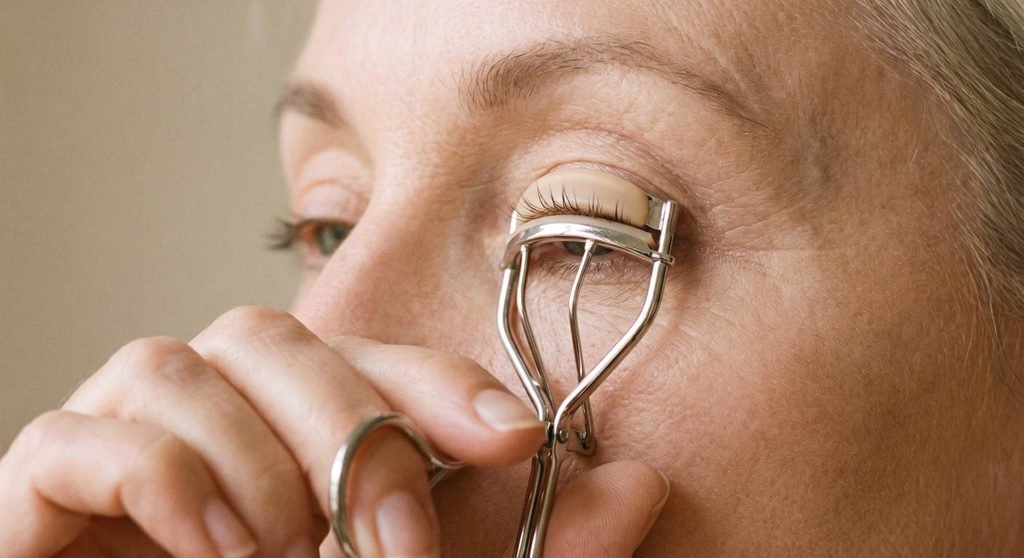
Curl before anything else. This one step opens up the eyes more dramatically than any product change, and it matters even more once lashes have thinned, since a curl helps sparse lashes catch the light and appear denser than they are. Choose a curler with a rounded, cushioned pad, which is gentler on more fragile lashes than older, sharper-edged designs.
Choose lengthening formulas over heavy volumizing ones. Thinner lashes often can’t physically support very thick, waxy mascara without clumping together or flaking throughout the day. A lightweight, lengthening formula — especially a tubing mascara, which coats each lash in a thin, flexible tube rather than a heavy wax — tends to look fuller without weighing lashes down.
Consider a lash serum as a long-term investment. Nightly lash serums, used consistently over 8–12 weeks, can genuinely improve lash length and density over time, which makes every mascara you own perform better.
Save false lashes for special occasions, and when you do wear them, choose small, natural individual clusters at the outer corners rather than a full, dramatic strip, which can look overwhelming against thinner natural lashes and lids.
Try These Cruelty-Free Picks:
- ILIA Limitless Lash Mascara — a tubing-style formula that lengthens without flaking
- Thrive Causemetics Liquid Lash Extensions Mascara — buildable, lightweight length
- GrandeLASH-MD Lash Serum — a widely trusted, PETA-certified cruelty-free lash serum
Under-Eye Concealer and Brightening
While this guide is focused on the eye area above the lash line, the skin below the eye is just as central to how “tired” or “bright” the eyes appear overall.
Choose a hydrating, creamy concealer rather than a thick, matte one, and apply it in a small triangle shape under the eye — extending slightly toward the top of the cheek — rather than dabbing directly under the lash line. This brightens a wider area and looks far more natural than a small, obvious patch of lighter color. If discoloration leans brown or gray, a touch of peach or salmon color corrector underneath can neutralize it far more effectively than concealer alone.
Set only with the smallest amount of translucent powder, focused just on the inner corner where oil tends to collect, and use a small, precise brush rather than a puff, which can disturb the concealer and push it into fine lines.
Try These Cruelty-Free Picks:
- Tarte Shape Tape Concealer — full coverage that still moves naturally with the skin
- Kosas Revealer Concealer — skincare-infused with a natural, brightening finish
Eyebrows: Framing the Eye
Brows do more heavy lifting for the eye area than most people realize — they’re the frame the whole eye makeup look sits inside. As brows thin with age, the entire eye area can start to look less defined even when eyeshadow and liner are done beautifully.
The main goal is a soft, natural arch with slightly more density at the front and through the arch, using short, feather-light strokes rather than a bold, solid line, finished with a tinted brow gel to blend everything together. A well-shaped brow can visually lift the entire eye area and make hooding appear softer.
(For a full, detailed brow tutorial, see our complete guide to makeup tips for women over 60.)
Makeup Tips If You Wear Glasses
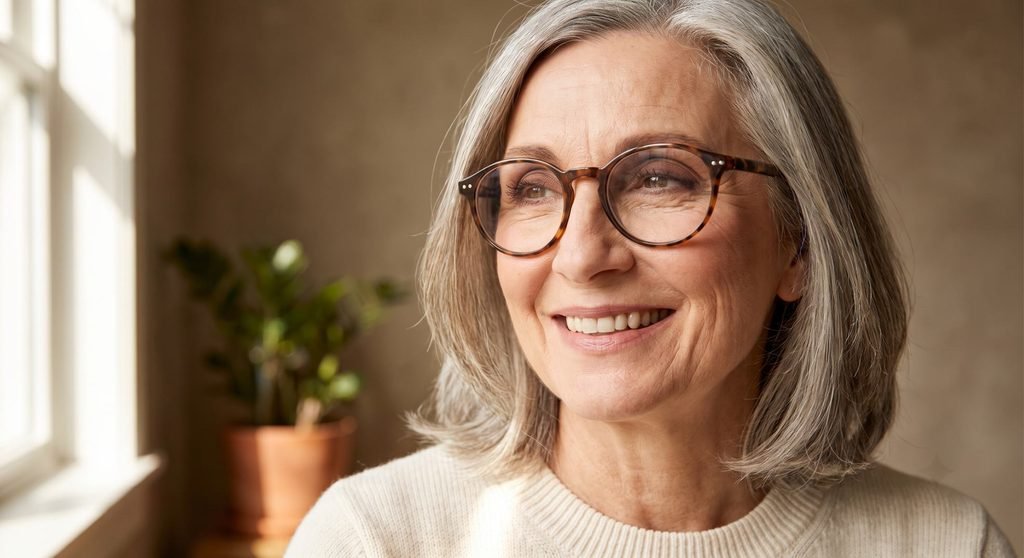
Since the majority of women over 60 wear glasses at least part of the day, it’s worth tailoring eye makeup specifically around how lenses affect its appearance.
Farsighted (reading) lenses magnify the eyes, which means any softness or blending mistakes will be more visible up close. Keep liner slightly softer and more smudged than you think you need, and double-check blending in a magnifying mirror before leaving the house, since these lenses will show every hard edge.
Nearsighted (distance) lenses minimize the eyes, making them appear smaller behind the lens. In this case, a slightly more defined liner, a touch more mascara, and keeping some eyeshadow depth toward the outer corner helps the eyes hold their presence rather than getting visually swallowed by the frame.
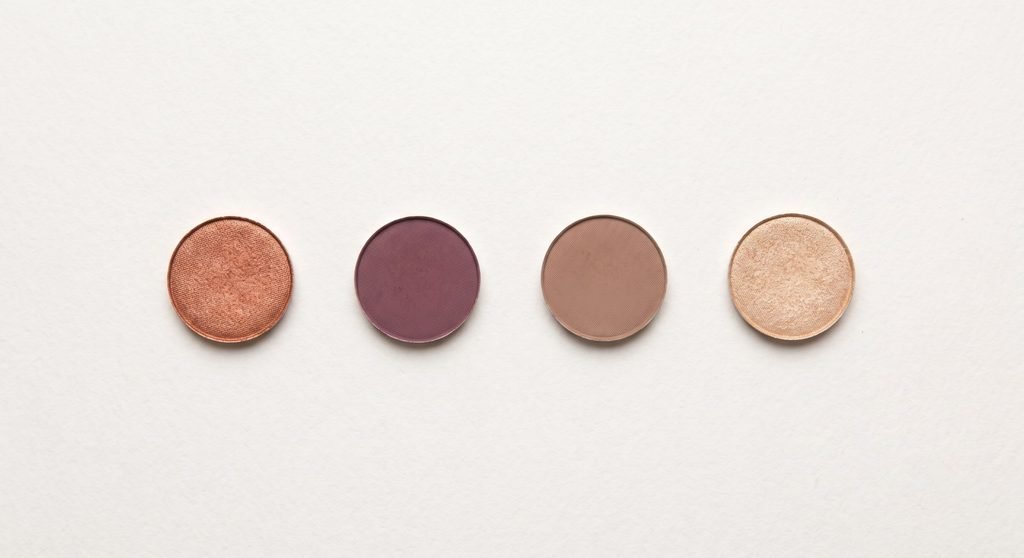
Frame color and shape matter too. Warm-toned frames tend to pair well with warm eyeshadow tones (bronze, copper, soft brown), while cool-toned or clear frames leave more flexibility to wear cooler shadow tones (taupe, mauve, soft gray) if you prefer them.
A helpful habit: apply your eye makeup with glasses off, but always do a final check with them on, under the lighting you’ll actually be wearing them in, since glasses change the visual weight of eye makeup more than most people expect.
Eye Makeup Colors That Flatter Mature Eyes
Many women notice their eye color appears to soften slightly with age — deep browns can look lighter, blue eyes can look more gray, and green eyes can look more hazel. This is a great opportunity to revisit which eyeshadow tones you reach for.
- Blue eyes tend to look especially vivid next to warm, copper-toned browns and soft terracotta shades, which sit opposite blue on the color wheel.
- Green eyes are flattered by deep plum, warm burgundy, and rich copper tones, all of which intensify green rather than competing with it.
- Brown eyes are naturally versatile and look beautiful in nearly every shadow family, though deep navy or forest green liner in place of classic black can make brown eyes look especially rich without appearing harsh.
- Hazel eyes shift depending on the dominant fleck of color, but soft gold, moss green, and warm taupe tend to bring out the multi-tonal quality hazel eyes are known for.
Regardless of eye color, warm, soft neutral tones — taupe, soft bronze, warm brown — tend to be the most universally flattering base for mature eyes, since they add gentle depth and warmth without the starkness that very cool or very dark tones can bring to thinner, more delicate lid skin.
Common Eye Makeup Mistakes to Avoid After 60
- Placing crease color only in the “textbook” crease, where hooding hides it completely.
- Wearing shimmer or glitter all over the lid, which settles into crepey texture and emphasizes it under most lighting.
- Drawing a thick, dark line along the entire upper lash line, which can visually shrink and harden the eye.
- Skipping lash curling, especially once lashes have thinned — this step matters more, not less, with age.
- Using heavy, waxy volumizing mascara on lashes that are now shorter and more brittle, leading to clumping and flaking.
- Darkening the outer corner in a downward direction, which emphasizes drooping rather than lifting the eye.
- Skipping eye cream and primer, leading to shadow that creases or fades within a few hours.
- Choosing concealer that’s far lighter than your skin tone, which can emphasize crepiness rather than disguising it.
Tools Worth Owning
- A small, fluffy blending brush — essential for the soft, diffused edges this guide calls for repeatedly; a stiff or overly large brush makes precise, gentle blending far harder.
- A rounded-pad eyelash curler — gentler on thinning, more fragile lashes than flat or sharp-edged designs.
- A lighted magnifying mirror — genuinely useful for both liner precision and double-checking blending, especially with glasses off.
- A small, precise concealer brush — for the targeted under-eye application described earlier.
Try These Cruelty-Free Picks:
- EcoTools Eye Brush Set — an affordable, cruelty-free set that includes the small blending brushes this routine relies on
- e.l.f. Eyelash Curler — a well-reviewed, budget-friendly curler with a comfortable rounded pad
- Real Techniques Enhanced Eye Set — a slightly more premium brush option, still fully cruelty-free
A Simple 5-Minute Eye Makeup Routine
For days when a full eyeshadow look isn’t realistic, here’s a streamlined version built around everything above:
- Pat on eye cream and let it absorb while you finish the rest of your skincare.
- Apply a thin layer of hydrating eye primer with a fingertip.
- Sweep one soft matte neutral shade across the lid and just above where hooding covers the natural crease, blending well.
- Tightline or softly smudge a pencil liner along the upper lash line only.
- Curl lashes and apply one coat of lengthening or tubing mascara.
- Fill brows with short, soft strokes and brush through with a tinted gel.
Six steps, most under a minute each, for an eye look that reads polished and lifted without needing a full palette or a lot of time.
Frequently Asked Questions
What’s the best eyeshadow finish for crepey eyelids? Matte and soft satin finishes are almost always more flattering than shimmer or glitter on crepey lids, since shimmer particles tend to settle into fine texture and draw attention to it rather than adding light. A small amount of shimmer applied only to the inner corner or center of the lid with a fingertip can still work beautifully in moderation.
Does eyelid tape actually work for hooded eyes? Eyelid tape can create a temporary crease and lift for special occasions, and many people find it helpful for photos or events. For everyday wear, most women find that adjusting eyeshadow placement (blending color higher, using the floating crease technique) achieves a similar lifted effect without any tape at all.
How do you stop mascara from smudging or transferring on hooded eyes? Curling lashes well before applying mascara helps lashes stay lifted away from the lid rather than pressing against it throughout the day. Choosing a lightweight, quick-drying formula (tubing mascaras are especially good for this) and avoiding very close-set lash placement near the base also reduces transfer onto the eyelid.
Is it necessary to change eyeliner color as eyes age? Not necessary, but often flattering. Very stark black liner can look harsher against thinner, paler eyelid skin than it did on younger skin with more natural color. Soft charcoal, warm brown, or deep navy liners often look just as defined but slightly softer and more flattering in daylight.
Can you still wear a smoky eye after 60? Absolutely — the key is adjusting where the “smoke” goes. Concentrate deeper color at the outer corner and along the lash line rather than covering the entire lid in dark shadow, and always blend the edges thoroughly. A well-blended, strategically placed smoky eye can look sophisticated rather than heavy at any age.
How often should I replace mascara and eye products? Eye products should be replaced roughly every three months, a rule worth following at any age but especially important as eyes may become more sensitive over time. Old, dried-out mascara is also more likely to clump and flake, undermining the exact lengthening effect this guide is aiming for.
Final Thoughts
The eye area changes more than almost anywhere else on the face after 60, which means it deserves techniques built specifically for what’s happening there — not a smaller version of a routine designed for a different decade of skin. A little extra prep, slightly adjusted placement, and a few well-chosen cruelty-free products can make eye makeup after 60 look more open, lifted, and effortless than it has in years.

For the rest of your routine, don’t miss our complete guide to [Makeup Tips for Older Women Over 60], covering everything from foundation to lips.
