There’s a moment most women hit somewhere after 60 when they look in the mirror and think, “The makeup routine I’ve used for the last thirty years just isn’t working anymore.” The foundation that used to look flawless now settles into fine lines by noon. The eyeshadow that once made your eyes pop now seems to disappear into hooded lids. The lipstick that stayed put for hours now feathers into the lines around your mouth within the first twenty minutes.
If this sounds familiar, you’re not imagining it, and you’re definitely not doing anything wrong. Skin genuinely changes after 60 — its texture, its moisture levels, even the way it reflects light — and that means the makeup techniques that worked in your 30s and 40s need a real update, not just a few tweaks.
The good news: with the right approach and the right products, makeup after 60 can look more effortless, more radiant, and more “you” than ever. This guide walks through exactly how to adjust your routine step by step, with cruelty-free product recommendations along the way so you can build a kit you feel good about using.
This post contains affiliate links. If you make a purchase through one of these links, I may earn a small commission at no extra cost to you. I only recommend products I’d genuinely suggest to a friend.
Table of Contents
- Why Makeup Needs to Evolve After 60
- Prep Is Everything: Skincare Before Makeup
- Foundation Tips for Mature Skin
- Concealer and Color-Correcting
- Setting Makeup Without Looking Cakey
- Eyebrows: Filling Sparse Brows Naturally
- Eye Makeup for Hooded and Crepey Eyelids
- Blush Placement for a Natural Lift
- Lips: Color and Care for Thinning Lips
- Tools That Make a Real Difference
- Common Makeup Mistakes to Avoid After 60
- A Simple 10-Minute Everyday Routine
- Cruelty-Free Beauty Brands Worth Knowing
- FAQ
Why Makeup Needs to Evolve After 60
Your skin at 60+ is doing genuinely different things than it was doing at 40, and understanding what’s changed makes every product choice afterward much easier.
First, skin gets drier. Oil production slows down significantly after menopause, which means the dewy “glow” you used to get naturally now has to come from your products instead. Second, skin thins and loses collagen, so fine lines and texture are more visible — and heavy, thick products tend to sink into those lines rather than sitting smoothly on top. Third, skin tone often becomes less even, with more visible age spots, redness, or thread veins, which changes what your concealer and color-correcting routine needs to do. Finally, features like eyebrows and eyelashes naturally thin out, and eyelids can become more hooded as skin loses elasticity — both of which change how eye makeup behaves.
None of this is a flaw to fix. It’s simply new information, and once you have it, you can choose formulas and techniques that actually work with your skin instead of against it. The overarching theme for makeup after 60 is this: hydration first, lightweight formulas, and soft blending over harsh lines. Keep that in mind and almost every choice below will make intuitive sense.
Prep Is Everything: Skincare Before Makeup
If there’s one habit that will improve your makeup more than any single product swap, it’s this: give your skin real hydration time before you touch a foundation brush.
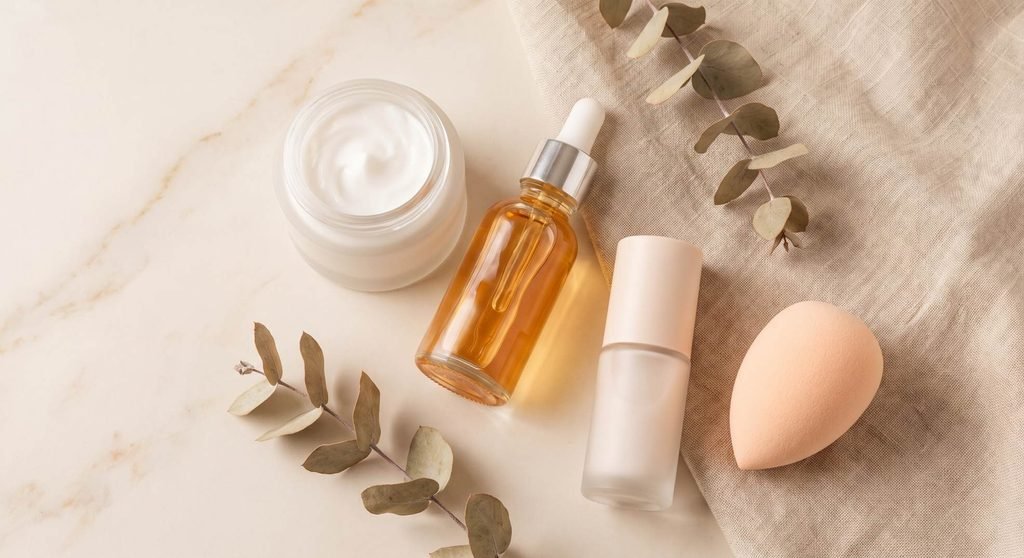
Start with a gentle cleanser, then a hydrating serum, then a rich moisturizer — and wait a full five minutes before applying primer. This isn’t a stalling tactic; it genuinely matters. Applying makeup over skin that hasn’t finished absorbing moisturizer is one of the biggest reasons foundation looks patchy or “sits” oddly on mature skin.
Once your moisturizer has absorbed, reach for a hydrating, silicone-light primer rather than a mattifying one. Mattifying primers are designed to control oil and grip powder, which is exactly the opposite of what drier, more mature skin needs. Look for primers described as “glow,” “dewy,” or “hydrating,” and avoid anything with a strong pore-blurring, blurring-powder finish, since those tend to emphasize texture rather than smooth it.
Try These Cruelty-Free Picks:

- e.l.f. Poreless Putty Primer — lightweight, blurs texture without drying the skin out
- ILIA Necessary Empathy Priming Serum — a hybrid serum-primer with hyaluronic acid, great for very dry skin
- Vegan Ceramide Barrier Support Cream — a rich, vegan moisturizer to use just before primer
One more prep step worth mentioning: sunscreen. Sun damage is one of the biggest contributors to visible aging, and it’s just as relevant at 60+ as it was at 30. Look for a lightweight, non-greasy SPF 30 or higher to wear under makeup every single day, even on cloudy days or when you’re mostly indoors near windows. Many of the tinted moisturizers and skin tints mentioned later in this guide already include SPF, which is a convenient way to combine this step with your foundation.
Foundation Tips for Mature Skin
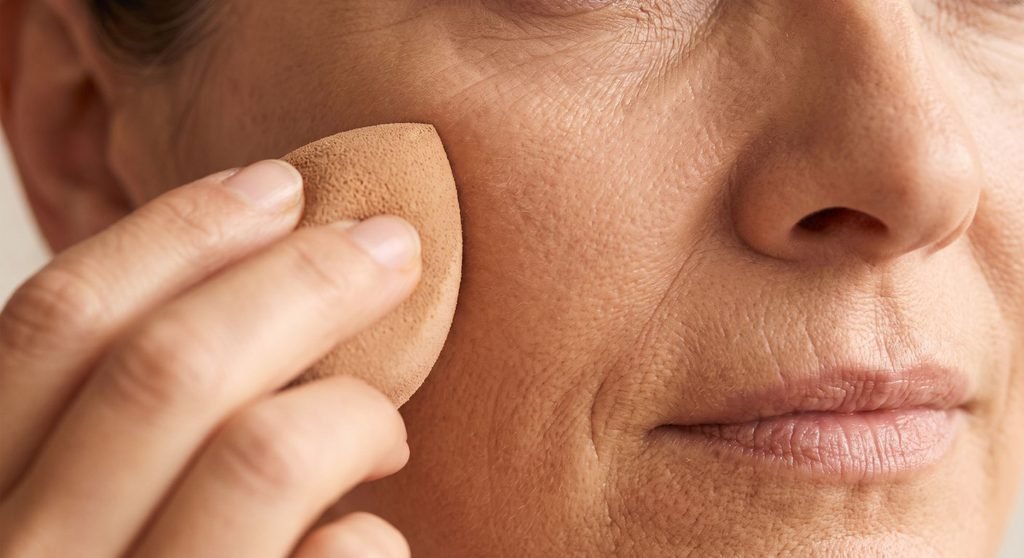
The single biggest foundation mistake after 60 is reaching for the same matte, full-coverage formula you may have loved in your 40s. Matte finishes tend to cling to dry patches and fine lines, making skin look flatter and older rather than smoother. The fix is switching to a lightweight, buildable, dewy or “satin” finish foundation — one that lets some natural skin texture and luminosity show through.
A few application tips make a real difference too:
- Apply with fingers or a damp sponge, not a brush. Brushes can drag product into fine lines. Fingertips warm the product and press it into skin more naturally; a damp makeup sponge bounces product on for an even, skin-like finish.
- Use less than you think you need. Start with a small amount in the center of the face and blend outward. You can always build more coverage on areas that need it, like around the nose.
- Skip full-face foundation if you don’t need it. Many women over 60 look fresher with a tinted moisturizer or skin tint everywhere and a touch of heavier concealer only where truly needed.
- Warm your foundation shade slightly. Skin often looks more washed out under indoor lighting as we age, so a shade with a touch more warmth can look more alive than the “correct” cool-toned match.
It’s also worth re-checking your undertone every few years, since skin tone can shift gradually over time. Test shades along the jawline in natural daylight rather than under indoor lighting or store fluorescents, and blend down onto the neck to make sure there’s no visible line of demarcation. If you’re between two shades, size down to the lighter one and warm it up with a touch of bronzer rather than sizing up, which tends to look heavier and more obvious on drier skin.
Try These Cruelty-Free Picks:
- ILIA Super Serum Skin Tint — sheer, skincare-infused, and extremely natural-looking
- Thrive Causemetics Buildable Coverage Foundation — medium coverage that still looks like skin
- Milani Conceal + Perfect 2-in-1 Foundation + Concealer — a budget-friendly drugstore option with a soft, non-cakey finish
Concealer and Color-Correcting for Under-Eyes and Age Spots
Under-eye concealer gets trickier after 60 because the skin there is thinner and often has more visible discoloration, whether that’s dark circles, hollowing, or fine crepiness. The trick is choosing a hydrating, creamy concealer — never a thick, matte one — and applying it in a small triangle shape (rather than just dabbing directly under the eye) to brighten the whole under-eye area.
For age spots or areas of redness on the cheeks or forehead, a small amount of peach or salmon-toned color corrector applied before concealer can neutralize discoloration far more effectively than concealer alone, especially on deeper age spots that read as brown or gray.
A few rules to keep this natural rather than obvious:
- Pat concealer in with a fingertip or small sponge — never drag or rub.
- Only set with a very small amount of translucent powder, and only where you genuinely need it (usually just the inner corner).
- Avoid concealers that are more than one or two shades lighter than your skin, since very light concealer can emphasize crepiness under the eyes.
Try These Cruelty-Free Picks:
- Tarte Shape Tape Concealer — full coverage that still moves with the skin
- Kosas Revealer Concealer — skincare-infused, very natural finish, great for daily wear
Setting Makeup Without Looking Cakey
Setting powder is where a lot of “cakey” makeup problems actually start. The instinct after applying foundation and concealer is to set the whole face with powder, but on drier, more mature skin this is often the step that makes makeup look heavy and emphasizes texture rather than smoothing it.
Instead, set only the areas that get oily throughout the day — typically the T-zone — using a very light dusting of a finely-milled, illuminating setting powder, applied with a fluffy brush rather than a puff. Leave the cheeks, temples, and under-eye area either unset or set with the lightest possible touch.
Finish with a hydrating setting spray rather than skipping this step. A good setting spray melts the layers of makeup together so nothing looks separate or powdery, and it adds back a bit of the dewiness that powder can take away.
Try These Cruelty-Free Picks:
- e.l.f. Halo Glow Setting Powder — finely milled with a soft-focus glow
- Milani Make It Last Setting Spray — hydrating, budget-friendly, long-wearing
Eyebrows: Filling Sparse Brows Naturally
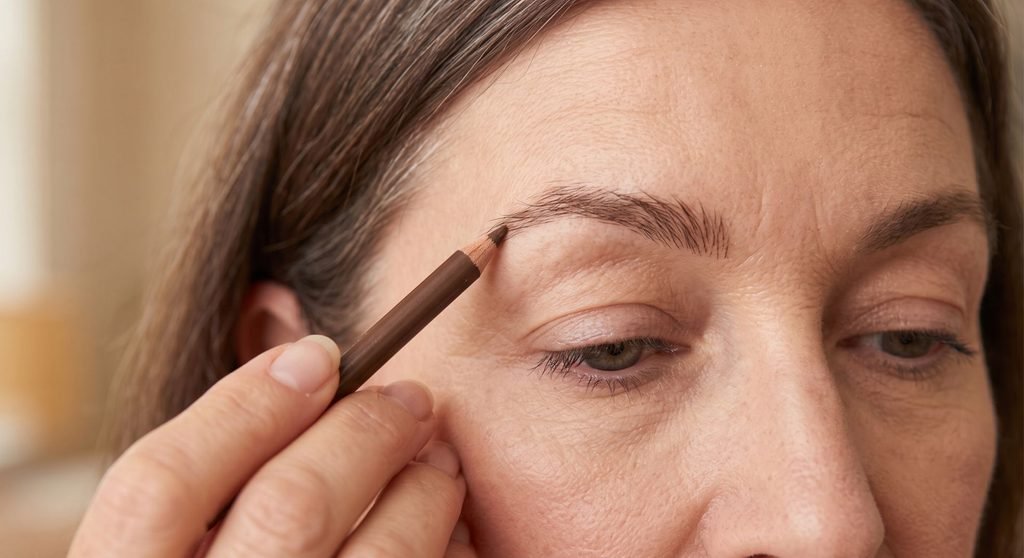
Eyebrows thin out significantly for most women after 60, and bare or sparse brows can make the whole face look less defined, even when everything else is done beautifully. The goal here isn’t to draw on a dramatic, bold brow — it’s to gently rebuild the shape and density that’s naturally faded.
Use short, feather-light strokes rather than solid lines, following the direction your brow hair naturally grows. A slightly angled brow pencil or a fine-tip brow pen works better than a thick pencil for this. Focus most of your product on the front third and the arch, since that’s usually where thinning is most noticeable, and keep the tail soft rather than sharply drawn.
Finish with a tinted brow gel to blend everything together and hold sparse hairs in place — this single step does more to make filled-in brows look natural than almost anything else.
Try These Cruelty-Free Picks:
- e.l.f. Instant Lift Brow Pencil — dual-ended with a spoolie, great for beginners
- Milani Stay Put Brow Pomade — long-wearing, buildable, and precise
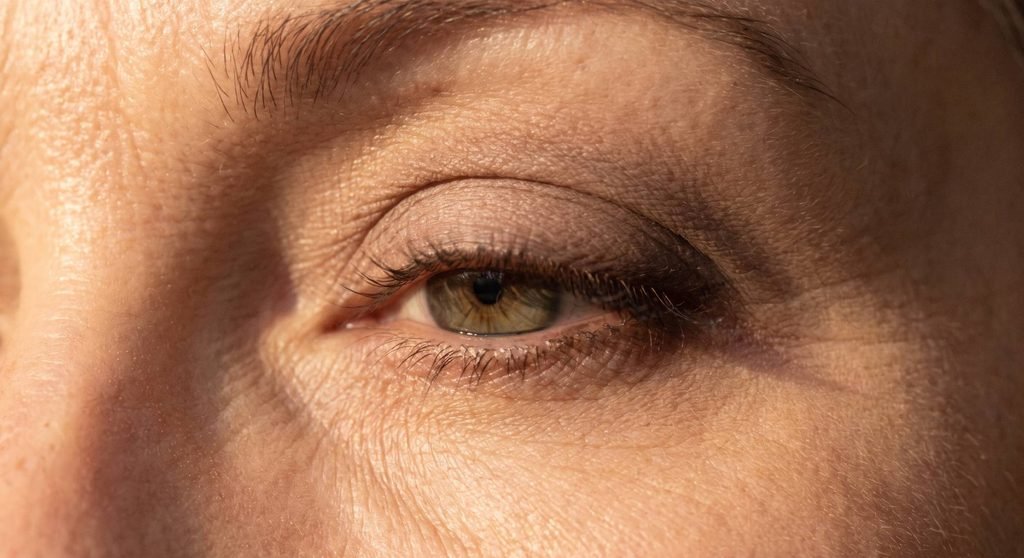
Eye Makeup for Hooded and Crepey Eyelids
Eyes tend to see the most dramatic changes after 60 — lids can become hooded as skin loses elasticity, and the skin itself often becomes more crepey, which changes how eyeshadow behaves. Shimmer and glitter formulas, in particular, tend to settle into every crease and emphasize texture rather than hiding it.
Here’s what actually works instead:
- Choose matte or soft satin eyeshadows over shimmer, especially in the crease. A little shimmer on the center of the lid, applied with a fingertip, can still work beautifully — it’s an all-over shimmer wash that tends to look aging, not a small pop of light.
- Blend the crease color slightly higher than you think you need to. On hooded eyes, the “crease” often isn’t visible when your eyes are open, so placing color a touch higher ensures it actually shows.
- Skip harsh, thick liquid eyeliner along the whole lash line. Instead, try a soft, smudged pencil liner concentrated near the outer corner, or a subtle “tightlining” technique along the upper lash line to define eyes without a hard line.
- Curl lashes before mascara, always. This one step opens up the eyes more than almost any product.
- Choose a lengthening, non-flaking mascara rather than a heavy volumizing one, since thinner lashes often can’t support very thick formulas without clumping.
Try These Cruelty-Free Picks:
- Tarte Tarteist PRO Amazonian Clay Palette — a versatile neutral matte palette perfect for soft, blended looks
- ILIA Limitless Lash Mascara — a tubing-style mascara that lengthens without flaking or smudging
- Thrive Causemetics Liquid Lash Extensions Mascara — buildable length with a lightweight feel
Makeup Tips If You Wear Glasses
If you wear glasses daily, a few small adjustments make eye makeup look better both with and without them on. For farsighted lenses that magnify the eyes, keep eyeliner and mascara slightly softer than you think you need, since lenses will exaggerate any harsh lines or clumping. For nearsighted lenses that minimize the eyes, the opposite applies — a slightly more defined liner and a touch more mascara helps eyes hold their own against the lens effect. Either way, matte or satin eyeshadow tends to photograph and read better through glasses than shimmer, which can create unwanted glare or reflection. It’s also worth applying makeup with your glasses off but checking the final result with them on, under the same lighting you’ll actually be in, since glasses change how color and definition appear far more than most people expect.
Blush Placement for a Natural Lift
Blush placement can visually lift the whole face, which makes it one of the most valuable tools in a mature makeup routine — but only if it’s placed correctly. Applying blush low on the apples of the cheeks, the way many of us were taught decades ago, can actually pull the face downward and emphasize sagging.
Instead, smile gently and apply blush to the highest point of the cheek, blending up and out toward the temples rather than straight across. Cream or liquid blush formulas tend to look far more natural on mature skin than powder blush, since powder can sit on dry patches and look chalky. A tiny dot of cream blush blended with fingertips melts into the skin and looks like a natural flush rather than “applied” color.
Try These Cruelty-Free Picks:
- Tower 28 BeachPlease Cream Blush — a gel-cream formula that blends like a dream
- Kosas Cloud Set Blush — buildable, weightless, with a soft-focus finish
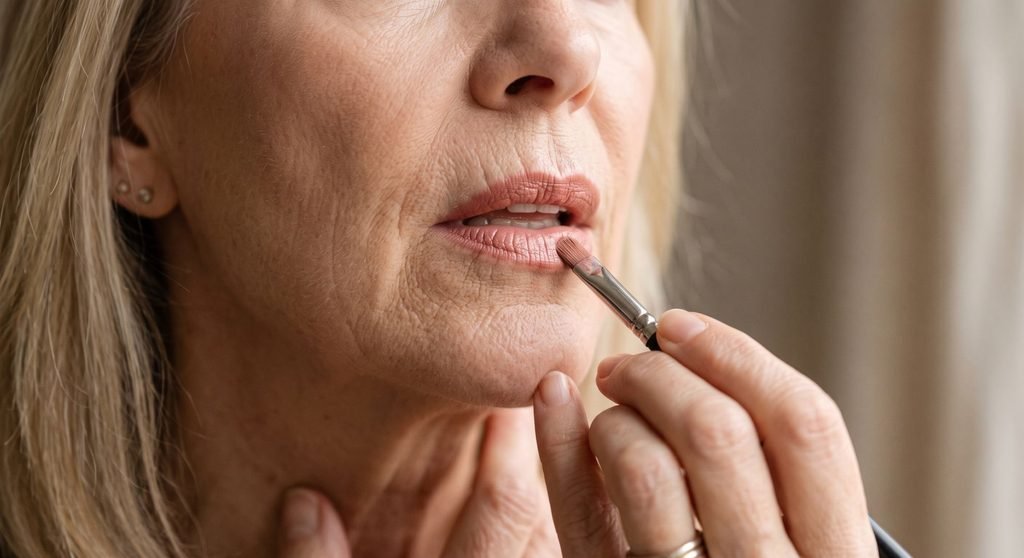
Lips: Color and Care for Thinning Lips
Lips naturally thin and lose definition after 60, and the skin around the mouth develops the fine vertical lines often called “lipstick lines,” which is exactly where color tends to bleed. Matte lipsticks, while long-wearing, can also emphasize dryness and settle into those lines, making lips look smaller and less hydrated.
A simple three-step approach solves most of this:
- Exfoliate and moisturize lips first. A gentle lip scrub followed by a hydrating balm, left on for a few minutes before makeup, smooths the surface color will sit on.
- Line lips with a creamy, slightly-blended liner in a shade close to your natural lip color, rather than a hard, precise line. This prevents feathering and subtly adds fullness.
- Choose hydrating, cream, or satin lipstick formulas over long-wear mattes. A sheer-to-medium coverage lip color in a rosy or warm nude tone tends to look far more flattering than a bold, opaque matte after 60.
Try These Cruelty-Free Picks:
- e.l.f. No Budge Lip Liner — creamy, precise, and long-wearing without feathering
- ILIA Balmy Gloss Tinted Lip Oil — hydrating with a sheer wash of color
- Axiology Lip-to-Lid Balmie — a clean, multi-use balm stick great for both lips and a soft eyelid wash
Tools That Make a Real Difference
The right tools can make even a simple, minimal routine look more polished, and a few are especially worth investing in after 60:
- A lighted magnifying mirror — essential for precise brow and eyeliner application when close-up vision changes.
- A damp makeup sponge — for a natural, skin-like foundation finish rather than a “painted on” look from a brush.
- A small, fluffy powder brush — for the light, targeted powder application described earlier, rather than a large, all-over powder brush.
- A good pair of slant-tip tweezers — for precise, gentle brow grooming.
- An eyelash curler with a rounded pad — gentler on thinner, more fragile lashes than older curler designs.
Try These Cruelty-Free Picks:
- beautyblender Original Sponge — the gold standard for a seamless, skin-like finish
- EcoTools Brush Set — affordable, cruelty-free, and includes the fluffy brushes this routine calls
- Real Techniques Miracle Complexion Sponge — a budget-friendly alternative to beautyblender
Common Makeup Mistakes to Avoid After 60
A quick checklist of the habits that tend to age the face rather than flatter it — many of them holdovers from routines developed decades ago:
- Using heavy, full-coverage matte foundation that settles into fine lines instead of a lightweight, dewy formula.
- Over-plucking or completely skipping eyebrows, which removes structure from the whole face.
- Applying blush too low on the cheek, which can visually pull the face downward.
- Wearing very dark, harsh lip liner that doesn’t match the lipstick, creating an obvious outlined look.
- Skipping moisturizer and primer and applying makeup straight onto dry skin.
- Using shimmer or glitter eyeshadow all over the lid, which emphasizes crepey texture.
- Choosing a foundation shade that’s too light, thinking it will look “brightening” when it actually looks ashy and emphasizes fine lines.
- Applying too much powder, which sits on dry patches and looks chalky under both natural and indoor light.
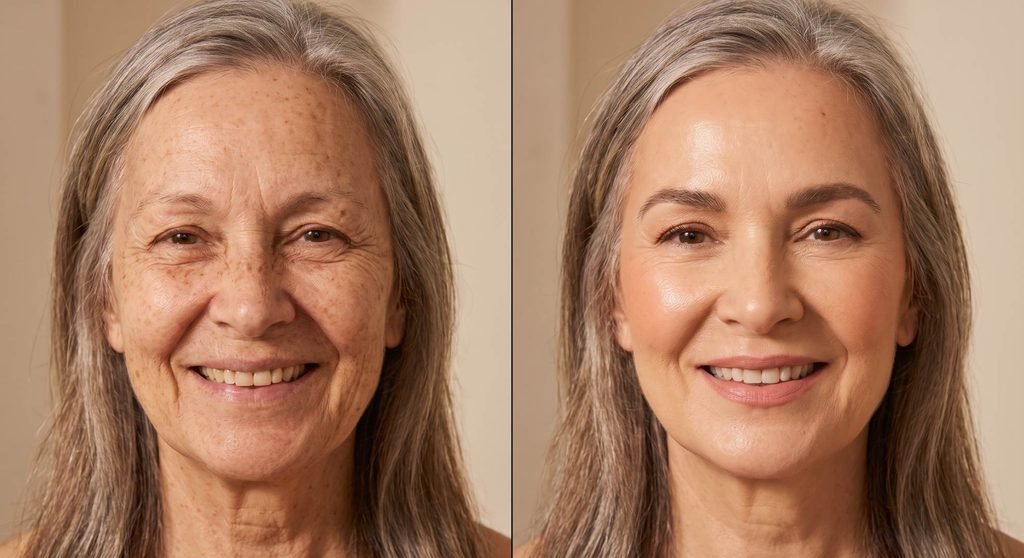
A Simple 10-Minute Everyday Routine
For mornings when a full routine isn’t realistic, here’s a streamlined version that still looks polished:
- Moisturize and let it absorb (2 minutes) while you get dressed or make coffee.
- Apply a hydrating primer, focused only on the T-zone and any areas with visible texture.
- Blend on a lightweight skin tint or tinted moisturizer with a damp sponge or fingers.
- Conceal only where needed — usually under the eyes and any obvious spots — and blend with a fingertip.
- Fill in brows with soft, short strokes and brush through with a spoolie or tinted gel.
- Curl lashes and apply one coat of mascara.
- Add cream blush to the apples of the cheeks, blending up toward the temples.
- Finish lips with a tinted balm or sheer lipstick, no liner needed for this quick version.
That’s it — eight simple steps, most of which take under a minute each, for a finished, natural look that holds up all day.
Frequently Asked Questions
Should you stop wearing foundation after 60? Not at all — but it’s worth switching to a lighter, more hydrating formula. A skin tint, tinted moisturizer, or lightweight liquid foundation applied with a damp sponge will look far more natural than heavier formulas, and many women find their skin actually looks smoother with the right lightweight product than with none at all.
What’s the best foundation finish for mature skin? A dewy or satin finish almost always looks better than a fully matte finish after 60, since matte formulas tend to settle into fine lines and emphasize dryness. Look for words like “luminous,” “glow,” or “hydrating” on the label.
How do you keep lipstick from bleeding into fine lines? Line the lips with a creamy liner before applying color, and avoid heavy matte lipsticks in favor of hydrating, cream, or satin formulas. Exfoliating and moisturizing lips beforehand also makes a significant difference.
Is shimmer eyeshadow off-limits after 60? Not entirely — a small amount of shimmer on the center of the lid can still look beautiful. The key is avoiding shimmer in the crease or all over the lid, since it tends to settle into texture and emphasize crepiness.
What are the best cruelty-free drugstore brands for mature skin? e.l.f., Milani, Physicians Formula, and Pacifica are all widely available, affordable, and genuinely cruelty-free, with formulas well-suited to drier, more mature skin.
How often should eyebrow and eyeliner techniques change as we age? Roughly every few years, or whenever you notice your brows or lash line have visibly thinned, is a good time to revisit your technique — softer strokes, higher crease placement, and lighter formulas tend to need occasional updates as these features continue to change.
Do I need different makeup for daytime versus evening after 60? Yes, though the difference can be subtle rather than dramatic. For daytime, keep everything as described above — lightweight, natural, and softly blended. For evening, you can build slightly more intensity without changing the whole approach: a touch more eyeshadow depth in the outer corner, one extra light layer of mascara, and a slightly richer lip color. Avoid adding shimmer or glitter for evening, since artificial lighting tends to make it look harsher rather than more glamorous on mature skin.
Final Thoughts
Makeup after 60 isn’t about hiding or “fixing” anything — it’s about adjusting your approach to match skin that’s genuinely different than it was twenty years ago, and choosing formulas that actually work with it instead of fighting it. A little extra hydration, softer techniques, and a few well-chosen cruelty-free products can make your everyday routine feel easier and look more like you than it has in years.
If you’re building out a full over-50 beauty routine, you might also enjoy our guide, [What to Tell Your Stylist: The Over-50 Salon Consultation Guide], for getting your hair and makeup working together seamlessly.
